Photographers working on a small table
If you want to capture a whole candle holder or several objects, check the framing and camera position. Canon Deutschland and Nikon Deutschland list kit zooms with different focal length ranges.


For full candle holders and arrangements on a small table, a kit zoom may be a good option if you can get the framing you want from your intended camera position. For small decorative details, however, what matters is the close-up capability of the specific lens or camera mode. Remember to allow space for lighting and a stable set-up, too.
If you want to capture a whole candle holder or several objects, check the framing and camera position. Canon Deutschland and Nikon Deutschland list kit zooms with different focal length ranges.
For decorative details and surfaces, the camera’s close-up function or the magnification ratio of the specific lens is key. OM SYSTEM, Nikon Deutschland, Sony Deutschland and Fujifilm X Deutschland provide product-specific information on this.
If you want to capture materials, shadows and candlelight just so, you’ll need a stable set-up and control over exposure and depth of field. Canon Academy explains the relationship between aperture and depth of field, while Canon B2B describes how to set shooting parameters for repeatable product images.
A good fit if: You want to capture small decorative details without changing lenses. OM SYSTEM states that the TG-7 can focus from 1 cm in Microscope mode.
Keep in mind: A short focusing distance doesn’t tell you whether there’s enough room in front of the subject for lighting or whether you can capture a wider view.
A good fit if: You want to photograph whole holders and arrangements, and vary your framing. The Canon EOS R50 kit includes an RF-S 18–45 mm lens; the Nikon Z50II kit includes a NIKKOR Z DX 16–50 mm lens.
Keep in mind: Canon gives a magnification of 0.25x for its kit zoom when focusing manually at close range; Nikon lists a minimum focus distance of 0.2 m for its kit zoom. These figures are no substitute for checking the framing with your own set-up.
A good fit if: You regularly want engravings or surfaces to fill more of the frame, and can plan the lens, camera position and lighting together. Nikon Deutschland, Sony Deutschland and Fujifilm X Deutschland list a 1:1 magnification ratio for certain macro lenses.
Keep in mind: A macro lens is an additional component, and at high magnification there may be little room to light the subject from the front. You may need to stop down for greater depth of field, which lets in less light.
| What you need | What to check before buying | Who is this important to? |
|---|---|---|
| Capture the whole holder | Check the focal length range and framing from your intended camera position. | If I want to show the whole candle holder or an arrangement on a small table, I need a suitable frame. Around 31% of consumers prioritise seeing the whole subject. |
| Show decorative details prominently | Check the magnification ratio or close-up mode, and make sure there’s room to light the subject from the front. | If I want engravings or surfaces to stand out clearly in the image, I look at the close-up capability of the specific lens or camera mode. Around 25% of consumers prioritise close-up detail. |
| Control light and colour | Check the white balance and exposure settings, and allow for space to position light to the side. | If I want to control materials and shadows under changing light, my set-up needs to leave room for lighting and consistent settings. Around 25% of consumers prioritise control over light and colour. |
| Keep details at different distances in focus | Check the aperture controls and camera stability; consider the extra work involved in combining multiple focus planes if needed. | If I want the candle holder to be in focus from front to back, I take depth of field and the extra light needed when stopping down into account. Around 19% of consumers prioritise sharpness throughout the image. |
These figures refer to different properties: Canon gives a magnification of 0.25x for the kit zoom in question when focusing manually at close range, while Nikon lists a 1:1 magnification ratio for the separate Z MC 50 mm.
Check the magnification ratio of the lens actually included, and add a macro lens only if you need to capture details at the desired size.
You may need to buy an additional compatible macro lens.
Getting very close to the subject can make it harder to position your lights. Focusing distance and magnification ratio also describe different properties.
Check the framing and lighting with your planned table set-up. If you’re using lit candles, make sure the set-up is safe and never leave a candle unattended.
Depth of field decreases at close range, and stopping down further lets in less light. A camera won’t eliminate reflections by itself.
Plan where to position your lights and how to keep the camera steady. Also check whether you want to adjust the exposure and, for still subjects, combine several focus planes if needed.
A tripod, extra lighting or combining several shots may require more space and work.
The Tough TG-7 is a compact option for close-ups without changing lenses.
The EOS R50 kit with RF-S 18–45 mm offers zoom for different framing options; the RF 35 mm F1.8 MACRO IS STM is a separate lens for close-ups.
The Z50II kit with DX 16–50 mm offers zoom, while the separate Z MC 50 mm f/2.8 is designed for greater detail magnification.
An APS-C camera with a Sony E-mount can be paired with the separate E 30 mm F3.5 Macro SEL30M35 for close-up photography.
The XF30mmF2.8 R LM WR Macro is an X System lens option for capturing small details.
These product options include compact cameras and digital cameras with wide-angle specifications. For candle holder details, check the close-up capability and available lighting space with your specific set-up.
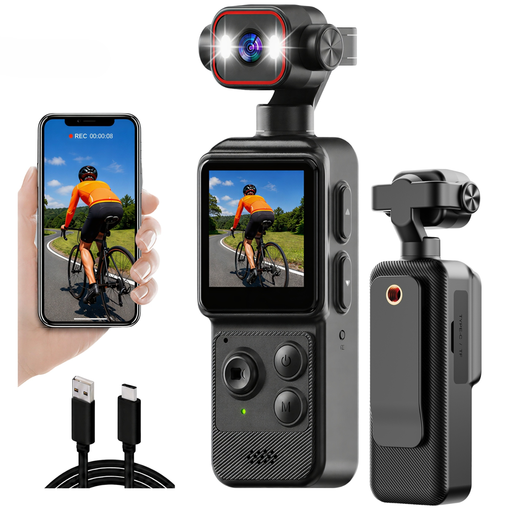 No image available
The title lists a 140° wide-angle lens; check the framing from your intended camera position.
4K; 1.54-inch display; app control; LED light; 1200 mAh battery.
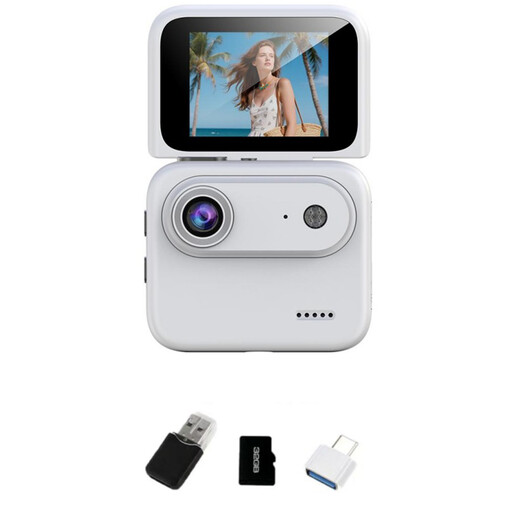 No image available
The title lists a 143° wide-angle lens; check whether it gives you the framing you want on your table.
4K; 32 GB TF card storage; built-in image stabilisation.
 No image available
The title lists autofocus and digital zoom; these specifications alone don’t show how close you can get to small decorative details.
4K Ultra HD; 64 MP; autofocus; 18x digital zoom; 32 GB memory card.
A kit zoom may be suitable if it captures the framing you want from your available camera position. Check this against the size of the holder and your table set-up. For small decorative details, the close-up capability of the specific lens matters too.
Keep the camera steady, focus on the important detail and choose an aperture that gives you the depth of field you need. Stopping down further may require a longer exposure. For still subjects, you may be able to combine several focus planes.
The German Fire Service Association recommends using a stable, non-flammable holder, keeping candles away from flammable objects and never leaving lit candles unattended. This advice is about candle safety, not a specific camera-buying requirement.
For consumer purchases made at a distance, you generally have a 14-day right to cancel. Your Europe, the European Union’s consumer portal, also states that faulty goods are covered by a legal guarantee of at least two years from receipt. This is separate from any voluntary manufacturer’s warranty.