Batch cooks
You make cannelloni for several working days and plan your oven dish, fridge space and transport together.


A built-in oven is a good choice for larger batches of cannelloni if you have a suitable housing space; if you don’t have room for a built-in model, a mini oven could be an option for smaller dishes. What matters is whether the inside dimensions fit your oven dish, and which heating functions the specific model offers – capacity alone won’t tell you whether your dish will fit. If you’re taking portions with you, you’ll also need to cool them quickly and keep them chilled during transport, as recommended by the German Federal Institute for Risk Assessment (BfR).
You make cannelloni for several working days and plan your oven dish, fridge space and transport together.
You want to make one or a few lunch portions and don’t have a suitable space for a built-in oven. With a countertop oven, the actual internal dimensions are what count.
You regularly bake dishes with sauce, so you compare how each model is cleaned, how it operates and its energy information.
First, check that your oven dish will fit and whether a built-in model is suitable for your kitchen. If you bake often, cleaning and comparable energy information also matter.
A good fit if: You want to make several portions in one large dish or several suitable dishes, and you have a suitable housing space.
Bear in mind: Factor in installation and, if necessary, removal of your old appliance.
A good fit if: You bake smaller quantities, don’t have a suitable space for a built-in oven, and your dish fits with the clearances required in the appliance instructions.
Bear in mind: According to Severin, the TO 2067 has a capacity of 20 l, but no fan-assisted function.
| What matters to you | What to look for when buying | Who it matters to |
|---|---|---|
| Space for your portions | Compare the oven dish dimensions with the internal dimensions, racks, shelf positions and required clearances. | If I’m batch-cooking for several working days in one large dish or several dishes, everything needs to fit. Around 33% of consumers prioritise having room for the portions they plan to make. |
| The right type of oven | For a built-in oven, check the housing space and installation requirements; for a countertop oven, check the space it will occupy and its internal dimensions. | If I don’t have a suitable space for a built-in oven, a freestanding model is a better option; my dish still needs to fit, with the required clearances. Around 27% of consumers primarily look for an oven that doesn’t need a built-in housing space. |
| Cleaning up after casseroles | Compare the cleaning method and care instructions for the specific model; hydrolytic cleaning and pyrolysis are not the same. | If I often bake dishes with sauce, the regular cleaning effort matters to me. Around 20% of consumers prioritise easy care. |
| Energy information and extras | For appliances with the relevant label, compare consumption per standard baking cycle using the same heating function. | If I bake regularly, I want to compare energy information on a like-for-like basis, rather than assuming that extra features mean lower consumption. Around 20% of consumers prioritise electricity consumption. |
The Verbraucherzentrale (German Consumer Advice Centre) explains that the energy label shows consumption per standard baking cycle for the heating functions listed. This figure isn’t a measurement of your own cannelloni bake. Portable ovens are also outside the scope of the EU oven energy labelling rules covered here.
The oven’s capacity doesn’t tell you whether a particular dish will fit on the rack or in the shelf space. For another mini oven, Severin notes that a 27 × 27 cm dish is too large.
Check the internal dimensions, rack and shelf dimensions, and required clearances in the specifications for the exact model.
You may need to use a smaller dish or buy an extra one to suit the oven you have.
The appliance dimensions alone don’t confirm that it will fit the housing space or that the connection meets the installation requirements.
Check the housing space against the installation instructions before ordering, and confirm separately whether installation services are available.
Installation, modifications or removal of an old appliance may require extra work.
An oven won’t solve the question of how to store pre-cooked cannelloni and keep it chilled on the way. The BfR advises storing perishable food in the fridge and keeping it cool while travelling.
Cool the portions quickly, store them at 2 °C to no more than 7 °C as advised by the BfR, and plan to use a cool bag for transport and have somewhere to keep them chilled at your destination.
For several working days, you’ll need enough fridge and transport space.
The HBA514BS3 is a built-in oven with 3D Hotair and hydrolytic cleaning. It’s worth considering if you have a suitable housing space and want these features.
The HR776G1B1 is an iQ700 built-in oven with a usable capacity of 71 l, steam boost, and pyrolytic and hydrolytic cleaning systems.
The freestanding TO 2067 mini oven could suit smaller dishes if you don’t want a built-in model.
The H 2761 B is a single built-in oven with PerfectClean and a fully extendable FlexiClip rail. These features could matter if ease of use and cleaning influence your choice.
This selection includes built-in ovens for larger baking projects and a freestanding combination oven for kitchens without a suitable built-in space. For each appliance, check your oven dish dimensions and the installation requirements.
 No image available
This model could be a built-in option if you’re planning larger portions and have a suitable housing space; check separately that your dish will fit.
71 l oven capacity, 3D Hotair, pyrolytic cleaning and 10 AutoPilot programmes.
 No image available
This built-in option could suit larger baking projects if the housing space is right; check the internal dimensions for your cannelloni dish.
70 l, 3 kW, fan-assisted cooking, grill and AquaClean steam cleaning.
 No image available
A built-in oven for larger baking projects, provided the housing space and installation requirements suit the appliance.
60 cm, 3D Hotair, AirFry and pyrolytic cleaning.
 No image available
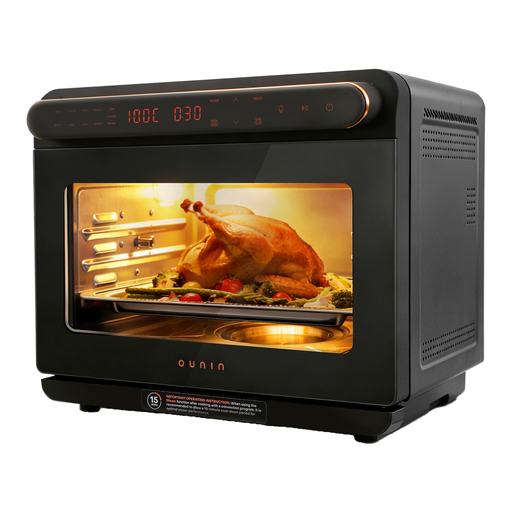
This freestanding combination oven could work if you don’t have a built-in space; check that your oven dish fits, with the required clearances.
24 l, Steam Bake, Steam Roast, rotisserie and 1L water tank.
 No image available
This built-in model is an option for larger baking projects if the housing space and installation requirements are suitable.
78 l, 9 cooking functions and energy class A+.
Cool the portions quickly and keep them chilled until you’re ready to eat. For perishable food, the BfR recommends storage at 2 °C to no more than 7 °C and keeping it chilled while travelling. Make sure you have somewhere to keep it cool at your destination, and use a cool bag for transport.
Not across the board. The Verbraucherzentrale explains that consumption per standard baking cycle is given for specified heating functions on household ovens covered by the rules; Regulation (EU) No 65/2014 excludes portable ovens from its scope. Only compare figures calculated on the same basis, and don’t use them to estimate the electricity needed for your cannelloni unless you have relevant consumption data.
No, pyrolysis isn’t essential for baking cannelloni. Some built-in ovens have hydrolytic cleaning, while countertop ovens may not have pyrolysis. Check the care instructions for the specific model and decide whether the extra cleaning function matters to you.
The seller is responsible for your statutory consumer rights; a manufacturer’s guarantee is a separate, voluntary offer. The Verbraucherzentrale lists repair or replacement as possible ways to resolve the issue. Arrange any installation or service work unrelated to a fault separately before you buy.
Not simply because it’s called an oven. Regulation (EU) No 65/2014 excludes portable ovens, among other products, from its scope; whether a particular appliance is covered depends on its design. This exemption doesn’t automatically apply to other relevant product safety requirements.