
Lieferung heute & morgen

Qualitätsgarantie

Willkommens-Angebote freischalten: KOSTENLOSE Lieferung | Bis zu 80 % RABATT | Kostenlose 30-Tage-JoyPlus-Testphase
App herunterladen
By a Joybuy Product Recommendation Officer, 28 August 2026
A high-quality cantilever parasol can transform your patio and garden into a shaded oasis. However, the market is vast, and not every model lives up to its promises. Before making a decision, it's crucial to understand the common weak points that often only become apparent after one season, turning a supposed investment into a disappointment.
The three most common problems with cantilever parasols are:
To avoid these pitfalls, focus your attention on three core areas. These objective criteria will help you separate the wheat from the chaff and find a model that will perform reliably for years to come.
The frame is the skeleton of the parasol. An aluminium cantilever parasol is often the right choice. The material is naturally rust-proof and offers an optimal balance of low weight and high stability. Pay attention to the mast diameter; more robust models feature larger dimensions. A powder-coated finish provides additional protection for the aluminium against scratches and weathering, further enhancing its longevity.
The fabric is the functional heart of the parasol. A certified parasol with UV protection is a crucial feature. According to established standards, a UPF 50+ (Ultraviolet Protection Factor) rating blocks over 98% of harmful UV radiation.
Other important parameters include:
A cantilever parasol offers the advantage of a side-post, leaving the space directly under the canopy completely clear. To make the most of this benefit, the following functions are essential:
Choosing the right parasol depends heavily on your individual needs. For users who value a long-term, functional, and high-quality solution for their patio, we have identified a suitable model from our range.
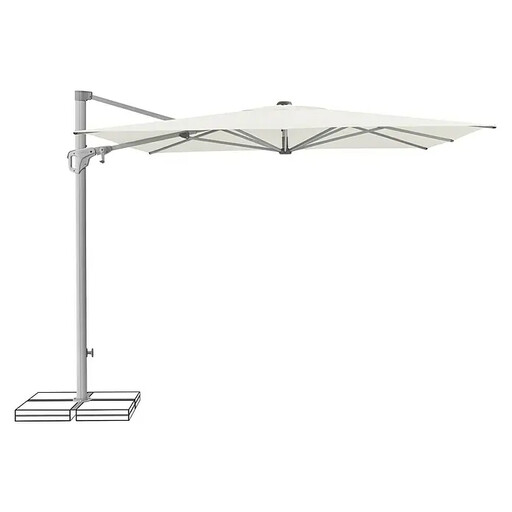
Why it's a match: This model from Glatz is aimed at users who view a parasol as a long-term investment. It combines high-quality materials with thoughtful functionality for demanding use in the garden or on the patio.
The powder-coated aluminium frame and the included cross base (designed for 8 slabs) ensure high stability. According to the manufacturer, the polyester canopy (180 g/m?) offers over 98% UV protection and a very good lightfastness rating (level 6), which counteracts fading. The smooth crank and 360° rotation function are designed for durability.
The combination of a 360° rotation and a 4-position tilt offers maximum flexibility for any sun position. Another advantage is its repairability: ribs, the canopy, and moving parts can be replaced if necessary, extending its service life.
We have compiled a complete, up-to-date list of products that fully meet these strict selection criteria and relevant safety regulations.
For a square cantilever parasol measuring 250x250 cm, a minimum base weight of 120 kg is generally recommended to ensure stability even in light winds. Bases designed to be weighted with concrete or granite slabs (e.g., 40x40 cm) are a common and flexible solution. Always follow the manufacturer's specific recommendations.
Most manufacturers advise against machine washing, as it can damage the water-repellent coating and UV protection. Spot cleaning with a soft brush and a mild soap solution is typically recommended. Allow the canopy to air-dry completely before closing the parasol.
Neither shape is inherently better; the choice depends on the area you need to shade. A 250x250 cantilever parasol is excellent for shading square or rectangular areas like dining tables or lounge sets. It often uses the space more efficiently than a round model with a comparable diameter. For round seating areas or as a standalone shade provider, a round model can be more aesthetically pleasing.