If several people want to make cappuccinos with minimal effort, a bean-to-cup machine with a cappuccino function is an obvious choice – although the milk system still needs cleaning after use. If space is limited or you’d prefer to make espresso and froth the milk yourself, consider a slim portafilter machine or a capsule machine with a milk function. Bear in mind that these involve more steps or require compatible capsules. You can add cinnamon to your finished drink; it’s not a proven factor to consider when choosing a machine.
Which type of machine is right for you?
For cappuccino lovers short on time
If several people want to make cappuccinos without frothing milk by hand, a bean-to-cup machine with a cappuccino function could be a good fit. Philips lists this feature for the EP3347/90, although cleaning the milk system after use is still part of the routine.
For teams with a clear cleaning routine
If you share a machine, make sure you have a set routine for cleaning all the parts that come into contact with milk. Philips recommends cleaning the LatteGo system after every use, while the consumer advice centre includes clean kitchen utensils and surfaces as part of good kitchen hygiene.
For espresso fans with limited worktop space
If you want to make espresso and prepare the milk yourself, you could consider a slim portafilter machine. Remember to allow space for the full process and any accessories you’ll need. De’Longhi Germany lists the Dedica Style EC685.M EX:4 as 15 cm wide.
What should you look for when buying?
In a shared kitchen, it’s not just the cappuccino function that matters. You’ll also need to consider cleaning, space for the preparation process and consumables.
Bean-to-cup machine with cappuccino function
A good fit if: several people want to make cappuccinos with as few steps as possible.
The trade-off: the milk system needs cleaning after use, and you’ll need enough space and easy access to its parts.
Portafilter machine with steam wand
A good fit if: you want to make espresso and froth the milk yourself, with control over each step.
The trade-off: making the coffee, frothing the milk and cleaning the machine all involve more hands-on work. You may also need to allow space for a separate grinder.
Capsule machine with milk function
A good fit if: individual users prefer to make cappuccinos one serving at a time.
The trade-off: compatible capsules are an ongoing consumable. In a 2025 price check by consumer advice centres at eight shops in Baden-Württemberg, ground coffee had a significantly lower unit price than capsule coffee.
| What matters when buying |
What to check |
Who is it important to? |
| Milk system and cleaning |
Can the milk container or frother be removed? What cleaning does the manual recommend after each use? |
If several people use the machine, I want to know whether cleaning the milk system will fit into our routine. Around 29% of consumers pay particular attention to milk-system cleaning. |
| Ease of use |
Can this specific model make cappuccino with milk, or does it only make espresso? |
If different people will be making cappuccinos, I want the steps to be simple and easy to follow. Around 23% of consumers prioritise ease of use. |
| Space on the worktop |
Check the machine’s dimensions and measure the space needed for a cup, filling and cleaning. |
If you share the worktop with other kitchen appliances, the machine and room to use it need to fit. Around 18% of consumers pay particular attention to the available worktop space. |
| Ongoing costs |
Check the type of coffee and any consumables. For capsules, factor in the compatible system and how much you expect to use. |
If several people will be buying consumables, I want to consider ongoing costs separately from the price of the machine. Around 18% of consumers pay particular attention to running costs. |
| Control over espresso and milk froth |
Check whether the steam wand is manual or automatic, and what accessories you’ll need to make coffee the way you want. |
If I want to adjust the settings myself, I’m more willing to put in a few extra steps. Around 12% of consumers prioritise having control over the process. |
Common misconceptions
-
“Cappuccino at the touch of a button” doesn’t mean no milk-system cleaning
Even an easy-to-access milk system needs cleaning after use. Philips recommends rinsing LatteGo after every use or washing its two parts in the dishwasher.
Before buying, check the cleaning and descaling instructions for the specific model, and agree who’ll take care of them in your shared kitchen.
-
Comparing only the machine’s width
The stated width doesn’t include space for accessories or room to fill the machine, froth milk and clean it.
Measure the space for the machine separately from the space you’ll need for the full preparation process.
-
Judging capsule convenience by the price of the machine alone
With a capsule machine, compatible capsules are an additional ongoing cost. A 2025 price check by consumer advice centres at eight shops in Baden-Württemberg found that ground coffee had a significantly lower unit price than capsule coffee.
Before estimating ongoing costs, compare how much you expect to use with current prices for the relevant type of coffee.
A guide to relevant brands
Philips
The EP3347/90 is a bean-to-cup machine with one-touch cappuccino preparation and a LatteGo milk system.
- Philips describes LatteGo on this model as a two-part milk system with no tubing.
- Philips recommends rinsing LatteGo after every use or washing its two parts in the dishwasher.
De’Longhi
The Dedica Style EC685.M EX:4 is a slim manual portafilter machine with a cappuccino system.
- De’Longhi Germany lists this model as 15 cm wide and says it has an adjustable manual milk frother.
- Preparing milk doesn’t involve the same steps as using the cappuccino button on a bean-to-cup machine.
Nespresso
The ORIGINAL Lattissima One Porcelain White combines single-serve capsule coffee with a cappuccino recipe.
- Nespresso says the removable milk container is dishwasher-safe.
- The machine uses compatible capsules, which are an ongoing consumable. In a 2025 price check at eight shops in Baden-Württemberg, consumer advice centres found that ground coffee had a lower unit price than capsule coffee.
Sage
The Bambino Plus SES500BSS4EEU1 is a portafilter machine with adjustable automatic milk texturing.
- Sage lists three settings each for milk temperature and texture on this model, as well as the option to texture milk manually.
- The manufacturer’s information describes the available settings; it isn’t an independent assessment of the milk froth.
Bosch
The VeroCafe TPR41503 is a bean-to-cup machine with a cappuccino function.
- Bosch lists a flexible Cappuccinatore and a 1,8 l water tank for this model.
- Bosch gives the machine’s dimensions as 378 × 272 × 472 mm. Whether it fits on your worktop depends on the space available and how easily you can access the machine.
Joybuy products for cappuccino
The Joybuy range includes cappuccino machines with different ways of making coffee, including a bean-to-cup machine, portafilter machines and a multi-format machine.
 No image available
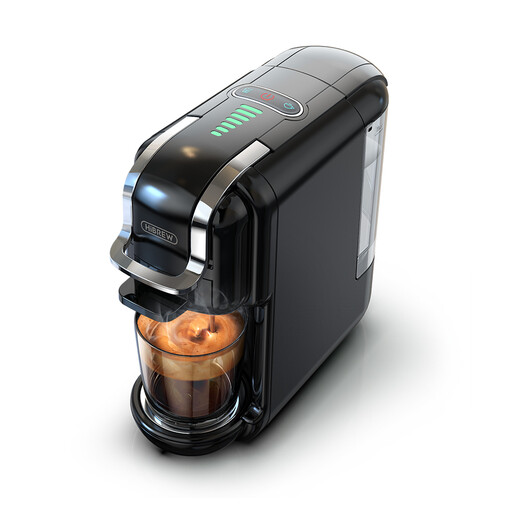
HiBREW H2B 5-in-1 coffee machine, hot/cold, black
Could be a good fit if you want to use different coffee formats in your shared kitchen.
The product name describes a 5-in-1 machine with hot and cold functions and cappuccino preparation.
View at Joybuy
 No image available
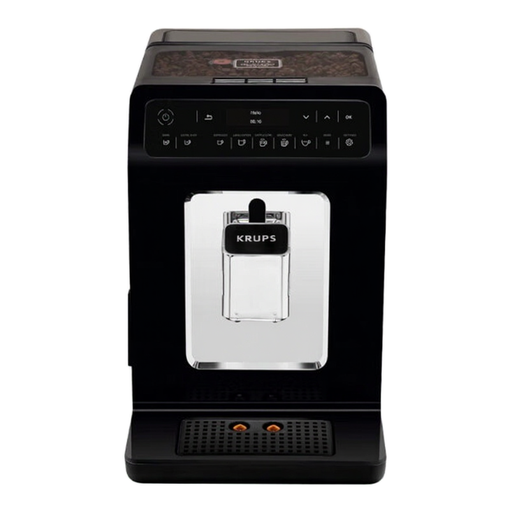
KRUPS Evidence EA8908 bean-to-cup coffee machine with one-touch cappuccino
Could suit a shared kitchen if several people want to make cappuccinos with just a few steps.
The product name lists eleven coffee specialities. The product description warns against touching the automatic steam nozzle during or shortly after the rinsing cycle.
View at Joybuy
 No image available
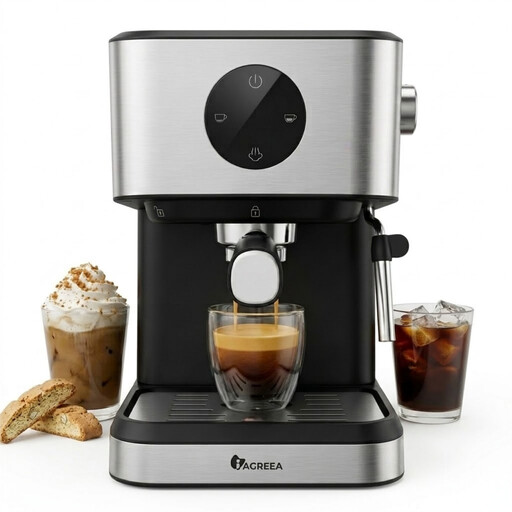
IAGREEA espresso machine with milk frother, 20 bar, stainless steel
Better suited to people who want to froth milk themselves with a manual steam wand and are happy to do a few extra steps.
The product name lists 20 bar, a 50 Oz water tank and a cup warmer. Let the machine cool down before cleaning it; don’t remove the portafilter while it’s brewing.
View at Joybuy
 No image available
IAGREEA espresso machine with steam wand, 20 bar, 1.1-l water tank
Could suit people who want to make their own milk froth and are prepared to do a few extra steps.
The product name lists a removable 1.1-l water tank and options for single and double espresso servings.
View at Joybuy
 No image available
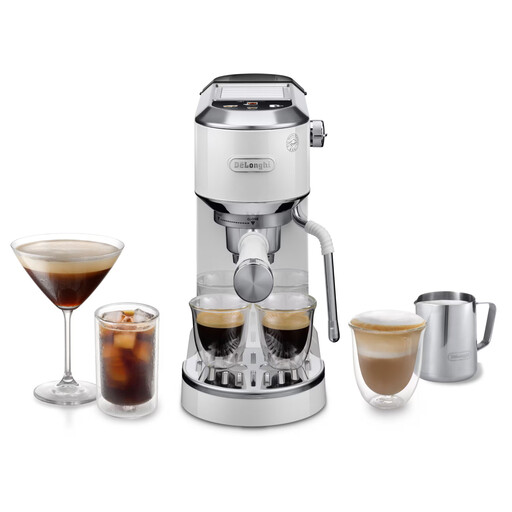
De’Longhi Dedica Duo EC890.WI portafilter machine, white
Suited to people who want to froth milk manually and are prepared to use ground coffee or allow space for a separate grinder.
The product name describes a white portafilter machine. The My LatteArt milk frother is manual, and there’s no built-in grinder.
View at Joybuy
Frequently asked questions
Do I need a machine with a cinnamon programme to make cinnamon cappuccino?
No. Espresso and frothed milk are the important things to consider when choosing a machine. You can add cinnamon to the finished drink for flavour; this doesn’t mean you should put spices in the bean hopper or milk system.
How can we organise cleaning if several people use the machine?
Agree on a routine to follow straight after making milk drinks, and follow the instructions for your specific model. Philips recommends rinsing LatteGo after every use or washing its two parts in the dishwasher. The consumer advice centre includes clean kitchen utensils and surfaces as part of good kitchen hygiene.
Are the ongoing costs of a capsule machine automatically lower?
No. Compatible capsules are an additional consumable to factor in on top of the machine. In a 2025 price check by consumer advice centres at eight shops in Baden-Württemberg, ground coffee had a lower unit price than capsule coffee. To make your own decision, compare your expected usage and current prices separately.
What does the CE mark mean on an electric espresso machine?
Where relevant EU rules require a CE mark, the manufacturer uses it to declare that the product complies with the applicable requirements. It isn’t an independent quality award. The European Commission explains that the mark is only required on products covered by harmonised EU rules that expressly require it. Germany’s Federal Network Agency also lists manufacturer details and German-language instructions with the necessary warnings as points to check.
Who should I contact if something is faulty after purchase?
Your statutory rights for faulty goods are against the seller; a voluntary guarantee is separate. The consumer advice centre explains this distinction for purchases in Germany too.


