For a single cappuccino, a bean-to-cup machine with a dedicated cappuccino programme is a good choice if you want to keep the number of steps to a minimum. An espresso machine is better suited to you if you’d like more control over making your espresso. A capsule machine with an integrated milk system is another option if you want to make individual portions without grinding and measuring coffee. Whichever type you choose, remember to factor in the cleaning routine for its particular milk system: Philips recommends rinsing LatteGo after every use or cleaning it in the dishwasher.
Which machine is right for you?
Cappuccino at the touch of a button
If you regularly make a single serving and want to keep manual adjustments to a minimum, a bean-to-cup machine with a cappuccino programme could be right for you. You’ll still need to clean the milk system as part of your daily routine; Philips recommends rinsing LatteGo after every use.
Make your own espresso
If you’d like more control over the dose and preparation, an espresso machine could be a good fit. You’ll have more hands-on steps, and depending on the model, you can either froth the milk manually or let the machine texture it automatically. Sage says the Bambino Plus has a 54 mm portafilter and no integrated grinder.
Cappuccino with limited counter space
If you want to save space in a small kitchen, compare not just the width but also the depth and the room needed to operate the machine. De’Longhi lists the Dedica Style EC685.M EX:4 as 15 cm wide, while Melitta gives the Solo & Milk a width of 20 cm.
What should you look for when buying?
Bean-to-cup machine with an automatic milk system
A good fit if: you regularly want a bean-to-cup cappuccino with as few preparation steps as possible. The Philips EP3347/90 has a cappuccino programme and an automatic LatteGo milk system.
Bear in mind: The milk system and other parts of the machine need regular care. Philips recommends rinsing LatteGo after every use or cleaning it in the dishwasher.
Espresso machine with a steam wand
A good fit if: you’d like more control over your espresso and milk foam. The De’Longhi Dedica Style froths milk manually; according to Sage, the Bambino Plus offers automatic milk texturing.
Bear in mind: Measuring out the coffee and locking the portafilter into place are still part of the process. According to the manufacturer, the Sage Bambino Plus has no integrated grinder.
Capsule machine with a milk system
A good fit if: you want to make a single serving without grinding and measuring coffee. Nespresso says the Lattissima One can make a cappuccino at the touch of a button.
Bear in mind: You’ll need to use compatible capsules. Check how to clean the milk container and any other parts that come into contact with milk.
Slim bean-to-cup machine with separate milk frothing
A good fit if: you want a slim machine that uses coffee beans and are happy to froth the milk yourself. Melitta lists the Solo & Milk as 20 cm wide and fitted with a Pannarello frothing attachment.
Bear in mind: Making a cappuccino takes several steps rather than just pressing a button. Check the depth and operating space as well as the width.
| Buying criterion |
What to look for |
Who is it important for? |
| Ease of preparation |
Check whether the exact model makes cappuccino at the touch of a button and what steps are needed afterwards to clean the milk system. |
If you want to make a serving every day with as little effort as possible, the process matters. Ease of use is the top priority for around 29% of consumers. |
| Control over espresso and milk foam |
Check the type of milk frother, the filter baskets, and whether a grinder is built in or needs to be bought separately. |
If you want to measure your own espresso dose and prepare the milk your way, think about which steps you’re happy to take on. Around 23% of consumers say control over preparation is their top priority. |
| Counter space |
Measure the width and depth, and allow room to access the water tank, bean hopper, portafilter or milk jug. |
If counter space is limited, you’ll need to make sure both the machine and its accessories are within easy reach. Around 18% of consumers say counter space is their top priority. |
| Ongoing consumption |
Check which coffee format the machine uses and which consumables or care products you’ll need for your intended use. |
If you want to consider the ongoing cost of coffee and any care products required for your model, the type of consumables matters. Around 18% of consumers focus on this. |
| Cleaning after making a milk drink |
Check the cleaning steps needed after each serving and how easy it is to access the brew group, steam wand or milk container. |
If you mainly want to make sure that parts which come into contact with milk are easy to clean after making a cappuccino, read the care instructions carefully. Around 12% of consumers say easy cleaning is their top priority. |
Common buying misconceptions
-
Assuming “cappuccino available” means “cappuccino at the touch of a button”
According to the manufacturer, the Melitta Solo & Milk prepares the coffee and milk foam in separate steps. A dedicated cappuccino recipe at the touch of a button works differently.
Check the exact model to see which steps are needed to make the espresso and milk foam, and combine them into a drink.
-
Assuming an automatic milk system cleans itself
Making drinks automatically doesn’t remove the need to clean parts that come into contact with milk. Philips recommends rinsing LatteGo after every use or cleaning its parts in the dishwasher.
Read the cleaning instructions for the specific model before you buy, and check which parts you’ll need to remove after making a drink.
-
Measuring only the machine’s width
Depth and operating space matter too: you’ll need to be able to reach the tank, portafilter or milk jug where you plan to place the machine.
Compare all the machine’s measurements and consider whether you’ll be able to carry out each step comfortably in that space.
Brands to consider
Philips
The 3300 LatteGo EP3347/90 bean-to-cup machine is an option for making cappuccino at the touch of a button with an automatic milk system.
- Philips lists customisable settings and a two-part LatteGo system with no tubing.
- Philips says LatteGo must be rinsed after every use or cleaned in the dishwasher. These are the manufacturer’s claims, not an independent performance comparison.
Sage
The Bambino Plus BES500 combines an espresso machine with automatic milk texturing.
- Sage lists a 54 mm portafilter and an automatic steam wand.
- According to Sage, the Bambino Plus has no integrated grinder, so you’ll need to consider how you’ll get the right ground coffee.
De’Longhi
The Dedica Style EC685.M EX:4 is a slim espresso machine with a manually operated cappuccino system.
- De’Longhi lists a width of 15 cm.
- Milk is frothed manually. De’Longhi also notes that how often you need to descale depends on your water hardness.
Melitta
The Solo & Milk is a slim bean-to-cup machine that prepares milk foam separately.
- Melitta lists a width of 20 cm and a Pannarello frothing attachment for preparing milk.
- According to the manufacturer, coffee and milk foam are prepared in separate steps. This model shouldn’t be confused with a bean-to-cup machine that makes cappuccino at the touch of a button.
Nespresso
The Lattissima One is a capsule machine option with an integrated milk system for making individual cappuccinos.
- Nespresso lists a cappuccino recipe at the touch of a button and a removable milk container.
- You’ll need to use a compatible capsule system, so check which capsules work with the machine.
Joybuy product selection
The Joybuy products below include espresso machines with manual or automatic milk preparation, as well as a bean-to-cup machine.
 No image available
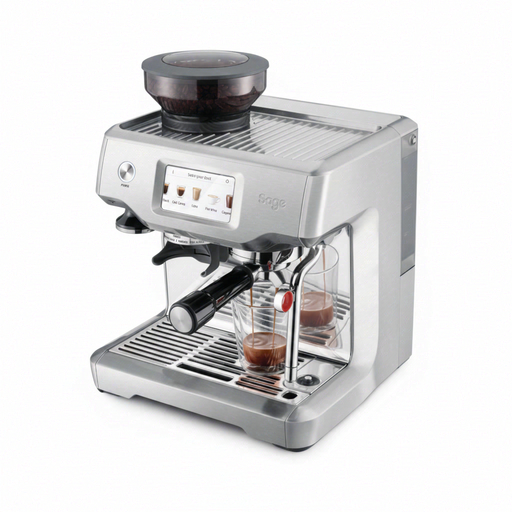
Sage Barista Touch with integrated conical burr grinder and automatic Micro-Foam
If you want to make espresso with a portafilter and automate milk texturing, this model brings both steps together. Measuring out the coffee and tamping are still part of the process.
The product title lists an integrated conical burr grinder, automatic Micro-Foam preparation and a touchscreen display.
Joybuy
 No image available
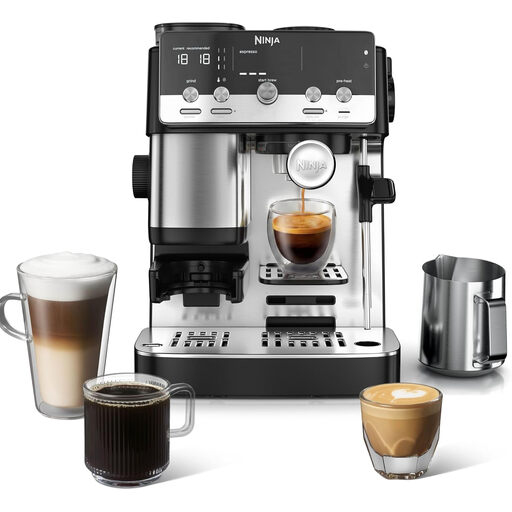
Ninja Luxe Café Mini 2-in-1 espresso and filter coffee machine ES301EU
If you want to make both espresso and filter coffee, the product title lists both functions. Milk is frothed manually.
The title lists an integrated grinder and a manual milk frother.
Joybuy
 No image available
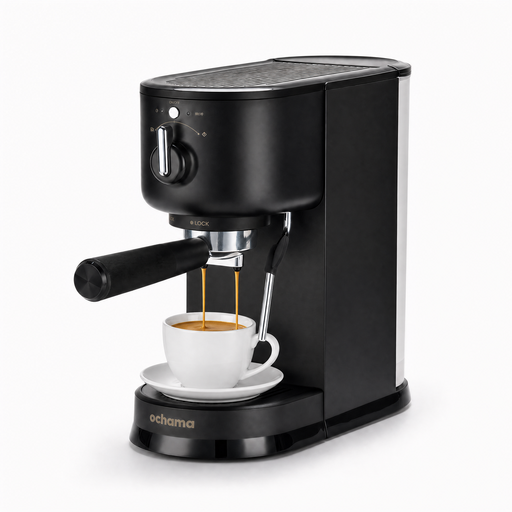
ochama Semi-Automatic Espresso Machine with Steam Milk Frother
If you want to make espresso with a portafilter and froth the milk yourself, this semi-automatic model offers both steps.
The product title lists 15Bar and a 1.25L water tank. You’ll need to fill and tamp the ground coffee and froth the milk manually.
Joybuy
 No image available
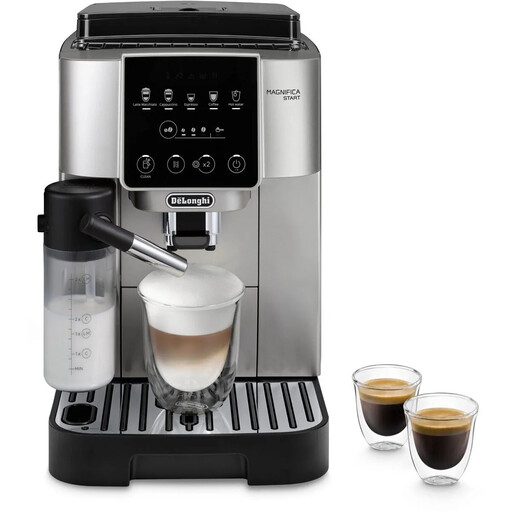
De’Longhi ECAM 220.80.SB Magnifica Start bean-to-cup coffee machine
If you want a bean-to-cup cappuccino with automatic milk preparation, this model is described as a bean-to-cup machine with a cappuccino function. Bear in mind that the milk system and removable parts need cleaning.
The product title lists a LatteCrema Hot Milk System, a 13-setting conical burr grinder, a 1,8-l water tank and a 250-g bean hopper.
Joybuy
 No image available
IAGREEA Espresso Machine with Manual Steam Wand
If you want to froth the milk for your cappuccino yourself, this espresso machine has a manual steam wand.
The product title lists 20 Bar and a 50 Oz water tank. Milk is prepared manually.
Joybuy
Frequently asked questions
Can I make cappuccino with an espresso machine that doesn’t have a milk frother?
You’ll need a way to froth milk to make a cappuccino. Check whether the specific model has a steam wand or integrated milk system, or whether you’d like to use a separate appliance.
What should I clean after making a cappuccino?
Follow the instructions for your specific model. Philips recommends rinsing LatteGo under running water after every use or cleaning its two parts in the dishwasher. Philips also recommends additional regular care for the brew group and other parts. This is the manufacturer’s guidance and doesn’t automatically apply to other machines.
When should I descale an espresso machine?
It depends on the machine and your local water hardness. For the Dedica and Dedica Arte, De’Longhi recommends checking the water hardness and paying attention to the descaling indicator. Don’t assume the same process applies to other models without checking.
Who is responsible if a product develops a fault after purchase?
For consumer purchases in Germany, the retailer is responsible for the statutory warranty, not the manufacturer in the first instance. The Verbraucherzentrale says this generally covers a two-year period and distinguishes statutory rights from a voluntary guarantee.
What does the CE marking on an espresso machine mean?
The CE marking is the manufacturer’s declaration that a product meets the relevant EU requirements, where these apply to that product. The European Union explains that the marking is required for products covered by the relevant harmonised EU rules; it is not a quality mark awarded by a central EU body. Check the marking and information for the specific machine.


