Cappuccino with minimal effort
If you get your coffee and milk ready first, then want to do as little measuring or frothing as possible yourself, compare the cappuccino programme and cleaning routine for the specific model.


If you want to keep the preparation steps to a minimum once your coffee and milk are ready, a bean-to-cup machine could be a good fit – just check that cappuccino and the milk system are listed for the specific model. With an espresso machine, you make the espresso yourself; an automatic steam wand can only take care of some of the milk preparation. Whichever type you choose, storing the milk correctly and cleaning the machine after use are part of the routine.
If you get your coffee and milk ready first, then want to do as little measuring or frothing as possible yourself, compare the cappuccino programme and cleaning routine for the specific model.
If you want to control the extraction with an espresso machine, consider whether you’d like to froth the milk by hand or use an automatic steam wand.
If handling prepared milk is especially important to you, check how it should be stored until you’re ready to use it and which parts of the milk system need cleaning afterwards.
A good fit if: You want to make cappuccino with minimal hands-on espresso and milk preparation once the ingredients are ready.
Bear in mind: The milk system still needs looking after; also check how the milk is supplied to the machine.
A good fit if: You want to make the espresso yourself but leave some of the milk texturing to the machine.
Bear in mind: Dosing, tamping and cleaning are still part of making espresso.
A good fit if: You want to make your own espresso and milk foam, and are happy to practise the necessary steps.
Bear in mind: Making espresso and frothing milk are both hands-on tasks; with the Gaggia Classic E24, check that the electrical version is suitable.
| What matters to you | What to check before buying | Who is it important to? |
|---|---|---|
| Minimal effort | Check whether cappuccino is listed as a drink for the specific model and what steps are needed before and after making it. | If I’ve got the coffee and milk ready and want to do as little as possible myself, I pay particular attention to the process. Around 33% of consumers put ease of use first. |
| Control over espresso and milk foam | Check whether the steam wand is manual or automatic, and how to prepare suitably ground coffee. | If I want to control the espresso myself, I consider which milk-preparation steps I’d like the machine to handle. Around 27% of consumers prioritise having control over their espresso and foam. |
| Milk and cleaning | Check how the type of milk you use should be stored, along with the cleaning instructions and removable parts of the specific milk system. The German Federal Centre for Nutrition recommends keeping fresh milk and opened UHT milk refrigerated. | If handling milk is especially important to me, I want to know in advance how it should be stored until use and how the parts that have been used should be cleaned. Around 27% of consumers prioritise milk hygiene and care. |
| Space and ongoing maintenance | Compare the machine’s dimensions and the space needed to operate it; also check whether you’ll need a grinder and what filter and descaling guidance applies to the specific model. | If I have limited worktop space or need to factor in ongoing maintenance, I check the dimensions and any additional equipment I’ll need in advance. Around 13% of consumers put space requirements and ongoing maintenance first. |
A drinks programme doesn’t remove the need to store perishable milk correctly or look after the milk components you’ve used.
Factor in milk storage and cleaning as part of the preparation process. The German Federal Centre for Nutrition distinguishes between unopened UHT milk and opened milk.
With the Sage Bambino Plus BES500, you still make the espresso yourself using the portafilter, even though the steam wand can be used automatically or manually.
Decide separately how much of the espresso-making and milk texturing you want to do yourself.
Depending on how you prepare your coffee, you may also need a grinder; dosing, handling the portafilter and cleaning afterwards all take time too.
Maintenance depends on the machine and the conditions it’s used in. De’Longhi notes that how often Dedica and Dedica Arte machines need descaling depends, among other things, on the local water hardness.
Check the guidance for the exact model and factor in any filters and care products you’ll need.
Replacing filters and using suitable care products can mean extra work, depending on the machine and how often you use it.
The LatteGo bean-to-cup range includes specific models such as the EP3347/90, which lists a cappuccino programme.
The range includes Magnifica Evo bean-to-cup machines and manual Dedica espresso machines.
The Bambino Plus BES500 is an espresso machine with a steam wand that can be used automatically or manually.
The EQ300 TF303E07 is a bean-to-cup machine with milkPerfect and cappuccino at the touch of a button.
The Classic E24 is designed for people who want to make espresso manually and froth their own milk.
The Joybuy models below are bean-to-cup machines whose product descriptions list cappuccino and an integrated milk system. They could be a good fit if you want to make a drink from ingredients you’ve prepared in advance, with minimal hands-on espresso and milk preparation.
 No image available
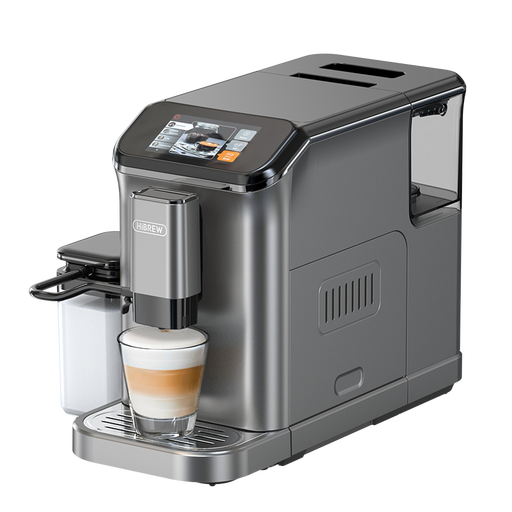
Its fully automatic design and cappuccino milk system suit a routine with minimal hands-on preparation.
The product description lists six drink options and a cleaning system.
Built-in grinder with 15 grind settings; coffee and milk quantities can be adjusted.
Operated using a touchscreen display.
 No image available
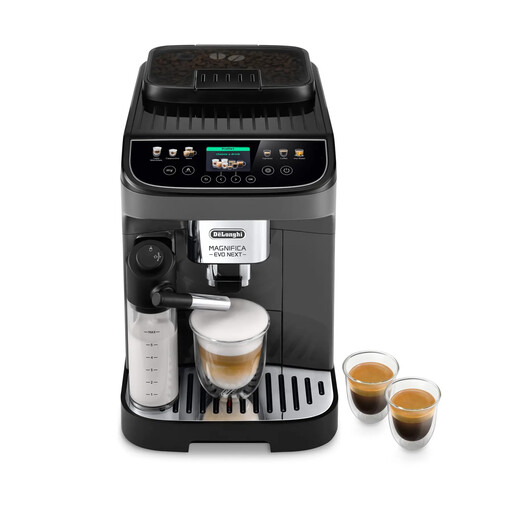
The product description lists cappuccino as a one-touch option with a LatteCrema milk system.
The conical burr grinder offers 13 grind settings.
The description lists a removable milk container and automatic cleaning of the milk system after use.
Some parts are described as dishwasher-safe.
 No image available
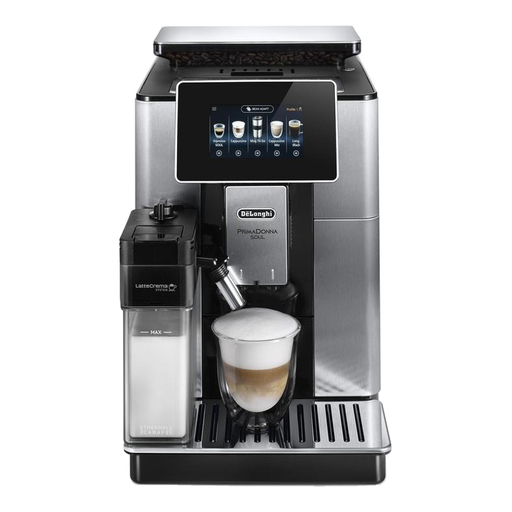
The LatteCrema Hot milk system and cappuccino option make it well suited to largely automated preparation.
The grinder has 13 settings; the water tank holds 1.9 l.
The product description lists ten pre-programmed drinks, customisable drink settings and profiles you can save.
The brew unit is removable; the milk container has an automatic cleaning function.
 No image available
The product description lists cappuccino, a LatteCrema milk system and an insulated, double-walled milk jug.
The water tank holds 2.2 l.
It lists 21 pre-set coffee and milk drinks, as well as automatic cleaning of the milk system.
The brewing unit is removable.
 No image available
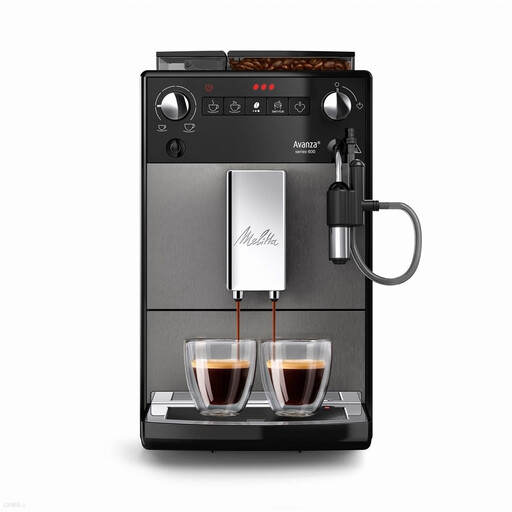
The product description lists cappuccino, with automatic milk frothing and dispensing.
The machine is 20 cm wide.
The product description says the milk tube should be removed and rinsed immediately after use.
Features include an adjustable grinder, automatic cleaning programmes and a removable brew unit.
Yes, but fresh milk and opened UHT milk should be kept in the fridge until you’re ready to use them. The German Federal Centre for Nutrition distinguishes these from unopened UHT milk and sterilised milk, which don’t need to be kept refrigerated at all times. Only pour the amount you need into the cup, jug or milk system, following the machine’s instructions.
It depends on the machine. According to the product information, the Siemens EQ300 TF303E07 has a bean container and grinder. With an espresso machine, you’ll need to have suitably ground coffee ready or check whether a separate grinder is needed for your routine: whole beans aren’t ground coffee.
Follow the instructions for the exact model. Siemens says the milk system on EQ300 machines must be cleaned after every use. Philips describes the LatteGo system on the EP3347/90 as having two parts and no hose; the parts you use should still be cleaned after making a drink, in line with the instructions.
Filters and descaling products can add to the ongoing maintenance. De’Longhi notes that how often Dedica machines need descaling depends, among other things, on the local water hardness. Your statutory rights against the seller in the event of a defect are a separate matter: under the conditions set out in § 437 BGB, these include, in particular, the right to have the fault remedied. For ordinary movable goods, the limitation period under § 438 BGB is generally two years from delivery. A voluntary manufacturer’s guarantee is separate from these rights.
No. For a mains-powered machine covered by the relevant EU legislation, the applicable conformity requirements are what matter; the European Commission states that CE marking is not an official safety approval. For the specific machine, also check the product identification, manufacturer details and German-language instructions – checks cited by the German Federal Network Agency for its market surveillance.