
Lieferung heute & morgen

Qualitätsgarantie

Willkommens-Angebote freischalten: KOSTENLOSE Lieferung | Bis zu 80 % RABATT | Kostenlose 30-Tage-JoyPlus-Testphase
App herunterladen
A capsule coffee machine promises quick, hassle-free coffee with consistent quality. However, the market is flooded with devices whose advertised features prove impractical or costly in daily use. Before you make a decision, it's crucial to understand the common pitfalls that often only become apparent after the purchase. This guide will help you separate the wheat from the chaff and find a model that truly fits your needs.
Many devices lure customers with attractive initial prices or impressive technical specs. Yet, their true costs and weaknesses often emerge during daily use.
coffee machine with a milk frother is often marketed as a convenient "one-touch" solution. What looks simple in the brochure frequently turns out to be a complex system of tubes and containers that must be disassembled and thoroughly cleaned daily. If cleaning is neglected, not only does the taste suffer, but so does hygiene.espresso machine. However, a pressure of around 9 bars at the brew head is already sufficient for extracting a good espresso. More important parameters include a consistent brewing temperature and the quality of the ground coffee in the capsule. A sole focus on pump pressure distracts from more critical features.To avoid buyer's remorse, you should focus on three fundamental aspects that determine the utility and running costs of your future coffee machine.
Choosing the system is the most fundamental decision. There are clear differences here:
Nespresso machine or Dolce Gusto machine is easy to use and delivers reliable results. The downside is the higher capsule prices and limited variety. However, third-party capsules are now available for some systems like Nespresso Original.coffee machine for capsules and powder offers maximum flexibility. Such devices are often equipped with adapters that allow the use of different capsule types (e.g., Nespresso and Dolce Gusto) as well as ground coffee powder. This frees you from being tied to one manufacturer and allows you to choose capsules based on price, taste, or availability.pad machine is an alternative. It operates at a lower pressure and produces a coffee more akin to a café crème than an espresso. The pads are often cheaper and biodegradable, making them a cost-effective and more eco-conscious option.For lovers of cappuccino or latte macchiato, the method of milk preparation is crucial.
small coffee machine without an integrated milk function is cheaper to buy and much easier to clean. A separate milk frother offers more flexibility, as it can be used for other purposes, but it requires an extra step and more space.The practical aspects of daily use are often overlooked. Pay attention to the device's dimensions, especially if your kitchen has limited space. The size of the water tank (water tank capacity) and the used capsule container determines how often you need to refill or empty them. An easily accessible water tank and dishwasher-safe parts make handling and maintenance much easier.
Here are some recommendations tailored to different user profiles that take the aforementioned pitfalls into account.
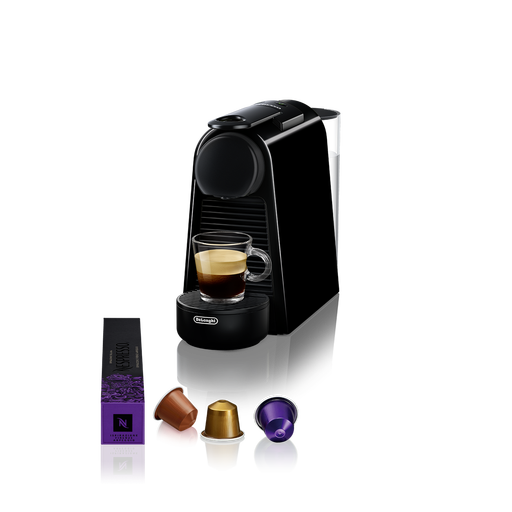
Why it's a great fit: Ideal for those who appreciate pure espresso or lungo and need an extremely compact machine for a small kitchen or office. It focuses on the essentials: fast, high-quality coffee.
This model avoids the complex cleaning required by milk systems. Although it's tied to the Nespresso system, a growing number of third-party capsules are available to lower costs.
Ultra-compact design: Fits into the smallest of spaces. Fast 25-second heat-up time for instant coffee enjoyment.
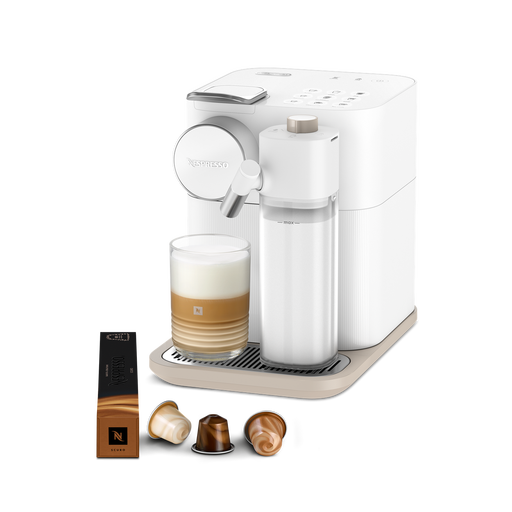
Why it's a great fit: Perfect for anyone who wants to enjoy cappuccino, latte macchiato, and other milk-based recipes at the touch of a button, without any of the prep work.
The device addresses the high cleaning effort with a smart design: its rinsing system cleans itself semi-automatically after each preparation, and the milk container parts are dishwasher-safe.
One-touch milk system: Prepares a variety of milk and coffee specialities fully automatically. Simple cleaning system for straightforward maintenance.
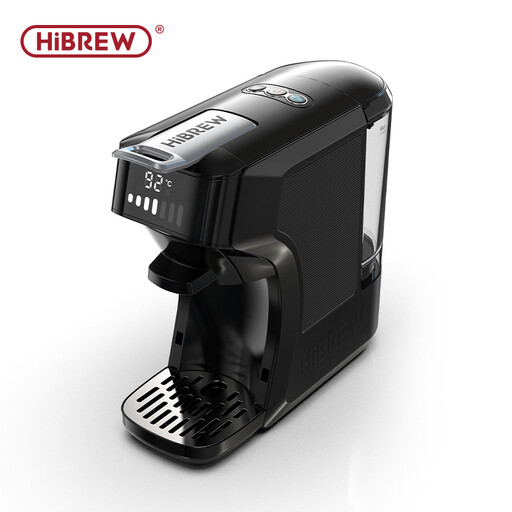
Why it's a great fit: For anyone who doesn't want to be locked into a single capsule system. This device offers the freedom to use different capsule brands and even your own coffee grounds.
This model is the direct answer to the system lock-in trap. By being compatible with various capsule formats and ground coffee, you have full control over running costs and flavour variety.
6-in-1 compatibility: Works with NS Original, DG, K-cup, ESE pods, and ground coffee. Compact all-in-one solution that saves counter space.
We've compiled a complete, up-to-date list of products that fully meet these strict selection criteria and UK/EU safety regulations.
The cost per cup varies greatly depending on the system. Original capsules from manufacturers like Nespresso or Dolce Gusto often cost between €0.40 and €0.70. Third-party capsules for compatible systems are usually cheaper, around €0.25 to €0.40. Multi-system machines that also process ground coffee offer the greatest savings potential, as the cost per cup is lowest here.
The frequency depends on the water hardness in your area and your usage. As a general rule, descale every three to six months. Many modern devices have an automatic descaling indicator. Regular descaling is crucial for the machine's lifespan, as it maintains heating performance, pump pressure, and hygiene.
The environmental impact of coffee capsules is a widely debated topic. Many manufacturers are responding to these concerns. For example, Nespresso capsules are made of aluminium, which is infinitely recyclable and can be disposed of in recycling bins or at special collection points. Coffee pads are often made of filter paper and are compostable. Multi-system machines that allow the use of reusable capsules or loose powder represent another environmentally friendly alternative.