
Lieferung heute & morgen

Qualitätsgarantie

Willkommens-Angebote freischalten: KOSTENLOSE Lieferung | Bis zu 80 % RABATT | Kostenlose 30-Tage-JoyPlus-Testphase
App herunterladen
A capsule coffee machine is designed to prepare coffee quickly and easily. In practice, however, disappointing purchases are often caused not by the price, but by overlooked details: the capsule system does not match your preferred coffee, the water tank is too small or the milk system creates more cleaning work than expected.
This buying guide explains what households, single-person households, couples, office workers and design-conscious shoppers should look for in a capsule coffee machine.
“Capsule coffee machine” is not a single, standardised category. A Nespresso machine for Original capsules will not automatically work with Dolce Gusto capsules. A Dolce Gusto machine and a Senseo pod coffee machine also use different systems.
Before buying, you should establish:
Adapters can expand a machine’s functionality, but they are not suitable for every model. The manufacturer’s compatibility information is therefore decisive.
Figures such as 15 bar or 19 bar may seem conclusive at first glance. Pump pressure alone, however, does not determine how the coffee tastes in everyday use. The capsule system, water volume, temperature control and brewing parameters also play a role.
A 19-bar coffee machine may be suitable for espresso, but this figure should not be the only purchase criterion. With pod machines such as a Senseo, the stated pressure is significantly lower because the pods and preparation method work differently.
A capsule coffee machine with milk frother can prepare cappuccino or latte macchiato at the touch of a button. However, milk containers, tubes and frothing components must then be rinsed regularly and, depending on the model, dismantled.
If you only drink milky coffee occasionally, a separate milk frother is often the simpler option. For several milk-based drinks a day, an automatic milk system can save time.
Systems such as Nespresso Original are suitable for espresso and lungo. Dolce Gusto capsules also cover drinks such as cappuccino, cocoa, tea and cold varieties. Senseo pods are designed for cup portions similar to filter coffee.
Multi-system machines can support several formats as well as ground coffee. The exact list should still be checked: the HiBREW H4A, for example, is listed as supporting NS espresso capsules, DG espresso capsules and ground coffee. According to the product information, the H1B supports several pod types as well as coffee powder.
For one person, a tank with 0.6 to 0.7 litres may be sufficient. In a household with several people or in an office, 1.0 to 1.3 litres is more practical, as the tank needs refilling less often.
The footprint also matters. A compact coffee machine fits into small kitchens, but it still needs enough clearance for opening the capsule lever and removing the tank. Check the dimensions, cable length and height beneath wall units before buying.
Many models in the selection are ready for use after around 18 to 30 seconds. For office use, programmable buttons and automatic capsule ejection are useful. An automatic coffee machine with a milk function usually needs extra time and cleaning steps when preparing milk-based drinks.
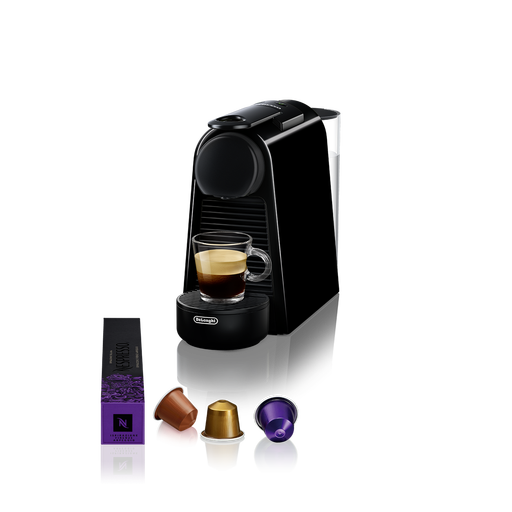
Why this product suits this profile: Its compact 11 × 20.5 × 32.5 cm design is ideal for small kitchens, single-person households and desks. Espresso and lungo are selected using two programmable buttons.
The product details specify the Nespresso Original system, the 0.6-litre tank and the automatic switch-off function. This allows you to check compatibility and space requirements in advance.
19-bar pump, heating time of around 25 seconds and Eco mode after a short period of inactivity.
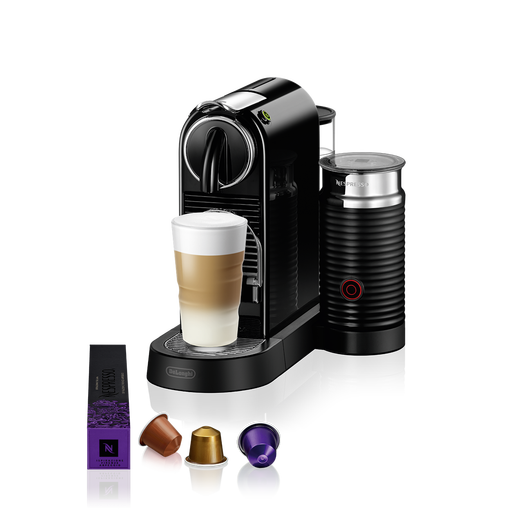
Why this product suits this profile: This model combines two programmable cup sizes with an Aeroccino milk frother. It is designed for households that want to prepare both espresso and milk-based drinks.
The Original capsule system is clearly stated. The separate Aeroccino avoids permanently installed milk tubes that require particular attention after every use.
1-litre water tank, 19-bar pump, automatic switch-off and heating time of approximately 25 seconds.
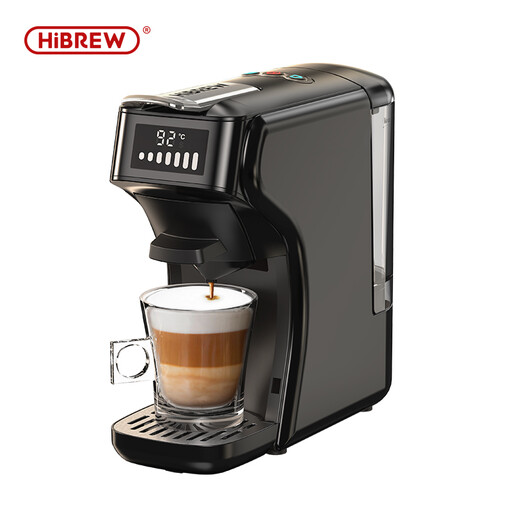
Why this product suits this profile: This machine is an interesting choice for users who want to switch between several capsule types, ESE pods and ground coffee. The 600 ml tank is suitable for smaller offices and households.
The 6-in-1 specification makes the system selection transparent. Before buying, you should still check whether your capsules actually belong to the formats listed.
According to the product details, 20-bar pump pressure, hot and cold modes, and several input formats.
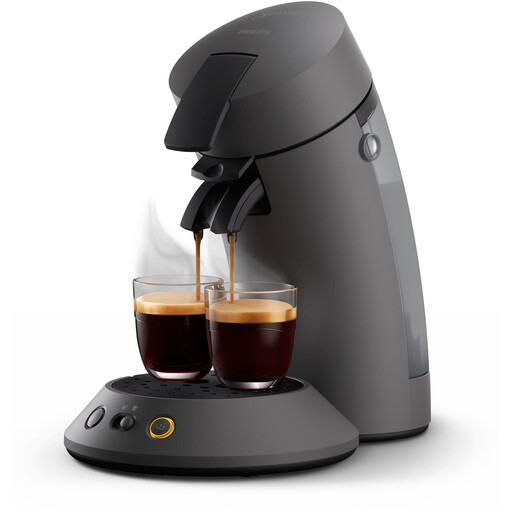
Why this product suits this profile: The machine brews one or two cups and uses Senseo coffee pods. It is suitable for households that prefer larger portions rather than traditional capsule espresso.
The pod format is clearly specified. Two outlets, a removable 0.7-litre tank and dishwasher-safe parts make everyday use easier.
According to the product data, 21 seconds for one cup, touchscreen, automatic switch-off and two intensity settings.
We have put together a complete, regularly updated list of products that fully meet these strict selection criteria and the safety regulations applicable in the EU.
The purchase price is only part of the overall calculation. You should also consider:
A machine with an automatic switch-off function can limit unnecessary standby operation. If you have hard tap water, descale the machine according to the instructions. Milk systems generally need cleaning after every milk-based drink.
Compact models such as the Nespresso Essenza Mini, Inissia or Pixie take up comparatively little space. Before buying, you should also check the depth, the clearance needed to open the lever and access to the water tank.
Its service life depends on how often it is used, water quality, descaling and proper operation. It is not possible to determine a reliable fixed service life from pump pressure or wattage alone. Regular cleaning and following the manufacturer’s instructions can help maintain reliable operation.
This depends on the capsule price, the number of cups and the system you choose. Pods can be economical for larger cup portions, while capsules are often designed for smaller espresso or speciality servings. Comparing the cost per cup is more informative than looking at the machine price alone.