For a two-PC setup on a small desk, an external USB capture card is an obvious place to start if your capture PC doesn’t have a suitable spare PCIe slot. Before you buy, check the HDMI signal path, the USB connection required and the space available for cables. Compare passthrough and recording formats separately, as they may have different limits. Also plan how you’ll get the audio you want from the source PC to the capture PC.
Who is a capture card for on a small desk?
Two-PC streamers short on space
If you’re bringing the source PC’s video into OBS, you’ll need room on your desk for the external card and the USB, HDMI and audio cables. The OBS Project describes capture cards as possible video capture sources; NZXT’s guide specifies a compatible USB 3.2 Gen 1 port for the Signal HD60.
Gamers with a demanding monitor
If you want to keep gaming on the source PC at a particular resolution and frame rate, or with HDR, check the monitor signal path as well as the recording format. For example, Elgato specifies passthrough up to 2160p60 and recording up to 2160p30 for the HD60 X.
Creators who value recording quality
If recording above Full HD matters to you, compare the formats supported by the specific model and check the software and operating system requirements. Elgato specifies 4K60 recording for the 4K S; AVerMedia makes certain high-resolution recording formats subject to specific software and operating system requirements.
What should you look for when buying?
First, work out how much room you have for the card and cables. Then check that the monitor format, recording format, USB connection and audio path will all work with your two-PC setup.
| Priority |
What to check before buying |
Who is this important to? |
| Space and connections |
Check the space available, the USB port on the capture PC and the HDMI cable route. |
If my desk is small, I want to fit the card and cables in without making the setup impractical. Around 36% of shoppers in this scenario care most about space and connections. |
| Monitor picture and frame rate |
Compare resolution, Hz, HDR and, where applicable, VRR separately for passthrough and recording. |
If I want to keep gaming on the source PC with the monitor picture I’m used to, the signal path needs to support it. Around 29% of shoppers prioritise monitor use and refresh rate when choosing. |
| Recording format |
Check the resolution and frame rate for recording, as well as any operating system and software limitations. |
If I’m planning to record at a higher resolution or frame rate, what matters to me is the format that actually reaches the capture PC. Around 21% of shoppers in this scenario put recording quality first. |
| Audio and software |
Check the source PC’s HDMI audio path and whether your recording software supports it. |
If I want the picture and audio I need to come through together in the stream, I want to plan the audio and software setup in advance. Around 14% of shoppers prioritise audio transmission and software compatibility. |
Which common buying mistakes should you avoid?
-
‘4K passthrough’ doesn’t automatically mean ‘4K recording’
A capture card may pass a 4K signal through to your monitor while recording at a lower format. NZXT points out that the Signal HD60 can pass through 4K, but can’t record in 4K. The stated passthrough and recording limits also differ for the Elgato HD60 X.
Check the input, HDMI output and recording format separately for the exact model.
If the recording format doesn’t meet your needs, you may need to replace the device later.
-
A USB-C plug doesn’t tell you what the host PC needs
What matters is the USB connection required by the specific capture PC. NZXT specifies a compatible USB 3.2 Gen 1 port for the Signal HD60; Elgato lists a built-in USB 3.0 connection in the system requirements for the HD60 X.
Check the model’s USB requirements against the ports on your capture PC, and make sure they’re compatible with the software you use.
Depending on the host’s available connections, you may need a different port or model.
-
The video cable alone won’t sort out the audio
Seeing a picture doesn’t automatically mean that the game, system or microphone audio you want will come through in your stream. In a two-PC setup described by Elgato, audio is routed to the capture PC using a configured HDMI audio path.
Before you buy, decide which sounds you want to record and how the source PC will output them.
Getting the audio output working may require extra setup.
Which brands are worth considering?
Elgato
Elgato offers external capture cards for different recording needs, including the HD60 X and 4K S.
- Elgato says the 4K S records at 4K60. For the HD60 X, the manufacturer specifies passthrough up to 2160p60 and recording up to 2160p30.
- According to Elgato, HDR recording with the HD60 X is currently limited to Windows. These formats are manufacturer specifications, not independent performance test results.
AVerMedia
According to AVerMedia, the Live Gamer ULTRA 2.1 GC553G2 is also designed for PC game recording with an HDMI 2.1 signal path.
- AVerMedia specifies high-resolution passthrough formats for the GC553G2.
- According to the manufacturer, recording at up to 4K144 requires Streaming Center on Windows and MJPEG. AVerMedia specifies up to 4K60 for OBS on Mac; the 4K144 figure doesn’t apply to OBS generally.
NZXT
The Signal HD60 is an external option for two-PC setups that don’t need 4K recording.
- The manual covers USB and HDMI connections, as well as an optional monitor output.
- According to NZXT, the Signal HD60 can accept and pass through a 4K signal, but can’t output 4K to the capture PC.
Magewell
The USB Capture HDMI 4K Plus is an external HDMI option with a USB 3.0 connection and HDMI loop-through.
- Magewell documents features including HDMI loop-through and support for various operating systems.
- According to Magewell, output to the host is up to 3840 × 2160 at 30 frames/s. The actual frame rate may depend on the host and resolution.
Joybuy products for external HDMI capture
The Joybuy picks below are external USB capture cards for HDMI recording, with passthrough specified. Compare the input, passthrough and recording format separately, and check that the USB connection and audio path will work with your two-PC setup.
 No image available
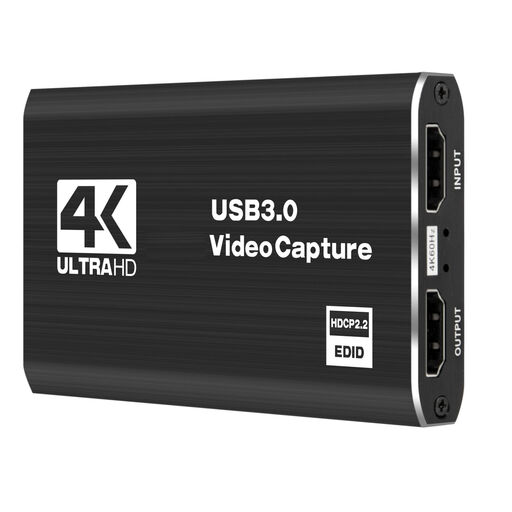
USB 3.0 capture card with five ports
For a setup where an HDMI source is captured on a USB-connected capture PC, with passthrough sending the picture to a monitor.
Specifications list a 4K60 input and 4K passthrough, with recording at 1080p60.
Joybuy
 No image available
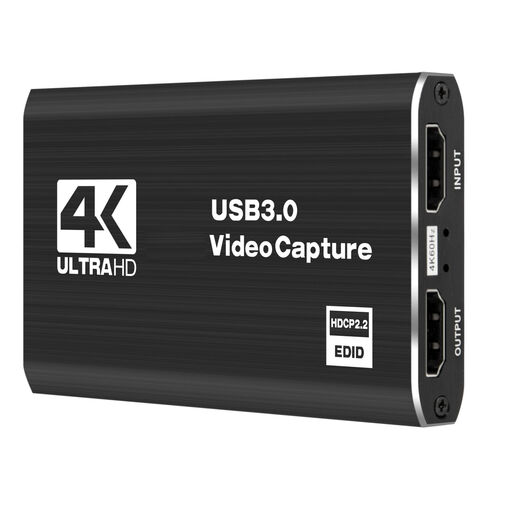
4K video capture card with five ports
This external USB capture card is described as suitable for HDMI recording on a computer, with a loop-through connection for a monitor.
Specifications list a 4K60 input and loop-through, with recording at 1080p60.
Joybuy
 No image available
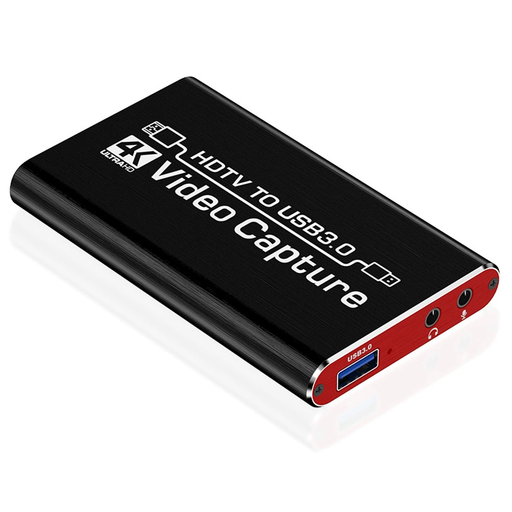
HDMI capture card with USB 3.0
For capturing an HDMI source on a computer, with a separate monitor signal path via passthrough.
The title specifies an HDMI input up to 4K30 and recording at 1080p60. The description also lists a microphone input and headphone output.
Joybuy
 No image available
USB 3.0 video capture card with five ports
For a two-PC setup where the HDMI picture is captured on a computer and sent to a monitor at the same time.
Specifications list a 4K60 input and passthrough, with recording at 1080p60.
Joybuy
 No image available
VIELLAN 4K HDMI Video Capture Card USB 3.0
For capturing an HDMI source via USB 3.0, with passthrough sending the picture to a monitor as well.
Recording is specified at up to 1080p, with 4K listed as a passthrough format. The title also mentions a microphone input and headphone output.
Joybuy
Frequently asked questions about capture cards for two PCs
With two PCs, do I need a second monitor connected to the capture card’s HDMI output?
No, you don’t have to connect a monitor to the card’s output. If you’re not using the HDMI output, Elgato recommends setting the appropriate internal EDID option on supported devices. If you connect a monitor through the card, check that it supports the passthrough format you want.
How does the second PC appear in OBS?
Add a video capture source in OBS, then select the capture card. The OBS Project notes that, on Windows, the device must support DirectShow output for this source type. You can check the resolution and frame rate in the source properties.
Why can I see the picture but not hear the second PC?
Check that the source PC is outputting the audio you want via HDMI and that this audio path is set up on the capture PC. In a two-PC setup documented by Elgato, audio is sent to the capture card via HDMI. However, the Wave Link steps described there relate to software marked as legacy.
What happens if a product develops a fault after purchase in Germany?
Your statutory rights against the seller are separate from any voluntary manufacturer’s warranty. The Verbraucherzentrale explains the difference; which rights apply in a particular case depends on the purchase and the fault in question.
Can I use a capture card to record copy-protected content?
Owning a capture card doesn’t automatically give you the right to bypass copy protection. Under the conditions set out in § 95a UrhG, bypassing effective technical measures without the rights holder’s consent is prohibited. Whether a particular recording or publication is permitted depends on the content and the relevant usage rights.


