
Lieferung heute & morgen

Qualitätsgarantie

Willkommens-Angebote freischalten: KOSTENLOSE Lieferung | Bis zu 80 % RABATT | Kostenlose 30-Tage-JoyPlus-Testphase
App herunterladen
The market for car accessories is vast and constantly expanding. From practical maintenance aids to modern gadgets designed for comfort, manufacturer promises are often grand. But not every product lives up to its claims. A cordless compressor whose battery gives out after half a tire, or a car charger that only powers modern devices at a crawl, are frustrating and often costly mistakes.
As your Joybuy Product Recommendation Officer, I'm here to help you separate the best from the rest. In this guide, I'll highlight the most common pitfalls when buying car accessories and explain the key technical specifications you should look for to make informed decisions.
Many products don't fail because of their core function, but due to poorly executed details. These three issues are particularly common sources of disappointment:
To avoid the problems mentioned above, you should examine the technical data before making a purchase. These three parameters are often more decisive than pure marketing claims.
For cordless devices like a cordless tire inflator or portable vacuums, battery capacity, measured in milliamp-hours (mAh), is a key indicator. However, also pay attention to the operating voltage (V) and the motor's power consumption (W). High capacity alone doesn't guarantee long runtime if the motor is inefficient. Look for devices where the manufacturer provides realistic usage durations for specific applications, such as "sufficient to inflate four car tires from 2.0 to 2.5 bar."
For a car charger, the total output in watts is crucial, but so is the power per port. Modern smartphones and laptops require fast-charging protocols like Power Delivery (PD) or Quick Charge (QC). A charger should explicitly support these standards and deliver at least 20-30 watts per port. For a wallbox for an EV, features like dynamic load balancing (DLB) are essential to adapt the charging power to the current electricity consumption in the household and prevent overloading the home's main connection.
For motorized car care tools like a polishing machine, it's not just the maximum power that's important, but especially its adjustability. A variable speed setting (measured in RPM – revolutions per minute) is essential. Low speeds (approx. 2,500-3,500 RPM) are suitable for applying wax, while higher speeds (up to approx. 5,500 RPM) are needed for correcting light scratches. A machine without speed control has very limited use for vehicle detailing.
Based on these objective criteria, we have identified several products that offer a well-designed solution for specific user profiles.
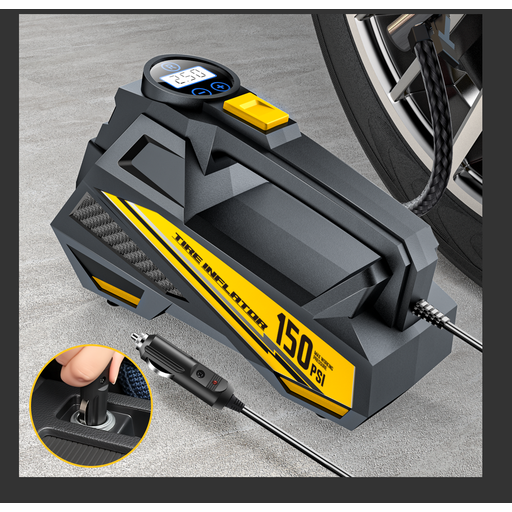
Why This Fits Their Persona: Ideal for drivers who want a reliable tool for emergencies without worrying about a battery's charge level. Powering it via the 12V socket ensures the compressor is always ready when needed.
This corded model completely bypasses the unreliable battery life trap. It delivers consistent power directly from the vehicle's battery.
Consistent power supply via the 12V port; digital display with auto-shutoff upon reaching the target pressure up to 150 PSI.
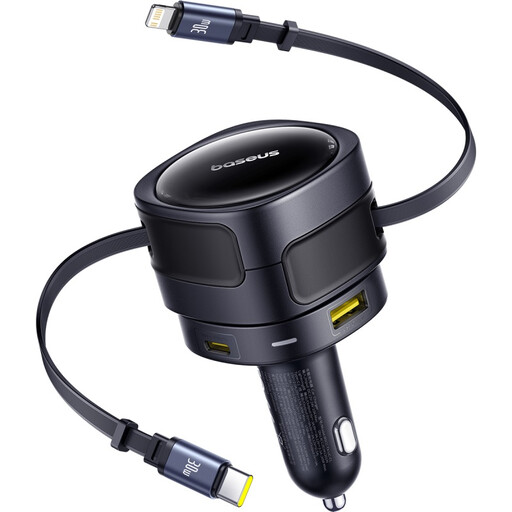
Why This Fits Their Persona: Perfect for commuters and families who need to charge multiple devices like smartphones, tablets, or laptops on the go. The combination of integrated, retractable cables and extra ports ensures a tidy and flexible setup.
This charger solves the problem of insufficient charging power. With 90W total output and support for PD and QC, it charges even power-hungry devices quickly and efficiently.
Four charging outputs (USB-C cable, Lightning cable, USB-C port, USB-A port); automatic cable retraction for a tidy cockpit.
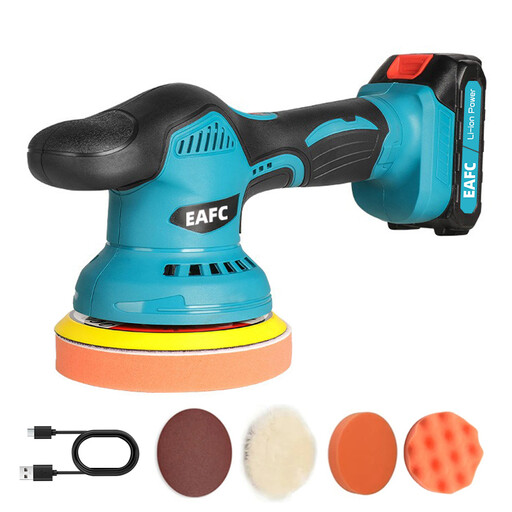
Why This Fits Their Persona: For users who value a flawless paint finish and want full control over the polishing process. The cordless design offers maximum freedom of movement around the vehicle.
This device avoids the trap of inadequate control. With 8 speed settings and an adjustable range of 2800-5500 RPM, it allows for a process tailored to the material and task at hand.
Variable speed control for polishing and waxing; cordless operation for high convenience; random orbit action is beginner-friendly.
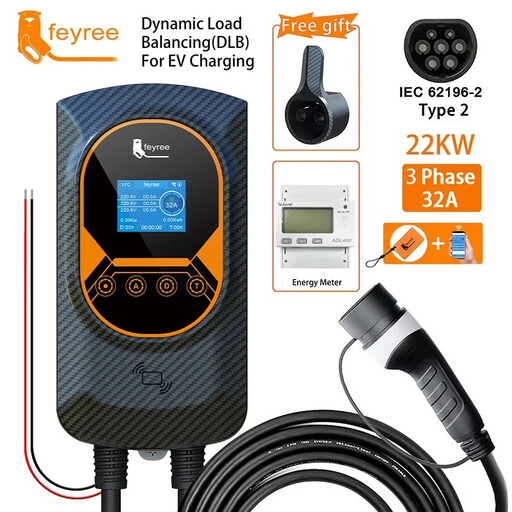
Why This Fits Their Persona: A home charging solution for EV owners seeking a safe, efficient, and intelligent charging station. It allows for high-speed charging of the vehicle overnight or during the day.
This wallbox solves the problem of grid overload. Its dynamic load balancing (DLB) feature intelligently adjusts the charging power based on household consumption, preventing tripped circuit breakers.
High charging power up to 22 kW (3-phase); app control for monitoring and scheduling charging sessions; IP66 certified for outdoor use.
We have compiled a complete, up-to-date list of products that fully meet these strict selection criteria.
Focus on three main factors: the maximum pressure (in PSI or Bar), the battery capacity (in mAh), and whether it has an automatic shut-off feature. For standard car tires, a pressure of up to 120 PSI (approx. 8.3 Bar) is sufficient. A battery capacity of at least 5000-6000 mAh is recommended to have enough reserve for multiple tires. Alternatively, a corded model powered by the 12V socket offers unlimited runtime and high reliability.
The most important metric is the total output in watts. Add up the charging power your devices require. A modern smartphone often needs 20W, while a tablet or laptop might need 30W or more. A charger with 60-90W total output is a good choice for multiple devices. Also, check if your devices' fast-charging protocols (e.g., Power Delivery (PD) for Apple/Android, Quick Charge (QC) for Android) are explicitly supported.
Yes, if you choose the right model. Look for a random orbital polisher (also known as a dual-action or DA polisher). This type mimics the circular motion of hand polishing and generates less heat than a rotary polisher, significantly reducing the risk of paint damage. A variable speed control is also crucial, allowing you to start at a low setting and gradually get comfortable with the tool.