
Lieferung heute & morgen

Qualitätsgarantie

Willkommens-Angebote freischalten: KOSTENLOSE Lieferung | Bis zu 80 % RABATT | Kostenlose 30-Tage-JoyPlus-Testphase
App herunterladen
By the Joybuy Product Recommendation Officer Published July 28, 2026
Every driver knows the feeling: your smartphone slides across the dashboard on a turn, your sunglasses fall into the footwell, or your keys rattle with every brake. These constant distractions are not only annoying but can also compromise driving safety. A car anti-slip mat offers a simple and effective solution to bring order and calm to your cockpit.
This article serves as a practical guide. It explains the key features to look for when making your selection and presents a range of products suited for different needs. The goal is to provide you with an informed basis for your decision, helping you find the perfect non-slip pad for your car.
Before you decide on a model, several functional aspects should be considered. These criteria will help you find a mat that reliably does its job.
The material is crucial for the functionality of a grip mat for your car. Common materials include silicone, thermoplastic polyurethane (TPU), and polyvinyl chloride (PVC).
Be sure to choose a material that is heat and UV-resistant to prevent warping or discolouration from sun exposure.
The mat's dimensions should accommodate the items you plan to place on it. Measure the available space on your dashboard and consider the size of your smartphone or other objects. A larger mat offers more flexibility, while a smaller anti-slip pad is more discreet. Models that can be trimmed to fit the shape of the dashboard provide a better, more complete hold.
Over time, dust and dirt can reduce a mat's grip. A key advantage of many modern mats is their easy cleaning. Models made of silicone or TPU can often be simply rinsed with water to restore their original adhesive properties. This makes them a durable and economical mount-free phone holder.
Here is a selection of products compiled based on their material properties and functionality.
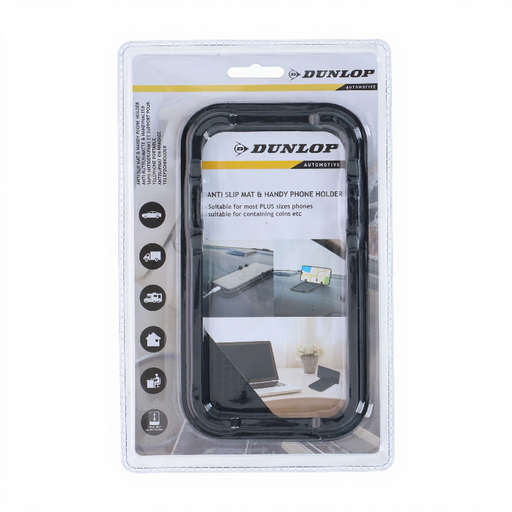
Why it stands out This mat from Dunlop is distinguished by its generous dimensions and elastic rubber material. It provides a strong, self-adhering effect on almost any surface, making it suitable for larger smartphones or several small items at once.
Pros
Who it's for For drivers who need a large and particularly high-performance grip mat to securely hold multiple or larger items. Also ideal for users looking for a multifunctional mat for the car, office, and home.
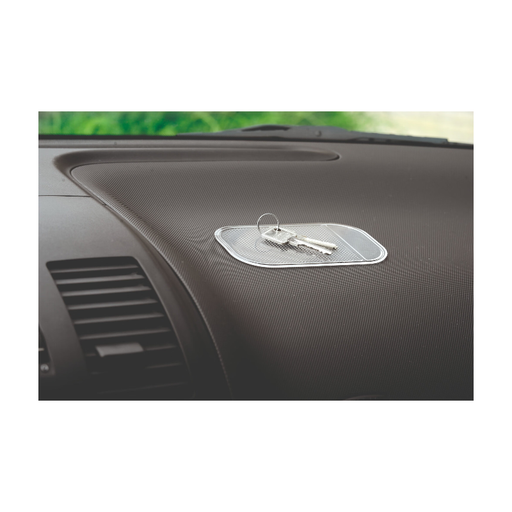
Why it stands out The transparent Dunlop Gripmat, made of TPU, is an extremely discreet solution. According to the manufacturer, it uses nanotechnology to create a strong grip without any magnetic or sticky properties. It leaves no residue and blends seamlessly into any vehicle's interior.
Pros
Who it's for Ideal for drivers who prefer a discreet, residue-free grip mat for the car that preserves the interior's aesthetic.
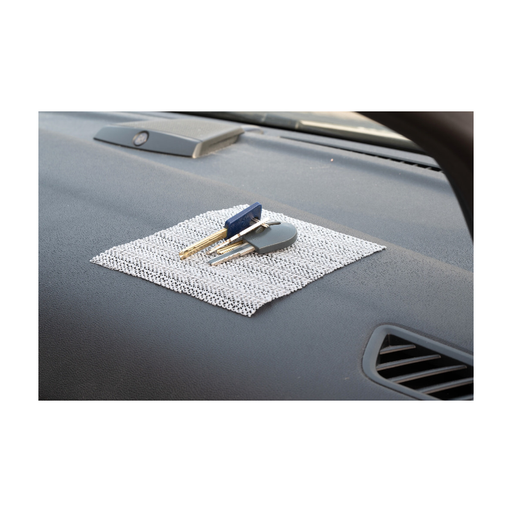
Why it stands out This PVC mat is a robust and functional basic solution. It was designed for universal use within the vehicle's interior, offering a reliable, non-slip surface that also protects the dashboard from scratches.
Pros
Who it's for For pragmatic vehicle owners looking for a durable and functional anti-slip pad whose primary job is to keep items in place and protect surfaces.
A tidy and protected environment contributes to well-being, whether in the car, at the office, or at home. If you're interested in other protective mats for various surfaces beyond your dashboard, you can find more options in our broader category.
Discover More Plastic and Protective Mats
1. How does a car anti-slip mat work? An anti-slip mat works through a high coefficient of friction or through adhesive forces. Materials like silicone or TPU adhere to the surface of the dashboard and the items placed on them at a molecular level, without using any glue. This prevents items from sliding, even during braking or cornering.
2. Can you wash a car grip mat? Yes, most high-quality grip mats made of silicone or TPU are washable. Dust and fine dirt particles can reduce the adhesive effect over time. By washing the mat with lukewarm water and, if necessary, mild soap, these particles are removed, and the mat's original grip is restored. Allow the mat to air dry afterwards.
3. Do anti-slip pads leave residue on the dashboard? High-quality mats, especially those made of silicone or TPU, are designed not to leave any sticky or oily residue. They adhere due to their material properties, not through adhesives. With very cheap products made from inferior materials, a reaction with the surface can occur in rare cases under intense heat. It is advisable to look for heat-resistant materials.