
Lieferung heute & morgen

Qualitätsgarantie

Willkommens-Angebote freischalten: KOSTENLOSE Lieferung | Bis zu 80 % RABATT | Kostenlose 30-Tage-JoyPlus-Testphase
App herunterladen
A dead car battery is more than just an annoyance—it can derail your plans and lead to unexpected costs. Whether it's after a cold night, a long period of inactivity, or because you forgot to turn off an interior light, you need a quick solution when the engine won't start. However, the market for car battery chargers and jump starters is overwhelming and full of marketing promises that often don't deliver.
As your Joybuy Product Recommendation Officer, I'm here to help you separate fact from fiction. Before you make a purchasing decision, you should be aware of the three most common traps that can lead to a bad buy:
To make an informed decision, focus on the technical facts instead of marketing slogans. Here are the three most important aspects to check before you buy.
A charger's performance is measured in amperes (A) and determines the charging speed. The right choice depends on your use case:
Ensure the device is explicitly designed for your battery type (e.g., Lead-Acid, AGM, GEL, EFB, Lithium/LiFePO4). Modern chargers often offer selectable modes for different battery technologies. A special AGM charger program adjusts the charging voltage to optimally maintain this battery type.
Define your needs. Are you looking for a solution for the workshop or for roadside assistance?
Safety is non-negotiable. Look for the following features that distinguish a high-quality device:
Based on these objective criteria, we have curated a selection of products suitable for various needs and budgets.
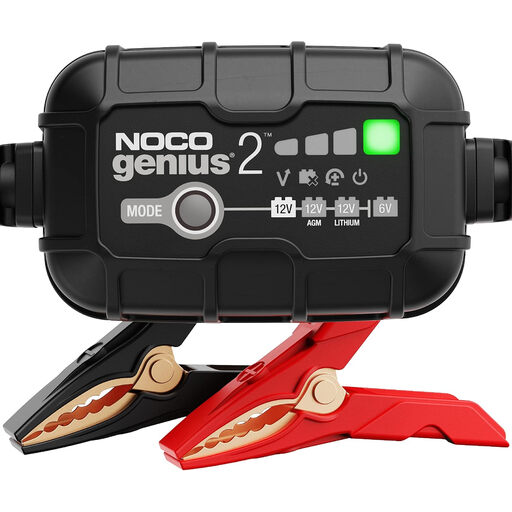
Why This Fits Their Persona: Ideal for vehicle owners who need a reliable trickle charger for winterizing their motorcycle, classic car, or second vehicle. It's compact, easy to use, and designed for long-term battery care.
It avoids the compatibility trap by supporting modern battery types like AGM and Lithium (LiFePO4). The integrated thermal sensor prevents damage from over- or under-charging.
Combines charging, maintenance, and desulfation functions in one device. According to the manufacturer, its "Force Mode" can even revive deeply discharged batteries from as low as 0V.
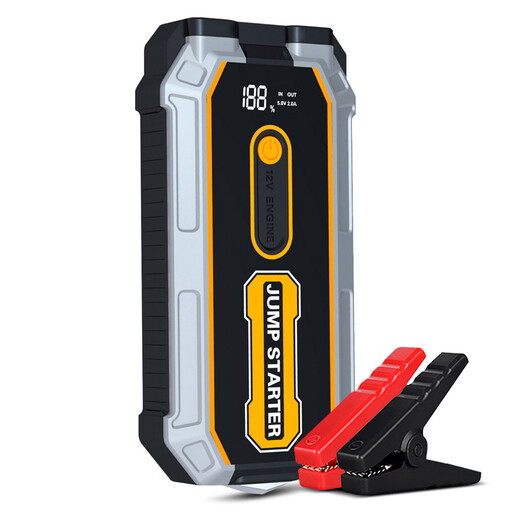
Why This Fits Their Persona: Perfect for commuters and families looking for a compact and lightweight emergency tool for the glove compartment. It provides the security of a jump start without taking up much space, and doubles as a power bank for mobile devices.
This device avoids the trap of unrealistic performance claims by delivering a verifiable peak current of 1200A, which is sufficient for most petrol and diesel vehicles. It includes all essential safety features.
Extremely compact and lightweight (approx. 330g). The smart LCD screen clearly displays the battery status, ensuring the device is always ready for use. Integrated LED flashlight with SOS function.
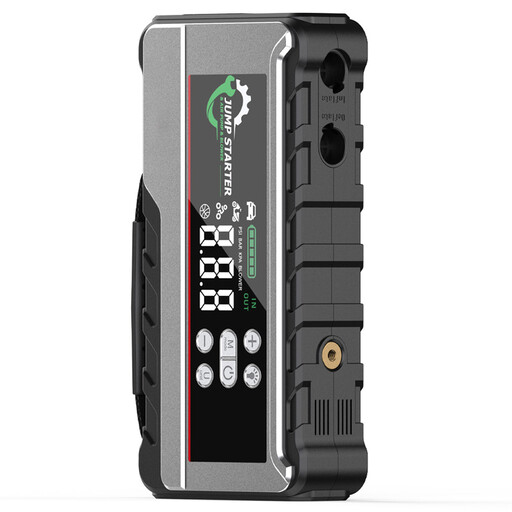
Why This Fits Their Persona: For owners of SUVs, vans, or RVs, as well as DIY enthusiasts and campers who need a multifunctional powerhouse. This device combines a powerful jump starter with a full-featured compressor and a high-capacity power bank.
With a peak current of 3000A, it delivers real power for large engines. It's not just a marketing promise but a robust tool that also impresses as a jump starter with compressor capable of up to 10 Bar / 150 PSI.
All-in-one solution: Jump starter, tire compressor, air pump, power bank with PD65W fast charging for laptops, and an emergency LED light. A single device for almost any emergency on the road.
We have compiled a complete, real-time updated list of products that fully meet these strict selection criteria and German safety regulations.
1. Can a car battery charger revive a completely dead battery?
That depends on the charger and the condition of the battery. Standard chargers often fail to detect batteries with very low voltage (typically below 2V) and won't initiate the charging process. Advanced models, like some in the NOCO Genius series, feature a manual "Force Mode" that can compel charging even at voltages near 0V. Many devices also have a pulse repair mode that can dissolve sulfate deposits in the battery, partially restoring its capacity. However, a physically damaged battery cannot be repaired.
2. How long does it take to fully charge a car battery?
The charging time depends on the battery's capacity (measured in amp-hours, Ah) and the charger's current (in amps, A). You can get a rough estimate using the formula: (Battery Capacity in Ah / Charging Current in A) x 1.2. For example, a 60 Ah battery with a 5A charger will take approximately 14.4 hours ((60 / 5) * 1.2).
3. Is it safe to leave a trickle charger connected permanently?
Yes, modern smart trickle chargers are designed for exactly this purpose. They continuously monitor the battery's state of charge. Once the battery is full, they switch to a maintenance mode, delivering only minimal current pulses to compensate for natural self-discharge. This is a common and safe method for keeping the batteries of seasonal vehicles in good condition over the winter.