
Lieferung heute & morgen

Qualitätsgarantie

Willkommens-Angebote freischalten: KOSTENLOSE Lieferung | Bis zu 80 % RABATT | Kostenlose 30-Tage-JoyPlus-Testphase
App herunterladen
A dead car battery is more than just an annoyance—it usually happens when you least expect it. Whether on a cold winter morning or after your vehicle has been sitting for a long time, a reliable car battery charger is a wise investment. But the market is confusing and filled with technical jargon. Many drivers invest in a device that's unsuitable for their needs or can even damage their battery. As your Joybuy Product Recommendation Officer, I'm here to help you avoid the common pitfalls and make an informed decision.
Before we look at the important features, let's highlight the most costly mistakes that people repeatedly make:
A good automotive charger is an investment in your battery's longevity and your vehicle's reliability.
To avoid a bad purchase, focus on three core technical aspects. These determine whether a charger is suitable, safe, and efficient for your vehicle.
Modern vehicles use different battery technologies. Before buying, check what type of battery is in your vehicle and confirm that the charger explicitly supports it.
A smart battery charger often detects the battery type automatically or allows you to set it manually.
The charging current, measured in Amperes (A), determines the charging speed. Your battery's capacity is rated in Amp-hours (Ah). A simple rule of thumb is:
The optimal charging current is about 10% of the battery's capacity.
For a standard 60 Ah car battery, a 5–6 A charger is ideal. For a motorcycle with a 12 Ah battery, a 1–2 A device is sufficient. Too high a charging current generates heat and can damage the battery, while too low a current is inefficient for deeply discharged batteries.
Modern chargers are far more than simple power sources. Look for the following features that extend your battery's life:
Based on the criteria above, we have identified a few models suitable for different needs and vehicle types.
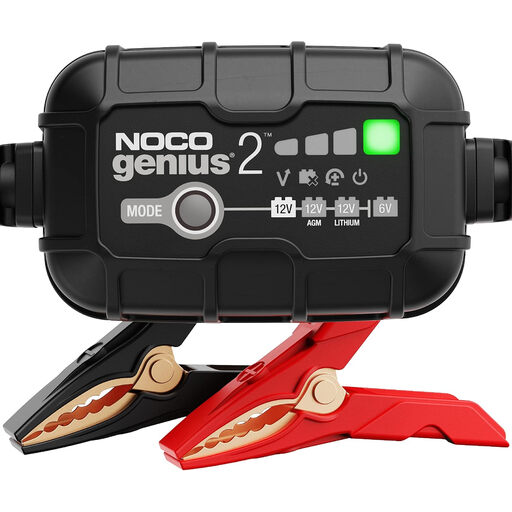
Why This Fits Their Persona: Ideal for owners of motorcycles, scooters, or classic cars whose batteries need to be maintained over the winter or during long periods of inactivity. Also suitable as a dedicated maintainer for car batteries.
The 2A charging current is perfectly matched to smaller batteries, avoiding the risk of overheating and damage that can occur with more powerful units.
Supports 6V and 12V systems as well as AGM and Lithium batteries. Features integrated temperature compensation and a desulfation mode.
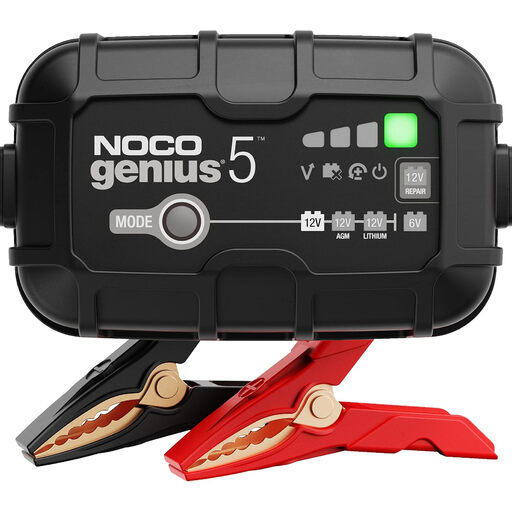
Why This Fits Their Persona: The solution for the average driver with a modern car (from compacts to mid-size SUVs). This device offers a balanced mix of charging speed and safety for the most common battery types.
Comprehensive compatibility with lead-acid, AGM, and Lithium batteries prevents the mistake of buying an incompatible device for vehicles with start-stop systems.
The 5A charging current is a great sweet spot for most car batteries. It includes a repair mode for deeply discharged batteries and all essential safety features.
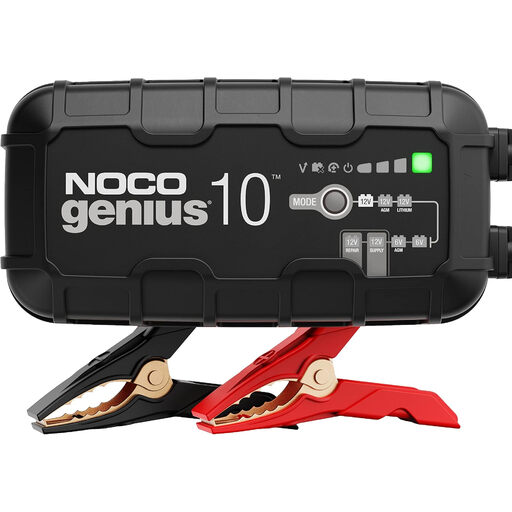
Why This Fits Their Persona: Designed for owners of large SUVs, vans, RVs, or boats with batteries up to 230 Ah. It's also suitable for users who value fast charging without compromising on safety.
Despite the high 10A charging current, its smart safety mechanisms and temperature compensation ensure the battery is not overcharged. The device reliably switches to maintenance mode.
Charges batteries significantly faster than lower-powered models. It also offers a 12V repair mode for lead-acid batteries and a special power supply mode for use without a battery.
We have compiled a complete, real-time updated list of products that fully meet these strict selection criteria and rigorous safety standards.
The charging time depends on the battery's capacity (Ah), its state of discharge, and the charger's current (A). As a rough estimate, you can divide the battery's capacity by the charging current. A 60 Ah battery that is 50% discharged (requiring 30 Ah) will take about 6 hours to fully charge with a 5A charger. Smart chargers reduce the current towards the end of the cycle, which can extend the time.
Yes, if it is a smart battery charger with an automatic maintenance charging mode. These devices monitor the battery's state and only deliver small pulses of current as needed to keep it at 100% without overcharging. This is ideal for winterizing vehicles. For basic, non-smart chargers, leaving them permanently connected is strongly discouraged.
Desulfation is a repair feature for lead-acid batteries. Over time, sulfate crystals form on the lead plates inside the battery, which impairs its ability to hold a charge. A battery desulfator sends targeted electrical pulses to break down these crystals and restore the active surface area of the plates. This can improve the lifespan and performance of an aging battery, but it is not a guarantee of full recovery.