
Lieferung heute & morgen

Qualitätsgarantie

Willkommens-Angebote freischalten: KOSTENLOSE Lieferung | Bis zu 80 % RABATT | Kostenlose 30-Tage-JoyPlus-Testphase
App herunterladen
A dead car battery is more than just an annoyance—it can derail your plans and lead to unexpected costs. When searching for a car battery charger, many buyers face a confusing market filled with technical jargon and grandiose marketing claims. As your Joybuy Product Recommendation Officer, I'm here to help you identify the crucial features and avoid common purchasing pitfalls.
Many devices fail in practice due to three key issues:
To make an informed decision, don't be swayed by marketing buzzwords; focus on objective technical data instead. Concentrate on the following three core aspects.
The charging current, measured in Amperes (A), determines how quickly your battery charges. There are two main categories:
It is crucial that the device is explicitly designed for your vehicle's battery type. Check if the charger has modes for lead-acid batteries (Wet, Gel, EFB) and especially for AGM charger applications or lithium batteries. Using the wrong charging mode can shorten the battery's lifespan.
A charger alone cannot get a car with a dead battery started immediately. For that, you need a device with an integrated jump-start function, often called a jump starter or a jump starter power bank.
The critical value here is the Peak Current (Peak Amps). This indicates how much energy the device can deliver for a short burst to start the engine. As a rule of thumb:
Look for realistic specifications and compare them with your vehicle's engine size.
A high-quality 12V battery charger must have fundamental protection mechanisms to prevent damage to the vehicle and personal injury. Essential features include:
Instead of making a one-size-fits-all recommendation, we have identified products that meet the specific needs of drivers.
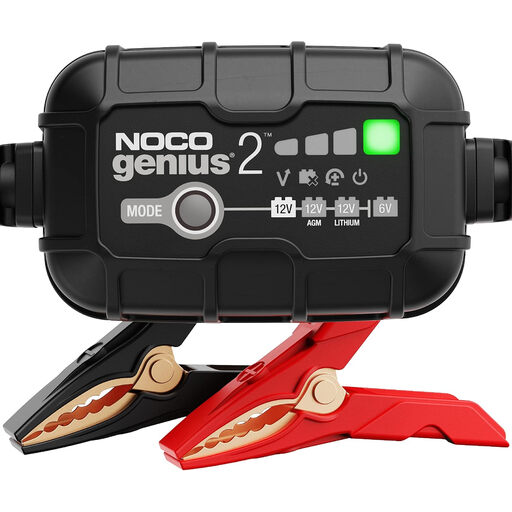
Why This Fits Their Persona: Ideal for drivers seeking a reliable and straightforward solution for routine maintenance and charging of standard car or motorcycle batteries, especially for winter storage. It's compact, easy to use, and covers the basic needs without unnecessary complexity.
It bypasses the compatibility trap by being explicitly designed for modern AGM and Lithium (LiFePO4) batteries and includes all necessary safety features, preventing battery damage from incorrect charging.
Fully automatic operation with an integrated thermal sensor to optimise the charging cycle and a mode for reviving deeply discharged batteries.
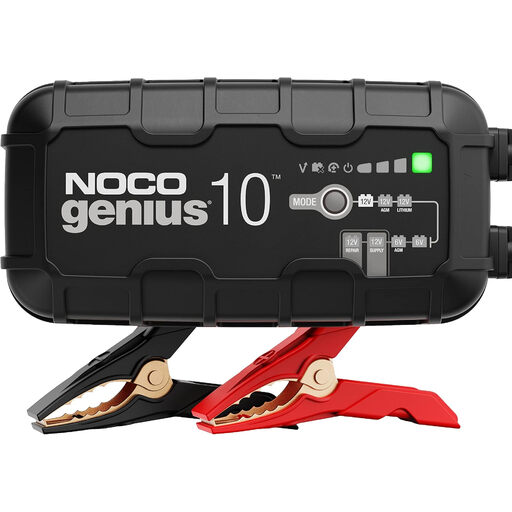
Why This Fits Their Persona: Perfect for owners of multiple vehicles (e.g., car, motorcycle, RV) who need a powerful and flexible device. The high 10A charging current significantly reduces charging times, and its compatibility with both 6V and 12V systems covers almost any need.
This device provides precise, temperature-controlled charging cycles for a wide range of battery types. It actively prevents damage from incorrect charging parameters and features a repair mode that can restore sulfated batteries.
High 10A charging current for fast charging of batteries up to 230Ah. Integrated desulfator to restore battery performance and a force mode for deeply discharged batteries.
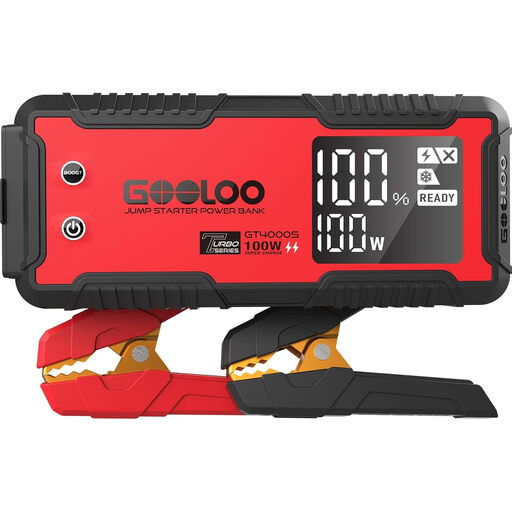
Why This Fits Their Persona: The ultimate mobile solution for emergencies. This jump starter power bank is designed for drivers who want maximum power and independence. It can start even large diesel engines and doubles as an ultra-fast power bank for laptops and smartphones.
This device exposes the trap of exaggerated performance claims by delivering a verifiable high peak current of 4000A. Its 10 integrated safety technologies also reliably prevent misuse and sparking.
Massive jump-starting power for engines up to 10.0L diesel. Unique 100W two-way fast charging, which fully recharges the unit in about 1.2 hours and also functions as a laptop charger.
We have compiled a complete, up-to-date list of products that fully meet these strict selection criteria and safety standards.
The charging time depends on the battery's capacity (in Amp-hours, Ah) and the charger's current (in Amperes, A). A rough formula is: Battery Capacity (Ah) / Charging Current (A) = Charging Time (Hours). For example, a 60Ah battery would take about 6 hours to charge with a 10A charger. Modern chargers reduce the current towards the end of the charging cycle, which can slightly extend the time.
Yes, modern smart chargers, especially those with a dedicated maintenance function (battery maintainer), are designed for this purpose. They monitor the battery's state of charge and only apply current when needed, preventing overcharging. This is ideal for winterising vehicles.
A car battery charger is primarily designed to slowly and gently charge a battery over several hours from a wall outlet. A jump starter power bank (or jump starter) is a portable battery that can deliver a very high current for a short period to start an engine. Many jump starters can also serve as a power bank for mobile devices, but they are not a substitute for a regular maintenance charger.