
Lieferung heute & morgen

Qualitätsgarantie

Willkommens-Angebote freischalten: KOSTENLOSE Lieferung | Bis zu 80 % RABATT | Kostenlose 30-Tage-JoyPlus-Testphase
App herunterladen
A weak or dead car battery is more than just an annoyance—it can disrupt your entire day. A reliable charger is therefore a wise investment for any garage. However, the market is crowded and full of technical promises. Many buyers invest in a device that either doesn't suit their vehicle, damages the battery, or becomes useless after a short time. This guide will help you identify the crucial features and avoid common purchasing pitfalls.
Before we dive into the technical details, let's highlight the most common issues that lead to a bad purchase.
To make an informed decision, you should carefully examine three technical aspects. These will determine if a 12V 24V car battery charger is right for your needs.
The first and most important check is for compatibility.
The charging current, measured in Amperes (A), indicates how much energy flows into the battery per hour. A higher value means a faster charge.
High-quality chargers offer more than just simple charging.
Here are two recommendations tailored to different user profiles that meet the criteria mentioned above.
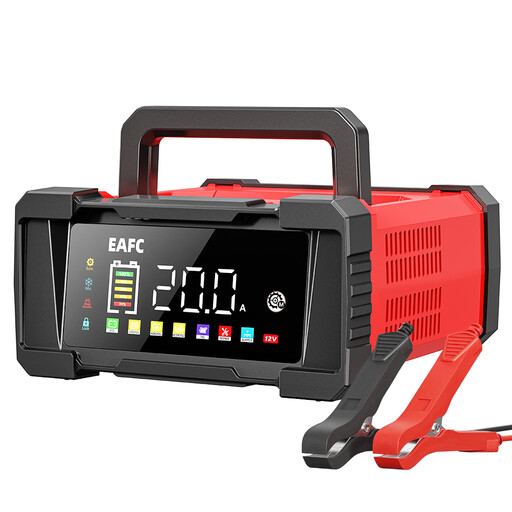
Why This Fits Their Persona: Ideal for DIY enthusiasts who need a flexible solution for various vehicles. It covers cars, motorcycles, boats, and even smaller trucks, making it a future-proof choice thanks to its broad compatibility.
Avoids the compatibility trap with explicit support for 12V/24V and various battery types, including AGM, GEL, and LiFePo4. The modes are clearly selectable.
20A fast-charging function for 12V systems and a 9-stage intelligent charging cycle, including repair and maintenance modes. The colour display clearly shows all relevant data.

Why This Fits Their Persona: Suitable for workshop use or for owners of larger vehicles who need a durable, high-performance device for lead-acid batteries (AGM, GEL, SLA).
Avoids the trap of misleading performance claims by delivering a high rated power of 400W and an actual output current of approx. 15A for 24V batteries, which is relevant for truck systems.
The robust metal casing makes it more resistant to impacts and dirt in a workshop environment. It features all necessary protection functions (overheating, overcurrent, reverse polarity).
We have compiled a complete, up-to-date list of products that fully meet these strict selection criteria and relevant safety standards.
The charging time depends on the battery's capacity (in Ampere-hours, Ah) and the charger's current (in Amperes, A). You can get a rough estimate by dividing the battery capacity by the charging current. For example, a 60 Ah battery on a 10A charger will take about 6 hours. Intelligent chargers optimise the process, which can affect the duration.
A battery charger with a repair mode can attempt to regenerate a deeply discharged or sulfated lead-acid battery. However, success is not guaranteed. If the battery voltage has dropped below a critical level or the internal cells are damaged, many chargers will no longer recognise the battery for safety reasons, or the repair attempt will fail.
Yes, with modern, intelligent chargers, this is generally safe and intended. These devices have protection mechanisms against voltage spikes, overcharging, and short circuits, which protect the vehicle's sensitive onboard electronics. Nevertheless, it is always advisable to follow the instructions of both the charger and vehicle manufacturer.