
Lieferung heute & morgen

Qualitätsgarantie

Willkommens-Angebote freischalten: KOSTENLOSE Lieferung | Bis zu 80 % RABATT | Kostenlose 30-Tage-JoyPlus-Testphase
App herunterladen
A click, a stutter, then silence—a dead car battery is more than just an annoyance, especially on a cold morning. A reliable car battery charger is therefore a wise investment for any vehicle owner. But the market is crowded and full of technical promises. Before you make a decision, it's important to know the most common pitfalls that can lead to a poor purchase.
As your Joybuy Product Recommendation Officer, I'll help you separate marketing hype from facts. In this guide, we'll focus on the crucial features that define a good charger and how to find the right model for your needs.
Many chargers look similar at first glance, but the differences are in the details. These three points often lead to disappointment and unnecessary expense:
To avoid these pitfalls, you should focus on three verifiable technical parameters. These determine the performance, safety, and versatility of your charger.
The voltage indicates which vehicle electrical system the device is suitable for. For most cars and motorcycles, a 12V battery charger is the standard. Some devices offer switchable modes for 6V (older motorcycles, classic cars) or 24V (trucks, RVs).
The charging current, measured in Amps (A), determines the charging speed. A simple rule of thumb for estimating charging time is: Battery Capacity (in Ah) / Charging Current (in A) = Charging Time (in hours)
A 10A charger will therefore charge a 60Ah battery in roughly 6 hours, theoretically. In practice, it takes a bit longer as the charging power is reduced towards the end of the cycle. For simple trickle charging over the winter, a device with 1-2A is sufficient. For quickly charging a dead battery, models with 5A to 10A or more are better suited.
Before buying, be sure to check which type of battery is installed in your vehicle. You can usually find this information directly on the battery. Make sure the charger is explicitly listed as compatible with the following types:
A high-quality charger is more than just a power source. It's an intelligent maintenance tool. Look for the following features:
Based on these objective criteria, we have compiled a selection of devices suitable for different user profiles and requirements.
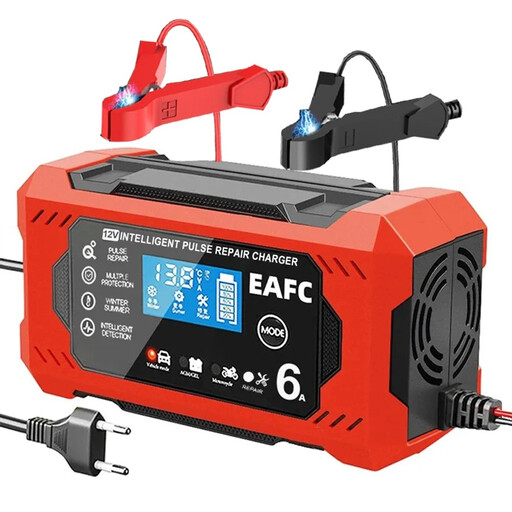
Why it's a match: Ideal for users looking for a straightforward and affordable solution for standard car and motorcycle batteries. With 6A of charging current, it's powerful enough for most common battery sizes (4-100Ah).
It supports common battery types like AGM, GEL, and wet-cell, thus avoiding the compatibility pitfall. The microprocessor-controlled charging process with automatic shut-off prevents overcharging.
Offers all the basic intelligent charging and protection functions, including a pulse repair mode and an LCD display, at a very accessible price point.
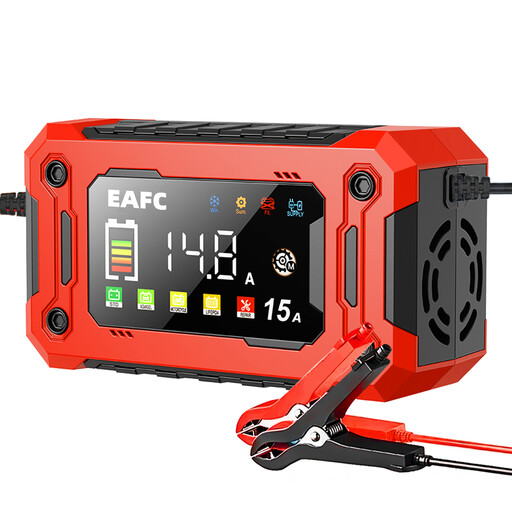
Why it's a match: For users who need a powerful device for various vehicles (cars, SUVs, vans). The high charging current of 15A significantly reduces charging time, which is practical for daily use.
Its broad compatibility explicitly includes start-stop batteries (AGM/EFB). The temperature modes (Summer/Winter) provide basic environmental adaptation and prevent major charging errors.
High charging current of 15A for rapid charging. The large digital display provides a clear overview of the charging status, mode, and any potential errors.
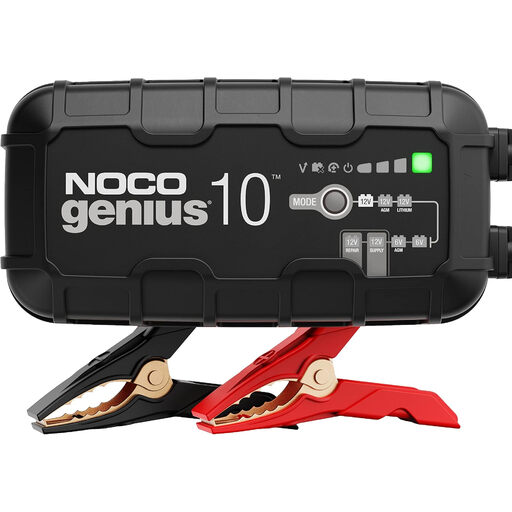
Why it's a match: For owners of modern vehicles, classic cars, or boats who value maximum reliability, precision, and compatibility. It is designed for long-term maintenance and demanding charging tasks.
It offers full compatibility with AGM and Lithium (LiFePO4) batteries. The integrated thermal sensor ensures precise, temperature-dependent charging control that goes far beyond simple summer/winter modes, protecting the battery.
Can revive deeply discharged batteries down to 1V and features a "Force Mode" for 0V batteries. The automatic desulfation helps to actively extend battery life.
We have compiled a complete, up-to-date list of products that fully meet these strict selection criteria and safety regulations.
1. How long does it take to fully charge a car battery? The charging time depends on the battery's capacity (in Amp-hours, Ah) and the charger's current (in Amps, A). As a rough estimate, you can divide the battery capacity by the charging current and add 1-2 hours for the final charging phase. A 60Ah battery with a 6A charger will therefore take about 11-12 hours.
2. Can I leave a charger permanently connected to the battery? Yes, as long as it is an intelligent maintenance charger with an automatic maintenance mode. Such devices monitor the state of charge and only top up when necessary, which is ideal for winter storage of seasonal vehicles. Basic chargers without this function must be disconnected after charging to prevent harmful overcharging.
3. What does the "repair function" on a charger mean? This function, often called pulse repair or desulfation, sends targeted current pulses into the battery. This is intended to dissolve sulphate crystals that form on the lead plates during prolonged deep discharge and reduce capacity. It is a useful maintenance feature for lead-acid batteries but cannot restore physically defective or end-of-life batteries.