Who might benefit from these solutions?

Top up your battery without a socket

You want to top up a weak starter battery in a remote garage using a suitable charger. The ADAC recommends following the guidance in your vehicle manual. CTEK’s specifications also show why it’s important to check the input requirements of the specific charger.

Be prepared for the occasional attempt to start your car

You mainly want to be prepared in case your car won’t start, rather than charge the battery regularly. NOCO describes the GB40 as a jump starter, while the ADAC treats recharging the battery as a separate step.

Maintain your battery during long periods of inactivity

Your vehicle will be parked for a long time, and you’re looking for a suitable way to maintain the battery without a socket at your parking space. Alongside its mains-powered chargers, CTEK offers the CS FREE, a differently designed mobile charging solution.

What should you look for when choosing?

Power station with a suitable charger

A good fit if: You regularly need a mobile power source in your garage for a separate battery charger or selected small appliances.

The trade-off: The rated capacity in Wh alone won’t tell you how long your specific charger will run. You’ll also need to consider its power consumption and the operating time required.

Jump starter

A good fit if: Your main concern is the occasional attempt to start your car and the jump starter is suitable for your vehicle.

The trade-off: A jump starter isn’t automatically a way to fully charge or maintain your battery. NOCO describes the GB40 as a jump starter.

Battery maintainer or mobile charging solution

A good fit if: Maintaining the battery is your priority during long periods of inactivity, and a compatible power source is actually available.

The trade-off: A mains-powered battery maintainer won’t solve the lack of a socket. Mobile solutions such as the CTEK CS FREE are a separate option.

Charging during regular journeys

A good fit if: Your car already makes journeys that are long enough, and this is in line with the vehicle manufacturer’s guidance.

The trade-off: Short journeys aren’t a reliable substitute for an external charger when one is needed. After a jump start, the ADAC recommends recharging the battery with a longer drive or a charger.

What you need What to check before buying Who should pay particular attention?
Suitable power supply The charger’s AC input and power consumption; compatible connections and sufficient operating time. If I want to top up my starter battery, the charger and mobile power source need to work together. Around 33% of consumers prioritise topping up their battery.
Starting backup Whether the jump starter is compatible with the vehicle and whether the specific model also offers a charging function. If I mainly want to be prepared for the occasional failure to start, a suitable jump starter matters more than a large energy reserve. Around 27% of consumers prioritise starting their car.
Battery maintenance while parked A suitable maintenance profile for the battery type; an available power source and any accessories needed. If my car will be parked for a long time, I want to be able to use a maintenance solution that’s suitable for its battery. For around 20% of consumers, maintaining the battery during long periods of inactivity is the main priority.
Portability and small appliances Weight and connections; don’t assume the rated capacity equals a guaranteed running time. If I need to carry the power station to a remote garage and run other small appliances there, portability and suitable outputs matter. Around 20% of consumers prioritise mobile power for multiple uses.

Common buying mistakes

  • Confusing power output with energy capacity

    Watts describe power; watt-hours describe stored energy. The manufacturer’s figures for these two values won’t, by themselves, tell you how long a specific battery charger will run in real-world conditions.

    Check your charger’s power consumption and estimated operating time. Don’t estimate its running time using the power station’s rated capacity alone.

  • Buying a jump starter as a long-term battery solution

    A jump starter is designed to help start your car; it doesn’t automatically replace charging or maintaining the starter battery.

    Decide separately whether you need a starting backup, a charger or a solution for long periods when the vehicle is parked.

    Depending on your situation, you may also need a suitable charger or a diagnostic check.

  • Choosing a similarly named version without the right connection

    Anker offers the C300 with AC/DC outputs and a separate C300X DC variant. The model names aren’t interchangeable.

    Before buying, check the full model name and the outputs on the specific version. If you’re using an AC charger, the power station must have the AC output you need.

Key brands to consider

EcoFlow

The RIVER 2 range includes compact power stations. The details below refer specifically to the RIVER 2.

  • EcoFlow lists the RIVER 2 at 256 Wh, 300 W and 3.5 kg.
  • These figures don’t confirm how long an unspecified charger will run, or whether another RIVER 2 variant is suitable.

Anker SOLIX

For the C300, it’s important to distinguish between the AC/DC version and the separately available C300X DC.

  • Anker lists the C300 at 288 Wh and 300 W.
  • If you want to run an existing AC charger, check the exact variant and its outputs.

Jackery

The Explorer 300 Plus is a compact AC power station for portable devices.

  • Jackery lists 288 Wh, 300 W AC, one AC output and a weight of 3.75 kg.
  • The manufacturer’s examples of usage time don’t confirm how long an unspecified battery charger will run.

BLUETTI

The EB3A is an example of a compact power station with a stated continuous AC output.

  • BLUETTI lists 268 Wh, a Schuko socket and a continuous output of 600 W.
  • A higher wattage doesn’t tell you how long a specific charger will run.

CTEK

CTEK offers a range of solutions for charging and maintaining vehicle batteries.

  • For the MXS 5.0 EU, CTEK lists a 220–240 V AC input, a maximum input current of 0.6 A and an output current of 5.0 A. It also offers programmes for the listed types of lead-acid battery, including AGM.
  • According to CTEK, the CS FREE has a built-in 66-Wh battery. With suitable accessories, it can also be powered by solar energy or a separate service battery. These specifications don’t apply to all CTEK devices.

Joybuy products

The portable power stations below could be suitable as a mobile power supply for a garage. Whether you can use a particular battery charger depends on having the right type of output, enough power and the operating time you need.
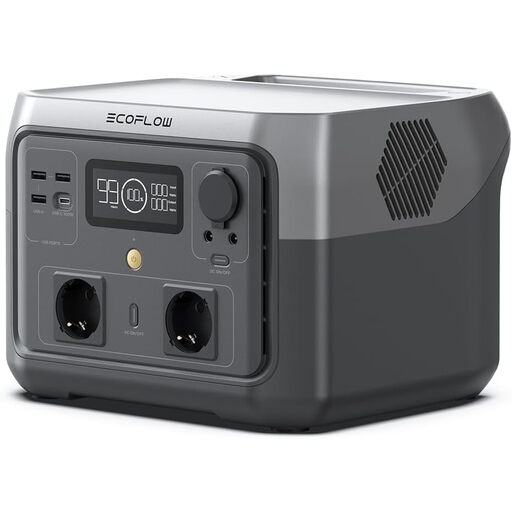
EcoFlow RIVER 2 Max Portable Power Station

EcoFlow RIVER 2 Max

This could be a suitable mobile power source for a separate charger, as long as the charger’s requirements match the power station’s outputs.

Listed in the product title: 512 Wh and a LiFePO4 battery. According to the product information, keep it in a dry, well-ventilated place, don’t use it in the rain or a damp environment, and follow the temperature guidance.

View at Joybuy
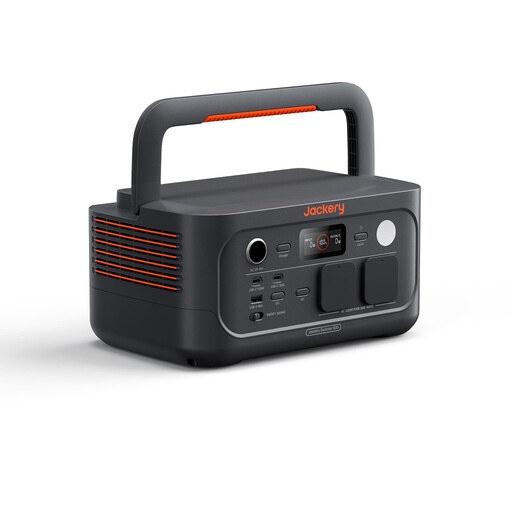
Jackery Explorer 500 V2 Portable Power Station

Jackery Explorer 500 V2

This power station is suitable as a power source for a separate battery charger only if it meets the charger’s input requirements.

Listed in the product title: 512 Wh, a LiFePO4 battery, 230 V/500 W and 1,000 W peak power. Peak power should not be confused with the stated 500 W output. According to the product information, keep it in a dry, well-ventilated place while charging.

View at Joybuy
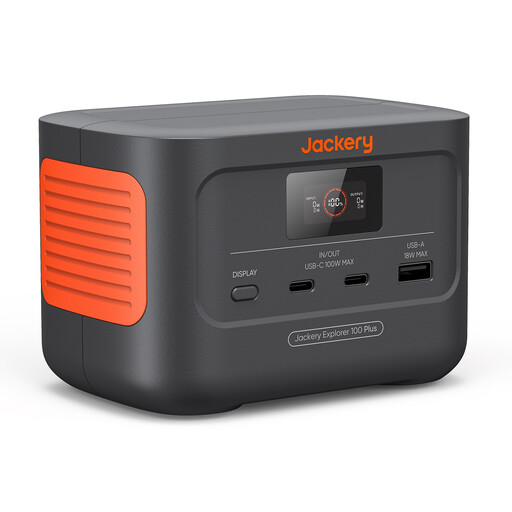
Jackery Explorer 100 Plus Portable Power Station

Jackery Explorer 100 Plus

The USB outputs listed aren’t, by themselves, proof that this is compatible with an AC battery charger. Check that your charger has suitable inputs.

Listed in the product title: 99 Wh, a LiFePO4 battery, USB-A and USB-C outputs, and 128 W total output.

View at Joybuy
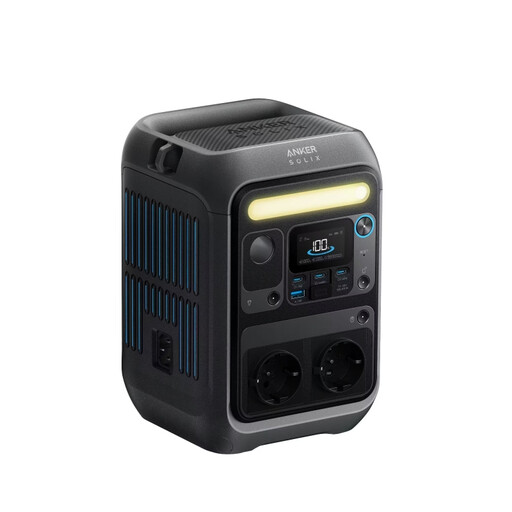
Anker SOLIX C300 Portable Power Station

Anker SOLIX C300

This model could be suitable as a mobile power source if the version you choose provides the connections and power needed for your separate charger.

Listed in the product title: 288 Wh and 300 W, with a maximum of 600 W. Anker distinguishes the C300 with AC/DC outputs from the C300X DC. Before buying, check the full model name and the outputs you need.

View at Joybuy
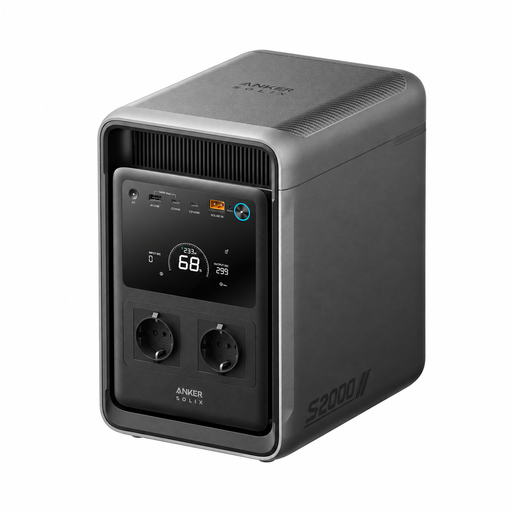
Anker SOLIX S2000 Portable Power Station

Anker SOLIX S2000

If your garage is around 200 m away, remember to factor in the extra effort of carrying its stated weight of 16.2 kg.

Listed in the product title: 2,000 Wh and 1,500 W.

View at Joybuy

Frequently asked questions

Which details of my charger should I check before choosing a power station?

Check the input voltage, power consumption and connection of your specific charger, as well as your vehicle’s battery type and charging guidance. As an example for a specific model, CTEK lists 220–240 V AC, 50–60 Hz and an input current of 0.6 A for the MXS 5.0 EU. The 5.0 A figure is the output current to the battery, not an input figure for the power station.

Can I connect the power station directly to the starter battery?

For the solution described here, the power station supplies a separate charger that’s suitable for your vehicle and battery type. Follow the charger’s instructions and use the charging points specified by the vehicle manufacturer. An AC output alone doesn’t provide a suitable charging profile for a vehicle battery.

What should I bear in mind when using one in a garage?

Follow the vehicle and device manuals, particularly their guidance on battery profiles, operating conditions and positioning. The ADAC refers to both manuals and recommends suitable fully automatic chargers with safety features. Don’t assume that temperature and storage recommendations for other battery-powered devices apply to a specific power station model.

What should I check when buying and if I need to make a complaint later in Germany?

As part of its market surveillance, the German Federal Network Agency lists CE marking, product identification, manufacturer details, instructions in German and a declaration of conformity among the points to check. The Verbraucherzentrale also distinguishes the right to repair from your statutory rights against the seller. A voluntary manufacturer’s guarantee should be considered separately.