
Lieferung heute & morgen

Qualitätsgarantie

Willkommens-Angebote freischalten: KOSTENLOSE Lieferung | Bis zu 80 % RABATT | Kostenlose 30-Tage-JoyPlus-Testphase
App herunterladen
A thorough car care and vehicle detailing routine involves much more than just washing and waxing. Depending on your vehicle's condition, it includes interior cleaning, paint decontamination, polishing, sealing and glass care. Many poor purchases happen because individual products are chosen based on flashy advertising claims, without the essential technical details being provided.
A high rotational speed does not automatically mean that scratches or oxidation will be removed safely. What also matters are the polishing principle, stroke, backing plate, pad material and pressure control. A rotary polisher works differently from a dual-action polisher. For beginners, a dual-action polisher with an orbital motion can be easier to control.
Claims like "long runtime" are hard to assess without details on capacity, charging time and workload. So, check the following:
A cordless polisher with two batteries can be more practical for larger vehicles than a model with a higher maximum speed but only one small battery.
After washing, iron fallout, tree resin, brake dust, industrial fallout or overspray can stick to the paint. These residues often feel rough to the touch. If you polish straight away, particles can spread across the pad and cause additional marks. A clay bar, clay towel, clay mitt or clay block should therefore be used before waxing and polishing preparation.
A dual-action polisher moves the pad in an orbit as well as rotating. This can help achieve a more even finish on larger paint panels. A rotary polisher spins the pad directly around its centre axis and is suitable for controlled, targeted work, but requires careful handling.
For small areas such as door handles, badges, headlights, wheel rims or bumper edges, a mini polisher with a 25, 50 or 75 mm backing plate is more sensible than a large car polisher. For the bonnet, roof and doors, larger pads are more efficient.
Multiple speed settings allow you to adapt to the material and work stage:
A soft-start function, a battery indicator and an ergonomic handle make control easier. On painted surfaces, always start on an inconspicuous area and with light pressure.
When using a car wash mitt, the chenille fibres must be clean and free of sand. The handle should lock securely, especially on SUVs, vans and motorhomes. For the interior, soft car detailing brushes with dense, flexible bristles are suitable. A glass cleaning cloth for car windows should be lint-free and used with a suitable glass cleaner.
Clay products must never be used dry. The surface must be thoroughly washed and wetted with water or a clay lubricant. If a clay towel, clay mitt or clay bar is dropped and picks up dirt, it should not be used further on the paint.
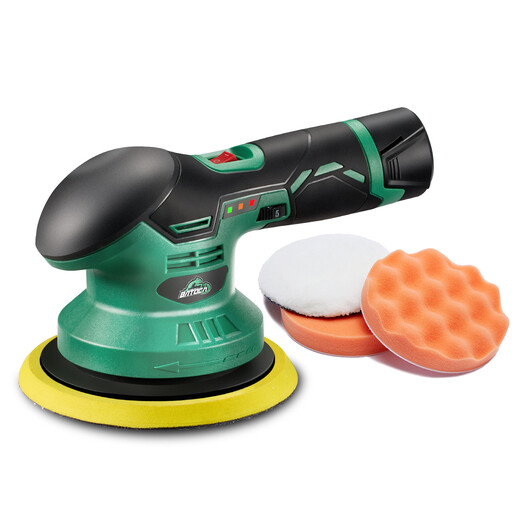
Why this product fits the profile: This cordless dual-action polisher works with a 5 mm stroke, six speed settings and a 2.0 Ah battery. Its weight of around 3 lb makes it easy to store and use for routine maintenance on a private vehicle.
The six adjustable settings allow for a more suitable adjustment than a single-speed device. The battery indicator shows the charge level.
5 mm random orbital motion, 2.0 Ah battery, fast charger and speed range from 2,500 to 5,000 rpm.
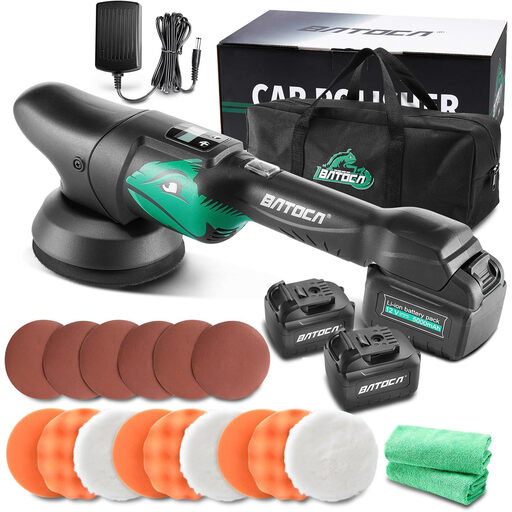
Why this product fits the profile: Two 5 Ah batteries, six speed settings and an LCD display appeal to users who want to keep an eye on charge level and speed during longer jobs.
The two batteries reduce longer interruptions. The documented capacity is more transparent than a vague runtime claim.
2 × 5 Ah lithium battery, approximately 60 minutes runtime per battery according to the product specification, and LCD display for speed and battery.
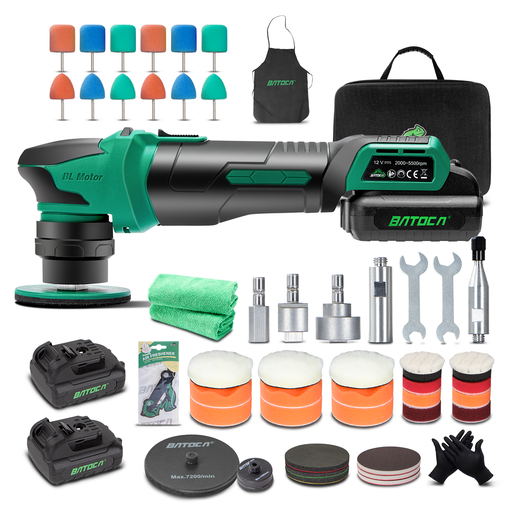
Why this product fits the profile: For workshops, motorcycle owners, and owners of motorhomes and vehicles with lots of detailed surfaces, this device offers interchangeable 25 mm and 75 mm backing plates and two polishing systems.
The small pads are designed for tight areas. The switch between rotary and orbital motion means it doesn't assume just one working method.
Brushless motor, four speed settings from 2,000 to 5,500 rpm and two 2.5 Ah batteries.
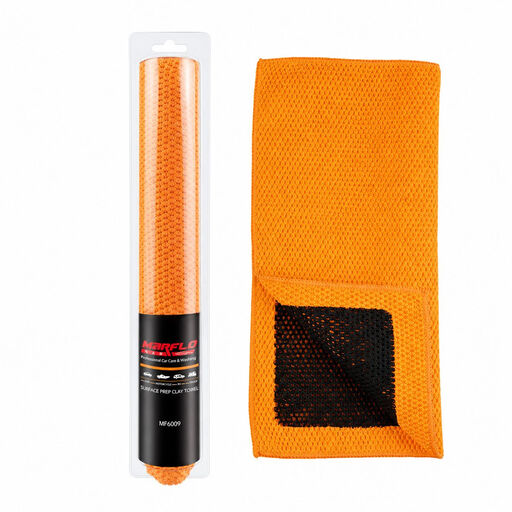
Why this product fits the profile: The flexible cloth with nano-clay polymer and a microfibre backing is suitable for larger paint panels, glass, mirrors and hard-to-reach contours.
The usage instructions rule out dry work and heavy pressure. This reduces the risk of dragging loose particles across the surface.
Large, flexible working area, washable design and microfibre side for subsequent wiping.
We have put together a complete, regularly updated list of products that fully meet these strict selection criteria and the safety regulations in force in the EU.
That depends on where it is parked, how much it is driven and the level of environmental pollution. A vehicle kept outdoors or near a busy road can pick up iron fallout and road film more quickly. Checking by hand after washing is more informative than a fixed schedule.
A dual-action polisher with adjustable speed and a moderate stroke is often easier to control than a rotary polisher. Regardless of the device, you should start with light pressure, a low speed and a mild pad.
The ongoing costs depend mainly on consumables such as shampoo, polish, pads, cloths and sealant. Cordless devices also incur charging and, if necessary, replacement battery costs. Washing and care accessories can be used multiple times if cleaned properly.