
Lieferung heute & morgen

Qualitätsgarantie

Willkommens-Angebote freischalten: KOSTENLOSE Lieferung | Bis zu 80 % RABATT | Kostenlose 30-Tage-JoyPlus-Testphase
App herunterladen
A dead smartphone during an important drive is more than just an inconvenience. A reliable car charger is therefore essential. But the market is crowded and filled with products whose marketing promises often fall short in practice. Many drivers invest in a car charger only to find that it charges agonizingly slowly, breaks after a few months, or even poses a safety hazard.
As your Joybuy Product Recommendation Officer, I'm here to help you separate the wheat from the chaff. We'll shine a light on the three most common purchasing traps and show you which technical features truly matter, so you can make an informed decision.
To avoid these common issues, you should check three core parameters before buying. These will determine the performance, safety, and longevity of your new charger.
Don't just look at the advertised total output; pay close attention to the maximum output power per individual port. This information is crucial.
The right ports and protocols are the key to a true fast car charger.
A good charger must be safe and compatible with your vehicle.
Based on the criteria above, we have identified a few models that represent a smart choice for specific user groups.
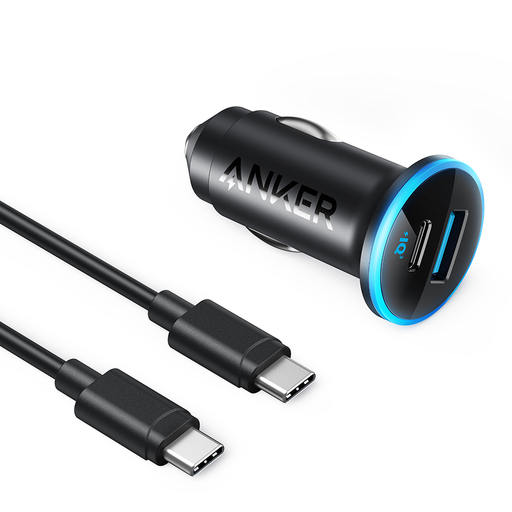
Why This Fits Their Persona: Ideal for the daily commute. This charger is compact and delivers enough power to fast-charge a smartphone during the drive, while a second device (e.g., headphones or a GPS) is powered simultaneously.
The power specs are clearly stated: The USB-C port delivers up to 30W, avoiding the misleading "total power" trap and ensuring fast charging for modern phones.
Combines a modern 30W USB-C PD port with a flexible 22.5W USB-A port. According to the manufacturer, its ActiveShield 2.0 technology monitors temperature to enhance safety.
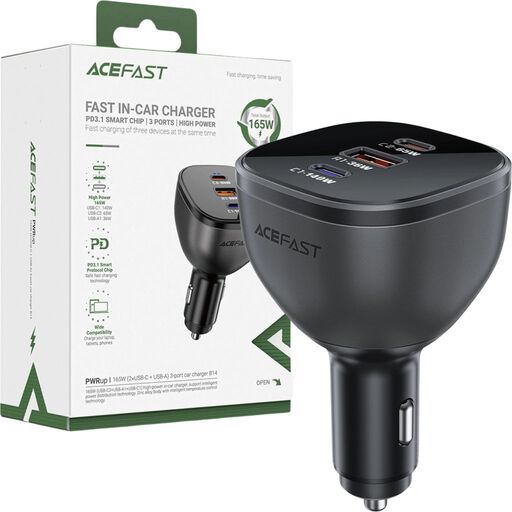
Why This Fits Their Persona: For users who need to charge not only their phone but also a high-performance laptop in the car. With 165W of total power and strong individual ports, this device is equipped for demanding tasks in a mobile office.
This model sidesteps the trap of weak individual ports. It offers a very high output, sufficient to efficiently charge even power-hungry laptops while other devices are powered in parallel.
Massive 165W total output with two high-power USB-C ports and one USB-A port. Its compatibility with both 12V and 24V systems makes it flexible for use in cars and trucks.
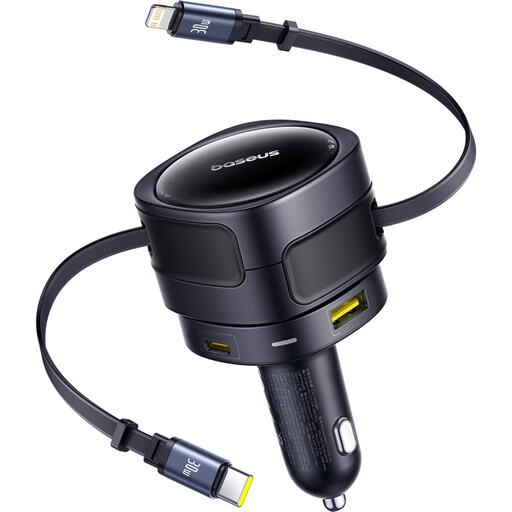
Why This Fits Their Persona: Perfect for long family road trips. With four charging options, including two built-in, retractable cables (USB-C and Lightning), it eliminates fights over charging cables and keeps the car interior tidy.
This model solves the compatibility problem with its variety of ports and cables. It supports common protocols like PD and QC, ensuring that various Apple and Android devices can be charged efficiently.
Two integrated, automatically retractable charging cables (USB-C and Lightning) plus two additional ports (USB-C/USB-A). The smart power management system safely distributes the 90W output across up to four devices.
We have compiled a complete, up-to-date list of products that fully meet these strict selection criteria and all relevant safety regulations.
In most modern vehicles, the power supply to the cigarette lighter charger is cut off as soon as the ignition is turned off. In this case, there is no risk to the car battery. However, in some older vehicle models, the socket remains permanently powered. Here, it is advisable to unplug the charger during long periods of parking to prevent battery drain. Many chargers have a very low standby current, but unplugging it completely is the safest method.
Both are technologies for a fast car charger, but they work differently:
You can identify a safe charger by several features. Look for the CE mark on the product or its packaging, which confirms conformity with EU safety standards. Additionally, integrated protection mechanisms against overcurrent, overvoltage, short circuits, and overheating are crucial. Models with a casing made of metal (e.g., aluminum alloy) or high-quality, fire-resistant plastic are often more durable and dissipate heat better than basic plastic models.