
Lieferung heute & morgen

Qualitätsgarantie

Willkommens-Angebote freischalten: KOSTENLOSE Lieferung | Bis zu 80 % RABATT | Kostenlose 30-Tage-JoyPlus-Testphase
App herunterladen
A car child seat must do more than simply suit your child’s age. Their height, the fitting method, vehicle compatibility and correct everyday use are all crucial. Many families initially focus on colours, swivel functions or a wide age range. Yet these claims can distract from the most important question: does the seat actually fit the child and the vehicle?
As a Joybuy Product Recommendation Officer, I filter product information according to clear, verifiable criteria and assess it for typical everyday situations. This can help you avoid common purchasing mistakes.
An adjustable car child seat can be used through several stages of your child’s development. This could save you from having to buy another seat later. However, stating “from 1 to 12 years” does not mean that every setting is suitable from the outset. Some features, such as a safety shield or a special toddler insert, may only be used within certain height or weight ranges.
Always check the specifications in centimetres and kilograms. Height is particularly important for an i-Size child seat.
A child car seat with ISOFIX can generally be secured to the vehicle anchor points designed for this purpose. However, that does not mean every ISOFIX seat may be used in every position or every vehicle. A support leg, Top Tether or the angle of the rear seat may impose additional requirements.
Before buying, check the vehicle handbook and the seat manufacturer’s approved vehicle list. The position of an active front airbag is also relevant: many child seats must not be fitted on a seat with an active airbag.
A 360-degree swivel car child seat makes it easier to place your child in the seat and take them out again. However, the swivel function alone says nothing about whether the seat fits correctly. Likewise, multiple recline positions are only useful when the harnesses, headrest and seat angle are adjusted appropriately.
A secure, close-fitting harness, the correct headrest height and a stable attachment remain essential. Additional padding or accessories not approved by the manufacturer should not be used.
The current approval standard UN R129, often referred to as i-Size, classifies child seats primarily by height. The standard also includes requirements for side-impact protection and rear-facing travel within certain height ranges. A seat bearing ECE R129 approval should only be used within the height range and fitting method specified by the manufacturer.
For example, an ECE R129 child booster seat is not suitable for smaller children simply because they have already reached the required weight. One model in our selection is explicitly designed for use from 125 to 150 cm.
ISOFIX reduces the risk of fitting errors, but it does not replace checking the indicators and locking mechanisms. Some seats also require a Top Tether, while other models use a support leg. In booster mode at a later stage, the vehicle’s three-point seat belt may provide the restraint.
Pay attention to:
Descriptions such as 9 to 36 kg car child seat, 15 to 50 kg car child seat or “for children from 1 to 12 years” are only general guides. The official manufacturer’s specifications for height, weight and stage of use remain decisive.
For example, a seat may be approved for 76 to 150 cm, while its front safety feature may only be used up to 105 cm or 21 kg. The vehicle seat belt is then used instead. These transitions must be clearly explained before you buy.
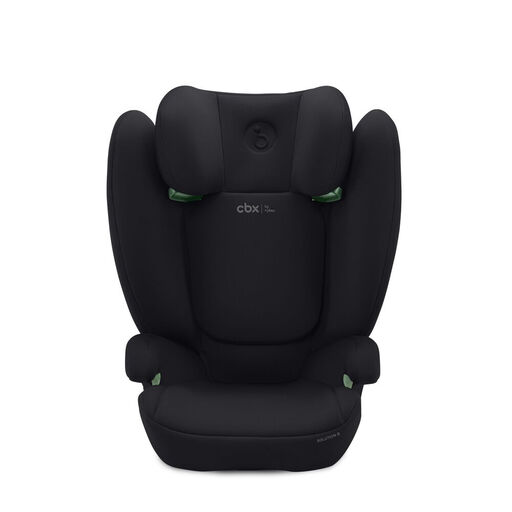
Why this product suits this profile: For children aged around 3 to 12 years with a height of 100 to 150 cm, this model offers a clearly defined usage range and ISOFIX fitting.
The height range is stated in terms of the child’s height rather than an unclear, blanket age claim.
UN R129/04, ISOFIX, 12-position adjustable headrest and integrated linear side-impact protection, according to the product information.
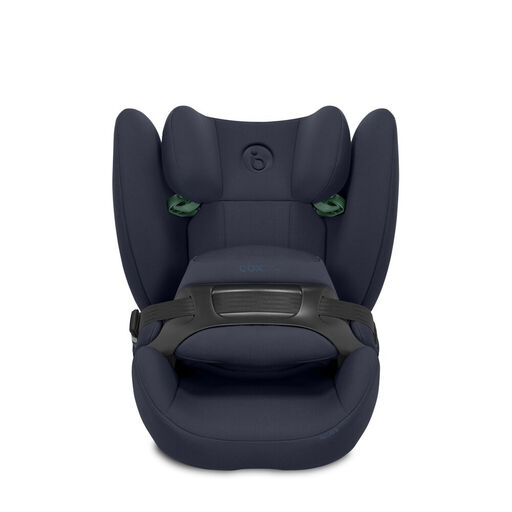
Why this product suits this profile: For families looking for a 2-in-1 seat with a long usage period from 76 to 150 cm.
The product information specifies clear transitions: the safety shield is removed from 105 cm or 21 kg, after which the vehicle seat belt is used.
UN R129/04, ISOFIX, Top Tether, 12 headrest positions and a machine-washable cover at 30 °C.

Why this product suits this profile: An option for families who get in and out frequently and need a swivel solution for children measuring 61 to 105 cm.
The usage range is clearly limited; this model is not a universal seat for use through to school age.
360-degree rotation, five recline positions, 12-position adjustable headrest and ISOFIX with support leg, according to the product description.
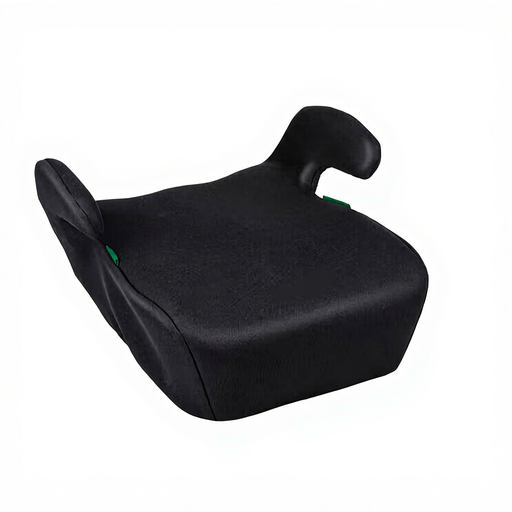
Why this product suits this profile: This lightweight booster seat is designed for children measuring 125 to 150 cm and can easily be moved between vehicles.
The product information requires use with a correctly routed three-point seat belt; a two-point belt is not suitable.
ECE R129, weighing approximately 1 kg, with armrests and a removable, washable seat cover.
We have put together a complete, regularly updated list of products that fully meet these strict selection criteria and the safety regulations applicable in the EU.
This depends on the approval of the specific seat and the child’s height. For an i-Size model, you must follow the manufacturer’s instructions. A rear-facing child seat is designed for rear-facing travel; the permitted period must not be shortened at your own discretion.
This depends on the model, your child’s height, weight and the rules governing transitions between stages. A seat covering 76 to 150 cm may be suitable for several years. However, its long service life ends sooner if the seat is damaged, needs replacing after an accident or the maximum height has been reached.
No. ISOFIX makes fitting easier in compatible vehicles, but it is not required for every seat. Some models are secured using the vehicle’s three-point seat belt. The key is ensuring that the seat, vehicle and fitting method are compatible according to the instructions.