
Lieferung heute & morgen

Qualitätsgarantie

Willkommens-Angebote freischalten: KOSTENLOSE Lieferung | Bis zu 80 % RABATT | Kostenlose 30-Tage-JoyPlus-Testphase
App herunterladen
A car child seat must do more than simply suit your child’s age. Their height, the installation position, vehicle compatibility and how often the seat will be used are all crucial factors. If you base your decision solely on terms such as “360 degrees”, “grows with your child” or “extra padded”, you may end up buying a model that does not suit your everyday needs.
A growing child car seat for children measuring between 40 and 150 cm can cover several stages of development. Even so, the needs of a newborn differ considerably from those of a school-age child. So check the following:
A model covering a wide age range does not automatically replace a separate infant carrier or a later child car seat.
An ISOFIX car child seat can be fitted quickly in many vehicles. However, the ISOFIX anchor points, any Top Tether or support leg, and approval for the specific seating position must all be compatible. Before buying, you should therefore check both your vehicle handbook and the seat’s installation instructions.
With some seats, ISOFIX merely stabilises the seat, while your child continues to be secured using the vehicle’s three-point seat belt. This is relevant, for example, with certain high-back booster seats.
A 360-degree rotating child car seat can make getting your child in and out easier. However, whether the function is genuinely convenient to use in your vehicle depends on the available space, how far the door opens and the position of the front seats. The swivel mechanism may also only be used in the positions specified by the manufacturer.
With an i-Size child car seat approved under UN ECE R129, the child’s height is the key factor. The measurements stated on the product must match your child’s height. Many models, for example, cover the following ranges:
The exact limits vary from product to product. Weight, age and height should therefore always be considered together with the manufacturer’s instructions.
A rear-facing child car seat is installed facing backwards. In a frontal collision, the forces are distributed across the seat shell differently than when the seat is forward-facing. Use is only permitted within the height and weight ranges specified by the manufacturer.
A child car seat with side-impact protection may include structural features such as reinforced side wings or special protective systems. Check the precise approval details and whether the protection needs to be fitted or folded out. Marketing terms alone do not allow for a direct comparison between products.
The harness must fit closely against your child’s body without digging in. An adjustable headrest makes it easier to adapt the seat as your child grows. Removable covers that can be washed at 30 °C are also practical. Regularly check the harness, buckle, ISOFIX indicators and support leg for dirt or damage. Following an accident, a child car seat should be replaced in accordance with the manufacturer’s instructions, even if there is no visible damage.

Why this product suits this profile: This infant carrier is designed for newborns measuring 40 to 87 cm and weighing up to 13 kg. It is suitable for families looking for a compact solution with flexible installation options.
The ISOFIX indicator with green-and-red confirmation helps you check that the seat is correctly secured. Alternatively, it can be installed using the vehicle’s three-point seat belt.
UN ECE R129-03, rear-facing use, a weight of 4.4 kg and a removable cover with washing instructions for 30 °C.

Why this product suits this profile: This seat combines an integrated base with ISOFIX, 360-degree rotation and use from 40 to 105 cm with the appropriate insert.
The permitted usage limits are clearly stated. The swivel function is designed to make access easier and does not replace the required safety restraints or installation direction.
UN R129/03 i-Size, five recline positions, twelve headrest positions and integrated Linear Side-impact Protection.
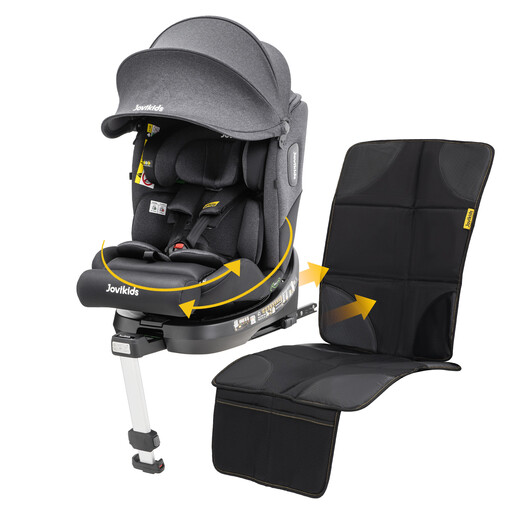
Why this product suits this profile: According to the product details, this seat covers 40 to 150 cm and is aimed at families looking for a long-term adjustable system with a swivel function.
The headrest, inserts and recline angle can be adjusted for different stages of growth. Installation is carried out using ISOFIX and a support leg.
Twelve headrest positions, rear-facing option, removable cover and adjustable support leg.
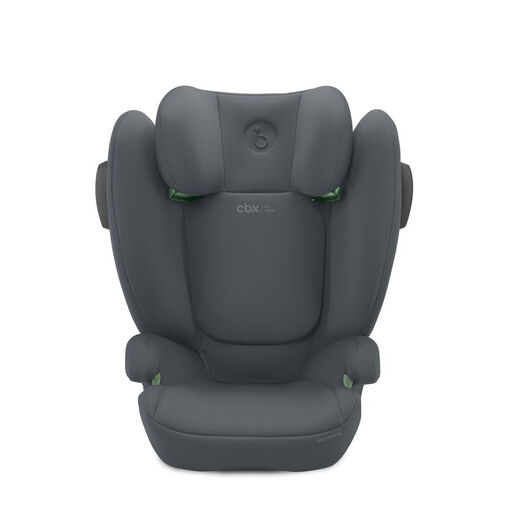
Why this product suits this profile: This high-back booster seat is designed for children measuring 100 to 150 cm, or approximately 3 to 12 years old, making it suitable for taller children.
The height range helps prevent the seat from being used too early. ISOFIX secures the seat, while the seat belt must still be routed correctly in accordance with the instructions.
UN R129/04, twelve-position headrest, adjustable backrest and integrated linear side-impact protection system.
We have put together a complete, regularly updated list of products that fully meet these strict selection criteria and the safety regulations applicable in the EU.
This depends on the approved height range of the individual seat. With i-Size models, children often need to travel rear-facing during the early stages of development. The information on the seat and in the instruction manual is decisive. Do not change the direction of travel based on age alone.
A child car seat up to 12 years is generally designed for a height of up to 150 cm. The actual period of use depends on your child’s growth, the fit and the condition of the seat. Covers, harnesses and attachment points should be checked regularly. Following an accident, consult the manufacturer before continuing to use the seat.
No. Some infant carriers can also be secured using the vehicle’s three-point seat belt. Other models require ISOFIX, Top Tether or a support leg. Before buying, check your vehicle’s equipment and the exact installation requirements for your chosen child car seat.