
Lieferung heute & morgen

Qualitätsgarantie

Willkommens-Angebote freischalten: KOSTENLOSE Lieferung | Bis zu 80 % RABATT | Kostenlose 30-Tage-JoyPlus-Testphase
App herunterladen
A car child seat must suit the child, the vehicle and how it is intended to be used. Eye-catching features alone say little about how practical a seat will be in everyday life. Before buying, parents should therefore check the height range, installation method and approval certification.
A child seat up to 12 years often covers a wide height range. However, this does not automatically mean that one model will provide the best fit at every stage of a child’s growth. With a child seat from birth, for example, a suitable newborn insert, a sufficient reclined position and rear-facing use are important. Larger children have different requirements for belt positioning and seat height.
The key factor is therefore not just the age specification, but above all the child’s height. Under ECE R129, or i-Size, seats are primarily classified according to the child’s height.
A child seat with ISOFIX can usually be fitted more quickly and with less movement. Nevertheless, not every ISOFIX position is suitable for every vehicle. Depending on the model, a support leg or Top Tether may also be required. Before buying, you should therefore check both the vehicle handbook and the manufacturer’s list of approved seats.
For a child seat secured with the vehicle’s three-point belt, the belt guides must be followed precisely. A seat without its own harness system must not be used with a lap belt alone.
A rotating child seat makes it easier to place your child in the seat and fasten the harness. However, a 360-degree rotation does not replace correct installation or proper harness adjustment. An adjustable backrest, sun canopy or washable cover are practical features, but they are not approval certifications in their own right.
First check the height range for which the car child seat is approved. A model covering 40–150 cm may accommodate several stages of development, whereas a seat for 100–150 cm is intended exclusively for larger children.
Under the requirements of the R129 regulation, children must be transported rear-facing up to a specified age or height. The information on the seat, in the handbook and in the applicable legal requirements is decisive. Forward-facing use should only begin when the seat is approved for it and the child is tall enough.
With an i-Size child seat, the approved vehicle seating positions and attachment points are important. Look out for:
A child booster seat, with or without a backrest, is generally used with the vehicle’s three-point belt. The belt must pass over the shoulder and pelvis, not across the neck or stomach.
The integrated 5-point harness should fit snugly against the child’s body, with no thick winter clothing between the child and the harness. The headrest must be suitable for the child’s height and must not be adjusted too high or too low.
A removable, washable cover reduces the effort involved in care and maintenance. Follow the care instructions carefully: some covers can be washed at 30 °C on a delicate cycle and should not be bleached or tumble-dried.
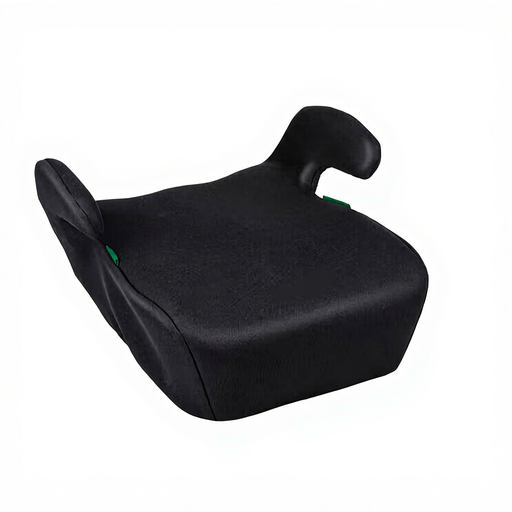
Why this product suits the profile: The booster seat is designed for children measuring 125–150 cm and weighs approximately 1 kg according to the product details. It is suitable for families looking for a straightforward seat for older children or for use when changing vehicles.
The clearly stated height range prevents the mistaken expectation that the booster seat is suitable for smaller children. It is secured with the vehicle’s three-point belt, not a 2-point belt.
ECE R129 approval, removable cover and low weight; integrated armrests.

Why this product suits the profile: The model is designed for children measuring 61–105 cm and, according to the product description, features ISOFIX, a support leg, 360-degree rotation, five recline positions and a 12-position headrest.
The limited height range makes it clear that this is not intended as a child seat up to 12 years. This makes it easier to choose a seat that matches the child’s current stage of growth.
UN R129/03 i-Size, integrated side protection according to the product details and a cover washable at 30 °C.
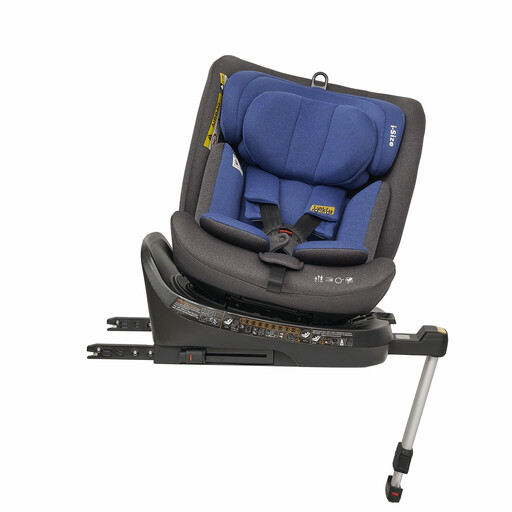
Why this product suits the profile: According to the product details, the seat is designed for children measuring 40–150 cm and combines ISOFIX with 360-degree rotation, several recline positions and a removable sun canopy.
The wide height range is combined with an adjustable headrest and removable inserts. Even so, parents should check every transition stage against the instructions.
Use from 40 cm according to the product details, ISOFIX, support leg, adjustable recline and removable cover.

Why this product suits the profile: According to the product details, this 2-in-1 model is designed for children measuring 76–150 cm, or approximately 15 months to 12 years, and features an adjustable headrest, ISOFIX and Top Tether.
It is not marketed as suitable from birth across the board; according to the product details, use begins from 76 cm. For older children, the design allows a switch from the protective system to the vehicle belt.
UN R129/04, 12 headrest positions, adjustable backrest and removable cover.
We have put together a complete, regularly updated list of products that fully meet these strict selection criteria and the safety regulations applicable in the EU.
The service life depends on the seat’s approval, the child’s height and the condition of the seat. A child seat up to 12 years may cover several height ranges, but it must be adjusted correctly at every stage. Following an accident or if there is visible damage, the seat should be replaced.
No. The rotation function depends on the ISOFIX anchor points, support leg, seat shape and available space in the vehicle. Before buying, check vehicle compatibility and install the seat in accordance with the manufacturer’s instructions.
The booster seat must suit the child’s height and be used with the three-point belt. The shoulder belt should pass centrally over the shoulder, while the lap belt should sit low across the pelvis. Use outside the specified height range is not intended.