
Lieferung heute & morgen

Qualitätsgarantie

Willkommens-Angebote freischalten: KOSTENLOSE Lieferung | Bis zu 80 % RABATT | Kostenlose 30-Tage-JoyPlus-Testphase
App herunterladen
As a car owner who parks outdoors, you know the challenges: bird droppings eating into the paint, sticky pollen in the spring, constant ice scraping in the winter, and relentless UV radiation in the summer that heats the interior and fades the dashboard. A high-quality car cover can be a cost-effective and efficient solution to preserve your vehicle's value.
However, the market is crowded and full of products that overpromise and underdeliver. Before you make a decision, it's crucial to understand the common pitfalls that often lead to disappointment and unnecessary expense.
A well-considered choice protects not only your car but also your wallet.
To make an informed decision, you should focus on three essential features. These determine the durability, protective effect, and everyday usability of your car cover.
The material is the heart of any car cover. The differences are significant and directly linked to the level of protection.
A winter-proof car cover particularly benefits from a multi-layer construction, as it provides better insulation against frost and snow.
The body shape of your car is crucial for the cover's effectiveness. A cover for a sedan has a completely different cut than one for an SUV or station wagon. Pay attention to manufacturer-specific size information that refers to the vehicle type and length.
How to Measure Correctly: Measure the total length of your vehicle from the front bumper to the rear bumper. Compare this value with the length ranges specified in the product description. Be sure to account for any add-ons like spoilers or tow hitches.
A good full car cover must not only protect but also be practical.
Here are some recommendations tailored to different user profiles and vehicle types.
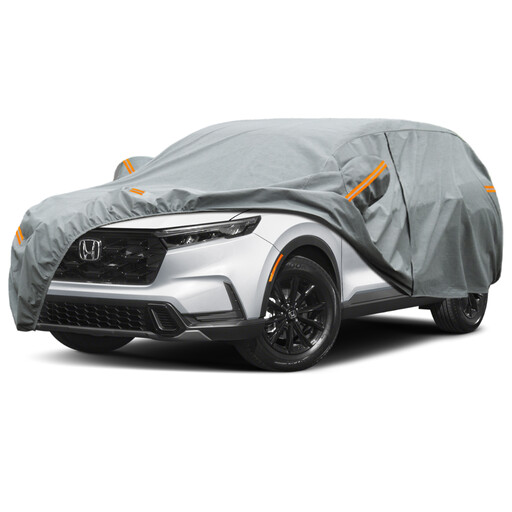
Why This Fits Their Persona: Ideal for owners of mid-size to large SUVs like the VW Tiguan Allspace, Skoda Kodiaq, or BMW X3, who want to protect their vehicle from all weather conditions year-round.
The fit is specifically designed for SUVs, avoiding the chafing caused by a universal cover. Three robust, windproof straps (front, middle, rear) ensure a secure hold even in storms.
The 5-layer non-woven fabric with a waterproof inner membrane and soft lining offers reliable protection from rain, snow, and UV radiation while being gentle on the paint.

Why This Fits Their Persona: Perfect for car owners in hail-prone regions who need a special protective layer for their sedan (e.g., VW Passat, BMW 5 Series) to prevent expensive dents on the roof, hood, and windows.
Unlike standard covers that offer no impact protection, this model features a dedicated padding layer that specifically guards against hail, rather than just vaguely promising weather protection.
The 5 mm thick EVA composite fabric in the core area (roof, windows) can cushion hailstones, according to the manufacturer. Ventilation openings also prevent heat buildup under the cover.
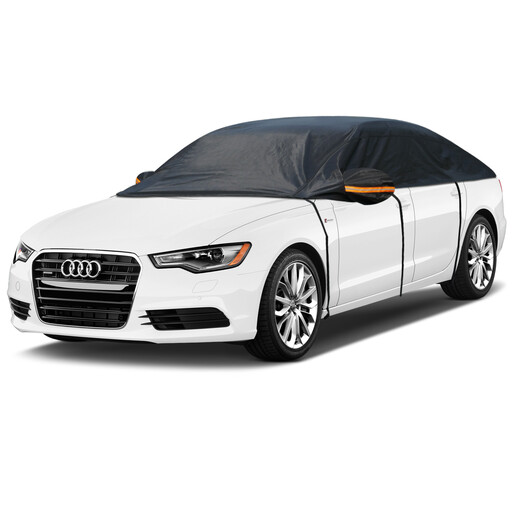
Why This Fits Their Persona: For drivers looking for a quick and easy solution to primarily protect the windows and roof from frost, heat, or bird droppings, without having to install a full cover every time.
A half cover is a deliberate choice for partial protection, avoiding the frustration of an ill-fitting full cover. The attachment with elastic straps to the rims or mirrors is fast and secure.
Extremely fast to install and remove. The multi-layer material with an aluminium layer effectively protects against UV radiation in the summer and prevents windows from icing over in the winter.
We have compiled a complete, up-to-date list of products that fully meet these strict selection criteria and rigorous quality standards.
The most reliable way is to measure the length of your vehicle yourself—from the front edge of the bumper to the rearmost edge. Then, consult the size charts in the product descriptions. Be sure to choose a cover that is explicitly designated for your vehicle type (e.g., sedan, SUV, station wagon), as height and shape also play a role.
Yes, this is possible, especially with significant temperature fluctuations. Condensation can form under any dense cover. High-quality, breathable materials or models with integrated ventilation openings significantly reduce this risk. It is advisable to occasionally air out the cover on dry days to ensure any residual moisture can escape.
A full car cover encloses the entire vehicle, offering complete protection from weather, dirt, and minor scratches. It is ideal for long-term protection. A half cover only covers the upper part of the vehicle (roof, windows, hood, trunk lid). It is much quicker to put on and take off and is excellent for preventing ice scraping in the winter or keeping the interior cool in the summer.