
Lieferung heute & morgen

Qualitätsgarantie

Willkommens-Angebote freischalten: KOSTENLOSE Lieferung | Bis zu 80 % RABATT | Kostenlose 30-Tage-JoyPlus-Testphase
App herunterladen
Maneuvering a vehicle in a cluttered garage, a tight workshop, or a showroom can be a challenge. Without starting the engine, it's nearly impossible to position a car with precision. This is exactly the problem the car dolly was designed to solve. It allows you to effortlessly move, rotate, and precisely place vehicles in the tightest of spaces.
This guide introduces the functionality and key features of car dollies. We'll explain what you should look for when making a selection and present a range of models suitable for various applications.
Choosing the right vehicle positioning dolly depends on several factors. To make an informed decision, you should consider the following criteria.
The most important characteristic is the maximum load capacity per dolly. This must be rated for your vehicle's weight. A single car dolly is placed under one wheel. To move the entire vehicle freely, you will need four units. The total load capacity of the dollies used should safely exceed the vehicle's curb weight. Look for robust materials like high-quality carbon steel or reinforced steel constructions, as these ensure high stability and longevity.
There are different systems for lifting the wheel. Hydraulic and mechanical ratchet pedals are common. Mechanical systems are often considered lower maintenance because they don't have issues with oil leaks. A crucial safety feature is a dolly with a brake. Locking casters prevent the vehicle from rolling away unintentionally once it's positioned. Additional safety features like non-slip surfaces on the platform or safety pins enhance protection for both the user and the vehicle.
The quality of the casters determines how easily the vehicle can be moved. Universal swivel casters that can rotate 360° are the standard here. Ball-bearing casters reduce rolling resistance, allowing even heavy vehicles to be moved with minimal effort. Such a positioning dolly is fundamental for precise work in the workshop.
Based on the criteria above, we have compiled a selection of products that stand out for their specific features, catering to different needs.
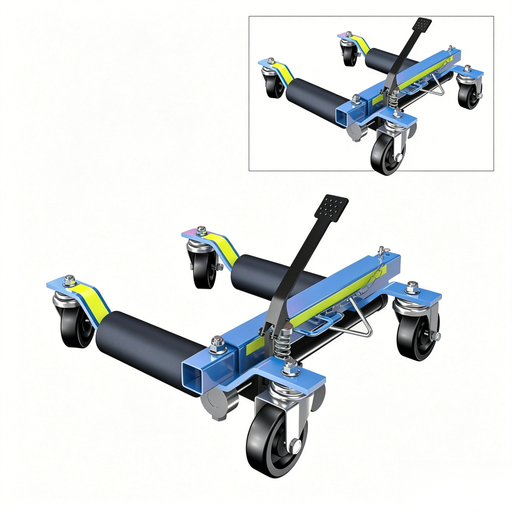
Why This Model Stands Out: This wheel dolly for lifting and positioning uses a mechanical ratchet pedal system. Compared to hydraulic models, it eliminates the risk of oil leaks and performance degradation. The carbon steel construction and an additional safety pin ensure secure operation. A practical detail is the full-surface reflective strips, which significantly improve visibility in poorly lit environments.
Advantages:
Who Is It For? This model is an excellent choice for home mechanics and workshops looking for a reliable, low-maintenance solution for regularly moving standard vehicles.
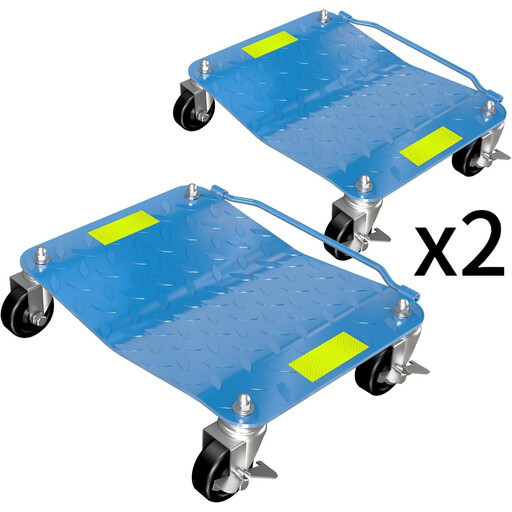
Why This Model Stands Out: This workshop positioning dolly is designed for heavy loads and professional use. The V-shaped steel plate is particularly thick at 4 mm and reinforced to prevent deformation even under high stress. The diamond-patterned, non-slip surface provides a secure grip for the tire. Two of the four swivel casters are equipped with a locking brake, making positioning exceptionally safe.
Advantages:
Who Is It For? Ideal for professional auto shops, body shops, and classic car owners who need to move heavy vehicles safely and value maximum stability and durability.

Why This Model Stands Out: Efficient work requires not only the right tools for moving vehicles but also excellent organization. This rolling tool chest, made of cold-rolled steel, offers a mobile and robust storage solution. The powder-coated finish is resistant to rust and wear. A special feature is the perforated side panels with removable hooks, allowing quick access to frequently used tools.
Advantages:
Who Is It For? This tool chest is a valuable addition to any workshop or garage. It is aimed at anyone looking to keep their tools organized, accessible, and mobile to streamline workflows.
The products presented cover common use cases. However, if you are looking for more specific solutions or other workshop accessories, a wide range of alternatives is available.
Discover more practical helpers for your workshop in our Creepers category.
1. How many car dollies do I need for one car? For complete 360° freedom of movement, allowing the vehicle to be moved sideways or diagonally, you need four dollies—one for each wheel. If you only want to pivot the vehicle around an axle or lift and move one end, two dollies placed on the wheels of the front or rear axle will suffice.
2. What is the difference between a floor jack and a car dolly? A floor jack (or trolley jack) is primarily used to lift the vehicle at a central point on the frame or axle to perform tasks like a tire change. It typically has a small contact pad. A car dolly (also called a positioning dolly), on the other hand, is a platform onto which the entire wheel is placed. Its purpose is not to lift for repairs, but to move the entire vehicle across the floor.
3. Are car dollies suitable for all tire sizes? Most car dollies are designed for a maximum tire width, which is specified in the product details (e.g., 12 inches or 30.5 cm). It is important to check before purchasing whether your vehicle's tire width is compatible with the dolly's capacity to ensure safe use.