
Lieferung heute & morgen

Qualitätsgarantie

Willkommens-Angebote freischalten: KOSTENLOSE Lieferung | Bis zu 80 % RABATT | Kostenlose 30-Tage-JoyPlus-Testphase
App herunterladen
Choosing the right car jack is a critical decision for anyone performing maintenance or repairs on their own vehicle. However, the market is saturated and confusing, filled with products whose specifications often overpromise and underdeliver. An unsuitable or low-quality tool isn't just an annoyance—it's a significant safety hazard.
As your Joybuy Product Recommendation Officer, I'm here to help you navigate the common pitfalls. Instead of being swayed by marketing buzzwords, we'll focus on the objective criteria that truly matter.
The 3 Most Common Mistakes When Buying a Car Jack:
To make an informed decision, you should carefully examine three core technical parameters. These determine the jack's safety, compatibility, and functionality.
The stated load capacity is the maximum weight the jack can safely lift. A common but flawed assumption is that half the vehicle's mass is a sufficient benchmark.
Rule of Thumb: Choose a jack with a load capacity of at least 75% of your vehicle's total gross weight. This creates a necessary safety margin to account for uneven weight distribution and dynamic loads. For most modern cars, estates, and SUVs, a 3t jack (3-ton) is a future-proof choice that offers enough capacity even for heavier vehicles. Look for certifications like EN 1494, which signal that the load-bearing capacity has been tested according to European standards.
The lifting range defines the jack's minimum and maximum working height.
The most common types differ in their operation and intended use.
Here are some models tailored to specific user profiles and their requirements.
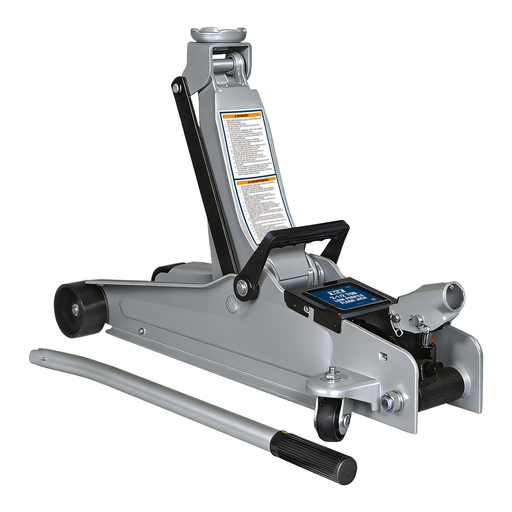
Why This Fits Their Persona: Ideal for owners of standard cars who also want to be prepared for lowered vehicles or performance models. A versatile all-rounder with professional features.
Solves the compatibility problem: With a low clearance of just 85 mm, it fits under very low vehicles, thus avoiding a classic purchasing mistake.
A 2.5-ton load capacity is suitable for most cars and light SUVs. The EN 1494 + CE certification confirms compliance with European safety standards.
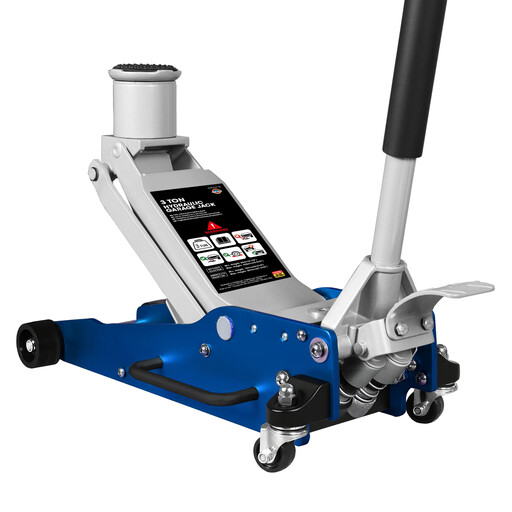
Why This Fits Their Persona: For enthusiasts who need a lightweight yet extremely powerful tool for various vehicle types—from low-profile sports cars to large SUVs.
Combines a very low minimum clearance of 85 mm with a high load capacity of 3 tons and a height extender for SUVs. Maximum flexibility, no compromises.
Lightweight aluminium construction for easy transport. The dual-pump hydraulic system allows for very rapid lifting with less effort.
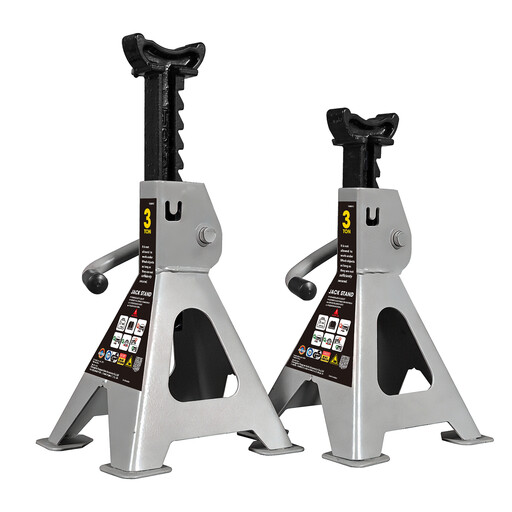
Why This Fits Their Persona: For anyone who works underneath their vehicle. This isn't an option—it's a safety-critical necessity that must complement any car jack.
Directly addresses the most dangerous mistake: using a jack alone for support. These jack stands provide the stable and secure support that is mandatory for any work under a car.
The GS certification ("Geprüfte Sicherheit" or "Tested Safety") and compliance with the EN 1494 standard demonstrate independent testing. The solid steel construction ensures maximum stability.
We have compiled a complete, up-to-date list of products that fully meet these strict selection criteria and safety regulations.
The load capacity should never be underestimated. As a safe rule of thumb: choose a load capacity that is at least 75% of your vehicle's gross weight. For most cars and SUVs, a model with a 2.5 to 3-ton capacity provides a sufficient safety margin for almost any application.
No, under no circumstances. A hydraulic or pneumatic jack is designed exclusively for lifting and lowering. As soon as the vehicle reaches the desired height, it must be immediately secured on a level, solid surface using certified jack stands designed for the purpose. This is the only way to ensure safe working conditions underneath the vehicle.
A floor jack is highly mobile and easy to position under a vehicle due to its castors and long handle. It offers a large, stable contact area and is the preferred choice for garages and workshops. A bottle jack is more compact and often less expensive, but it has a smaller footprint and is less convenient to operate. For regular vehicle maintenance, a hydraulic floor jack is generally the more practical and safer solution.