
Lieferung heute & morgen

Qualitätsgarantie

Willkommens-Angebote freischalten: KOSTENLOSE Lieferung | Bis zu 80 % RABATT | Kostenlose 30-Tage-JoyPlus-Testphase
App herunterladen
Choosing the right car jack is a fundamental decision for ensuring safety and efficiency during vehicle maintenance and repair. Technical parameters such as lifting capacity, lifting height, and power source are key determinants of the tool's application range and reliability. An informed decision is based on an analysis of the specific requirements of your vehicle fleet and the intended tasks. This guide breaks down the relevant criteria to simplify your selection process.
The decision to purchase a car jack should be based on objective, technical features. The following parameters are crucial for proper sizing and application.
The maximum lifting capacity, specified in tons (t), is the primary safety feature. It must be rated to handle the weight of the vehicle being lifted.
The type of power source affects handling, speed, and the amount of physical effort required.
The jack's design determines its stability and manoeuvrability.
The lifting range defines the minimum and maximum height the car jack can reach. The minimum clearance height is crucial for low-profile vehicles, while the maximum lifting height is relevant for vehicles with high ground clearance (e.g., SUVs). High-strength steel, clean welds, and a corrosion-resistant coating are indicators of a durable construction.
Based on technical specifications and practical utility, we present two models that cover different user profiles.
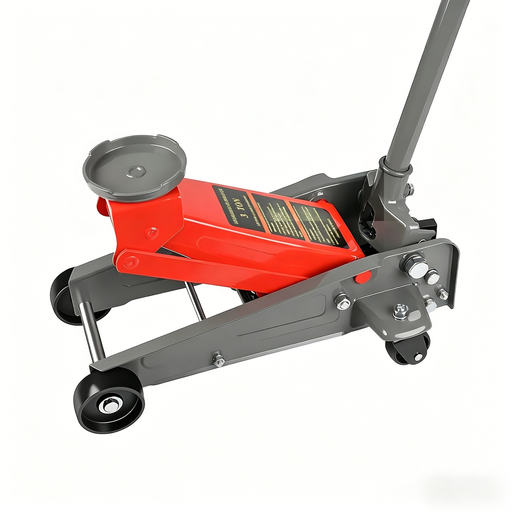
Why We Recommend This Product: This model combines the proven technology of a hydraulic system with the practical design of a floor jack. With a 3-ton lifting capacity and a lifting range of 135 mm to 460 mm, it covers a wide spectrum of passenger car models. Its carbon steel construction and 360° swivel castors ensure durability and excellent manoeuvrability.
Pros:
Who It's For: This model is a solid choice for private car owners, DIY mechanics, and small workshops that need a reliable and versatile hydraulic jack for regular maintenance on passenger cars.
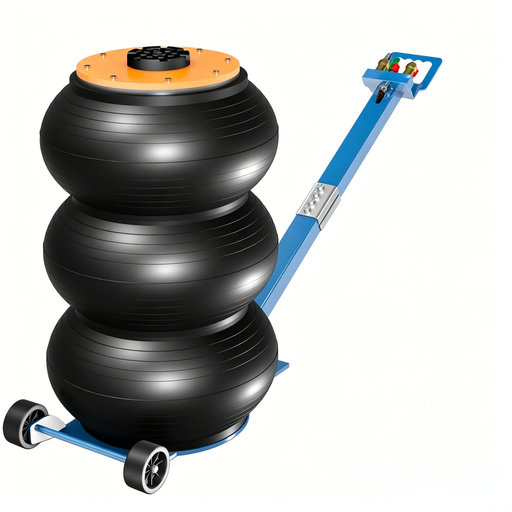
Why We Recommend This Product: This pneumatic jack is designed for maximum efficiency and heavy loads. With a 5-ton lifting capacity and an extremely fast lift time of 3-5 seconds, it optimises workflows in professional environments. Safety features like the automatic stop at maximum height and a controlled release valve enhance operational safety.
Pros:
Who It's For: This device is aimed at professional users in automotive workshops, tyre services, and body shops who require a powerful and time-saving jack for their workshop.
The choice of the right lifting tool depends heavily on the specific application. In addition to the models presented here, other specialised jacks and supplementary equipment are available. You can find an overview of various solutions and accessories in our Workshop Tools category.
1. What tonnage should a car jack have? As a rule of thumb, the jack's lifting capacity should be at least 75% of the vehicle's gross weight. Since a jack only ever lifts one side or one end of the vehicle, the full weight never rests on it. A 3-ton jack is a safe choice for most passenger cars up to mid-size SUVs. For heavier vehicles like large SUVs or vans, a 5-ton model is recommended.
2. What is the difference between a hydraulic and a pneumatic jack? A hydraulic jack generates lift by manually pumping fluid into a cylinder. It offers precise control and is widely used. A pneumatic jack uses compressed air from a compressor to inflate air bags. It is significantly faster, making it ideal for professional workshop use, but it requires an external compressed air source.
3. How do I correctly position a floor jack? Position the jack exclusively at the lifting points on the underbody designated by the vehicle manufacturer. These are often marked by reinforcements on the sill or frame and are documented in the vehicle's owner's manual. Ensure the ground is solid, level, and stable. Never lift the vehicle on loose or uneven ground. Always secure the vehicle with jack stands before performing any work underneath it.