
Lieferung heute & morgen

Qualitätsgarantie

Willkommens-Angebote freischalten: KOSTENLOSE Lieferung | Bis zu 80 % RABATT | Kostenlose 30-Tage-JoyPlus-Testphase
App herunterladen
A car jack doesn't just need to lift your vehicle – it also has to suit its weight, ground clearance and intended use. Changing a tyre at the roadside places very different demands on a jack compared to regular work in the garage or a workshop environment.
Many poor purchases happen because of specifications that look convincing at first glance but offer little real-world value in practice. What really matters isn't just a high tonnage rating or a low price, but how several technical details work together.
The stated load capacity describes the maximum load the jack can handle – it doesn't automatically guarantee safety for every vehicle. For a tyre change, you're normally only lifting a portion of the total weight. Even so, the load capacity should offer enough of a safety margin and match the axle load as well as your vehicle type.
A 3-tonne car jack can be suitable for many saloons, SUVs and MPVs. However, pick-ups, 4x4s or light commercial vehicles may have different requirements. The figures in your vehicle documentation and at the designated lifting point are what you should rely on.
A low-profile car jack must actually fit underneath the lowest designated lifting point. The minimum clearance height is therefore more important than a vague marketing claim like 'suitable for sports cars'.
For lowered saloons and sports cars, for example, 85 or 90 mm entry height can be critical. A jack with a higher entry point may not be possible to position at all, even if its maximum load capacity is sufficient.
A car jack is primarily designed for lifting. For any work carried out underneath the vehicle, you'll also need suitable axle stands. The vehicle must never be supported solely by a hydraulic or mechanical jack when repairs or inspections are planned underneath it.
When choosing axle stands, look for:
First, compare your vehicle's gross vehicle weight, axle loads and construction with the product's specification. An SUV car jack often needs a greater lifting range than a model designed for a compact saloon. For larger vehicles, a wider base and higher load capacity can also be beneficial.
Don't look at a '5-tonne' or '6-tonne' rating in isolation. Also check whether the jack is designed for the specific lifting point and the lifting height you need.
The lifting height is usually given as a range, for example 85–380 mm or 150–530 mm. The minimum height must fit under your vehicle; the maximum height must be enough to allow the wheel to move freely or to provide sufficient space for the work you plan to do.
Steel constructions are often designed for high load capacity, while aluminium versions can reduce weight. What really matters is the specific construction, the lifting saddle and the quality of manufacture.
For hydraulic models, a controlled release system and – if stated – an overload valve are relevant features. For axle stands, the height adjustment should lock mechanically and securely. Markings such as EN 1494, CE or a GS mark should only be considered if they are clearly associated with the specific product. For the GS mark, also check the responsible testing body on the product documentation.
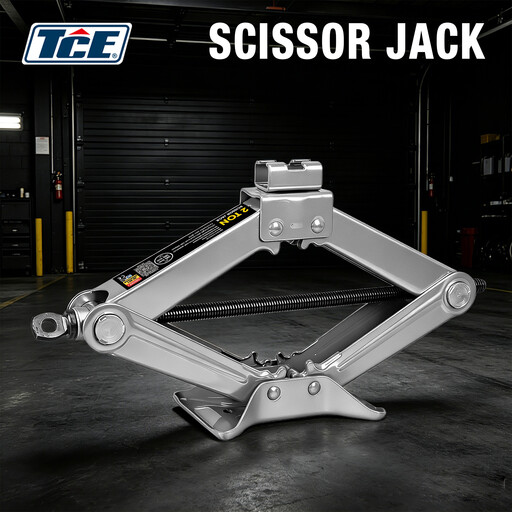
Why this product fits the profile: This foldable scissor jack is designed for occasional tyre changes and storage in the vehicle. Its lifting range of 120–395 mm covers many saloons and city SUVs.
The stated entry height of 120 mm and load capacity of 2 tonnes make its limitations clear. Before buying, you should check your own vehicle's ground clearance.
Foldable, suitable for the boot and equipped with a wide, non-slip base and screw mechanism.
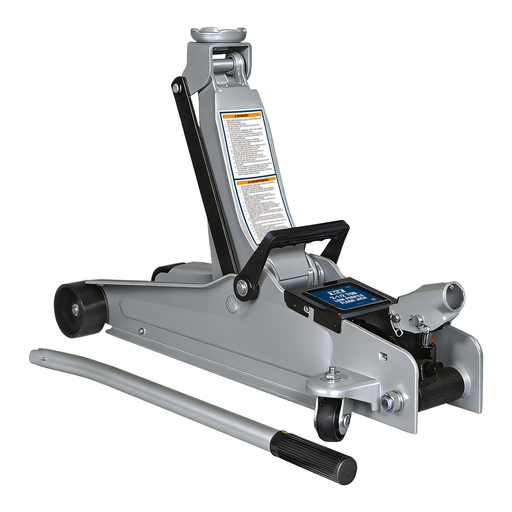
Why this product fits the profile: This hydraulic model is designed for vehicles with low ground clearance and offers a range of 85–380 mm for sports cars, lowered saloons, SUVs and MPVs.
The low entry height is specifically stated as 85 mm. EN 1494 and CE are also mentioned; these should be checked against the product documentation when you receive it.
2.5-tonne stated load capacity, steel construction and a lifting range for both low and higher vehicles.
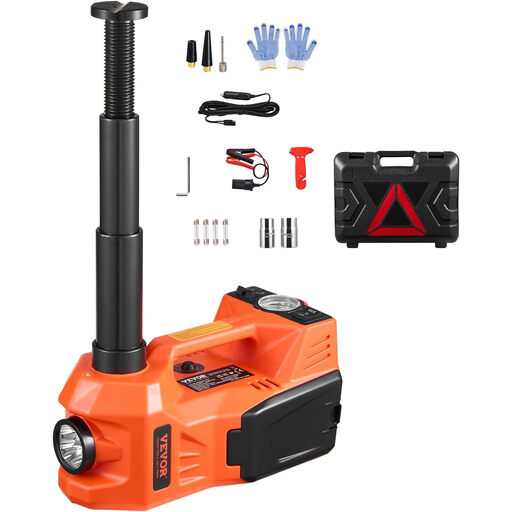
Why this product fits the profile: This 12-volt set is aimed at drivers who need electric assistance during a breakdown or when changing a car tyre. According to the product information, it is intended for saloons, SUVs and trucks under 5 tonnes.
The power supply via a 12-volt socket is explicitly stated. Before use, you must check the cable length, connection and safe positioning at the lifting point.
Electric lifting function, integrated lighting and safety tool for mobile use.
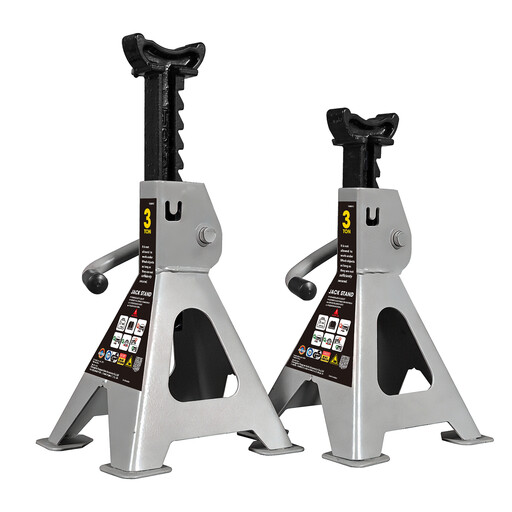
Why this product fits the profile: These axle stands complement a car jack for work where the vehicle needs to be supported. The height range is stated as 276–420 mm according to the product information.
The stated height adjustment and an audible locking mechanism help you control the support. According to the product description, EN 1494 and GS are mentioned.
Welded steel construction, adjustable height and a stated load capacity of 3 tonnes per pair.
We've put together a complete, regularly updated list of products that fully meet these strict selection criteria and the safety regulations in force in the EU.
For an SUV, the load capacity, maximum lifting height and position of the lifting point are all critical. A hydraulic trolley jack or a model with at least a suitable lifting range can be a good choice. Actual suitability must be checked against the vehicle's weight, axle load and manufacturer's specifications.
The lifespan depends on load, storage conditions, seals and maintenance. Store the jack in a dry place, clean the lifting saddle and follow the operating instructions. If you notice oil leaks, damaged castors, a bent frame or uncontrolled lowering, the jack should not be used any further.
For a quick tyre change, the vehicle is usually only lifted for as long as is needed for the wheel work. As soon as a person or any part of their body is underneath the vehicle, suitable axle stands are required. The jack alone is not sufficient as a permanent support.