
Lieferung heute & morgen

Qualitätsgarantie

Willkommens-Angebote freischalten: KOSTENLOSE Lieferung | Bis zu 80 % RABATT | Kostenlose 30-Tage-JoyPlus-Testphase
App herunterladen
A car jack needs to suit your vehicle, the job you have planned and the space available. The requirements for changing a tyre on a car differ from those for an SUV, pick-up or van. If you focus only on a high tonnage rating or a low price, you can easily overlook crucial details.
Typical buying mistakes arise from three issues:
The stated lifting capacity is usually given in tonnes, for example 1.5 t, 3 t, 5 t or 6 t. This indicates the product’s maximum intended load. For a car jack for passenger cars, a 1.5 or 2 t model is often sufficient, provided that the vehicle weight, lifting point and intended use are suitable.
For an SUV, pick-up or van, an SUV car jack with a capacity of 3 t or more may be a sensible choice. A 5-tonne car jack or a vertical 6-tonne jack, on the other hand, is more suited to heavier vehicles and specialised workshop tasks. Capacity should not be calculated too tightly. Check the vehicle’s gross permitted weight and bear in mind that, when lifting at a single point, the entire vehicle weight is not distributed evenly.
The minimum height must fit beneath the intended lifting point. For lowered vehicles or sports cars, a low-profile model with a low minimum height is a practical choice. A car jack with quick lift can bridge the gap to the contact point more quickly, but it does not replace checking the dimensions.
The maximum lift height determines whether the wheel actually clears the ground and whether there is enough room for the job you have planned. A hydraulic trolley jack with a range of 135 to 460 mm is suitable for many conventional cars. Taller vehicles may require a greater lifting range. Therefore, compare the jack’s technical specifications with your vehicle’s ground clearance and lifting points.
A hydraulic car jack is generally operated using a pump and handle. Trolley jacks have castors and can be positioned in the garage or workshop. Important features include a stable saddle, controlled lowering and a sufficiently strong frame.
A pneumatic car jack requires a suitable compressor and a level, load-bearing surface. With frequent use, it can save time and reduce manual pumping, but it is only practical for mobile breakdown assistance if a compressed-air supply is available.
Also pay attention to:
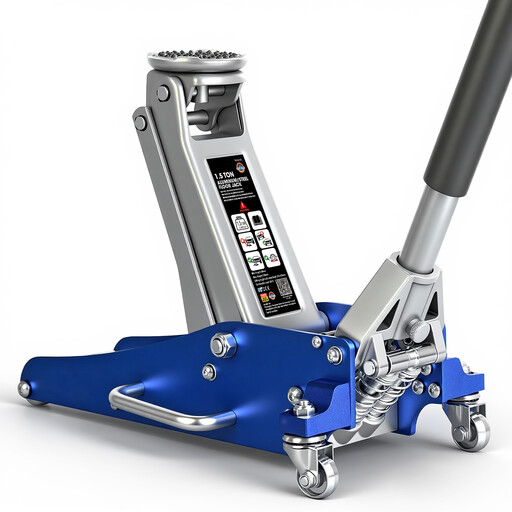
Why this product suits this profile: This model is aimed at owners of lighter cars who need a relatively easy-to-transport jack for the garage, emergency tyre changes or occasional jobs.
The specifications state a minimum height of 90 mm, a maximum lift height of 358 mm and a capacity of 1.5 t. This makes it possible to check the key compatibility details before buying.
Aluminium alloy construction, an approximate net weight of 14.3 kg, twin-piston pump, and stated EN-1494 and CE certification.
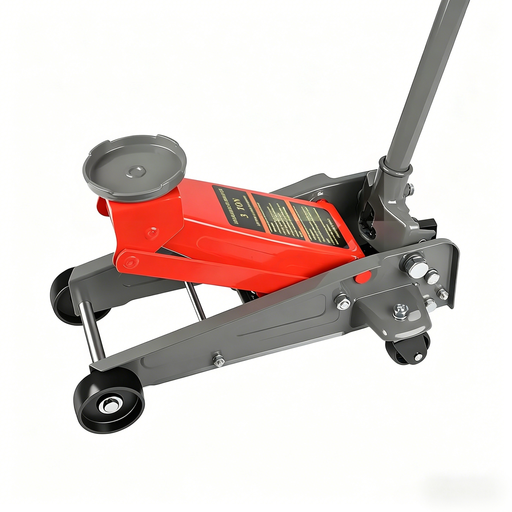
Why this product suits this profile: With a 3-tonne capacity, this hydraulic trolley jack is designed for regular work on cars and a wide range of maintenance tasks in the garage or workshop.
The stated lift range of 135 to 460 mm covers both the minimum height and a broad working range. Load-bearing castors and swivel castors help with positioning.
Carbon steel frame, 3 t capacity, large saddle and two-piece handle with non-slip rubber coating.
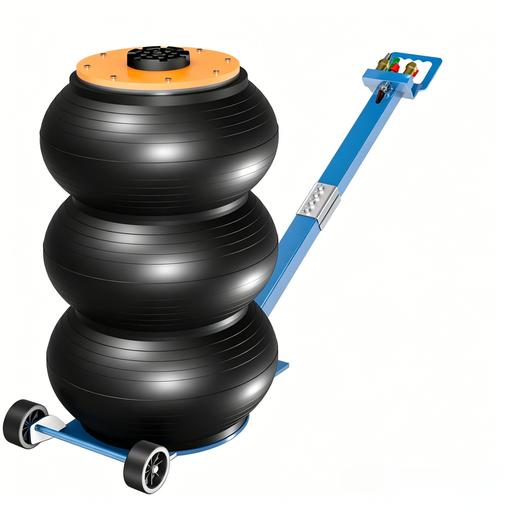
Why this product suits this profile: For workshop operators and frequent users with a suitable compressor, a pneumatic car jack can be a practical choice for repeated lifting operations.
The 5 t capacity, lift range of 40.4 to 49.75 cm and note about the required compressed-air supply make the intended use clearer.
Pneumatic quick-lift system with a stated lifting time of 3 seconds, adjustable handle and automatic limit at maximum height.
We have put together a complete, regularly updated list of products that fully meet these strict selection criteria and the safety regulations applicable in the EU.
Before use, read the vehicle and car jack operating instructions. In particular, check that:
A car jack for changing tyres should be stored in a dry, clean place after use. With hydraulic models, oil loss, damaged castors, cracks in the frame and difficult lowering are all reasons to stop using the equipment. Service life depends on the load, storage, maintenance and compliance with the permitted capacity.
For many passenger cars, a hydraulic car jack with a capacity of 1.5 to 3 t may be suitable. However, the decisive factors are the vehicle weight, the minimum height at the lifting point and the required lift height. Before buying, compare these specifications with the vehicle details.
There is no universal answer. Check the gross permitted weight and the intended lifting points. A 3-tonne hydraulic trolley jack may be suitable for certain SUVs; heavier vehicles or those with greater ground clearance may be better suited to 5 t or 6 t models.
Yes. Clean the saddle and castors, inspect the frame and pump mechanism, and check hydraulic equipment for leaks. Pneumatic models also require a suitable compressed-air supply and should be inspected in accordance with the manufacturer’s instructions. Regardless of the model, axle stands are required for work underneath the vehicle.