
Lieferung heute & morgen

Qualitätsgarantie

Willkommens-Angebote freischalten: KOSTENLOSE Lieferung | Bis zu 80 % RABATT | Kostenlose 30-Tage-JoyPlus-Testphase
App herunterladen
A car jack is part of the essential equipment for changing tyres, carrying out maintenance and handling emergency repairs. Even so, unclear manufacturer specifications and incorrectly assessed vehicle data often lead to unsuitable purchases. A model with a high load capacity is not automatically suitable for every vehicle. Important factors include the minimum clearance height, lifting range, support surface and intended use.
This guide explains what private vehicle owners, motorcyclists, DIY mechanics and workshops should look for when buying a car jack. The selection is based on clear technical specifications and different usage profiles.
The stated load capacity, such as 2-tonne car jack, 3-tonne car jack or 5-tonne car jack, refers to the maximum permitted load of the jack. When lifting one side of a vehicle, the entire vehicle weight is not transferred to the jack, but you should still avoid choosing a model with little safety margin.
A 2-tonne model may be sufficient for a small car, while an SUV, van or off-road vehicle often needs a car jack with a higher load capacity and greater lifting height. The specifications in the vehicle documentation and at the intended lifting point are decisive.
A car jack must first be able to slide beneath the lowest point of the vehicle. Low starting or clearance height is important for lowered saloons and sports cars. A scissor jack with an initial height of 88 or 120 mm may be more practical here than a larger trolley jack.
For SUVs and vehicles with greater ground clearance, the maximum lifting range is more important. You should therefore check both values: minimum height and maximum lifting height. Comparing only the maximum lifting height can quickly result in an unusable tool.
A hydraulic car jack reduces the effort required, but it does not replace safety measures. An electric car jack can make lifting easier, but it relies on a stable 12-volt power supply and a suitable vehicle position. The car jack must not be used as the sole permanent support.
Suitable axle stands are essential for working beneath a vehicle. The surface should be level, stable and resistant to slipping. Before lifting, apply the handbrake and select a gear or Park; loose objects and people must not be beneath a raised vehicle.
Do not choose the load capacity based solely on the kerb weight. Take luggage, accessories, potential loads and the vehicle’s construction into account. A car jack for cars and SUVs should also be sufficiently robust if you regularly lift heavier vehicles.
Look for clear marking of the maximum load and a stable base. For a motorcycle jack, the load capacity must match the motorcycle’s actual weight. Models with rated capacities of 500, 544 or 700 kg cover different motorcycle classes, but must always be used at the intended support points.
The lifting range should match the ground clearance and the intended task. A limited lift is usually sufficient for changing a tyre, while suspension work may require more clearance. The support surface must securely accommodate the lifting point specified by the vehicle manufacturer.
With a motorcycle lift or motorcycle jack, the frame, underside of the engine and underbody cannot be loaded arbitrarily. Before use, check the motorcycle’s design, the position of the exhaust system and the width of the support points. A motorcycle stand or additional tie-down straps may be required depending on the task.
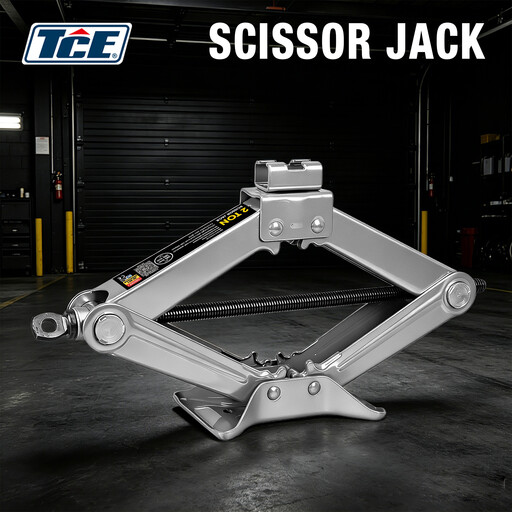
Why this product suits this profile: This foldable scissor jack is designed for emergency tyre changes at home and vehicles with low ground clearance. Its lifting range extends from 120 to 395 mm, with a rated load capacity of 2 tonnes.
The specific starting and maximum height specifications make it easier to compare the jack with the vehicle’s ground clearance. The wide, non-slip base helps provide a stable footing on a suitable surface.
2-tonne rated load capacity, foldable design and a lifting range of 120 to 395 mm.
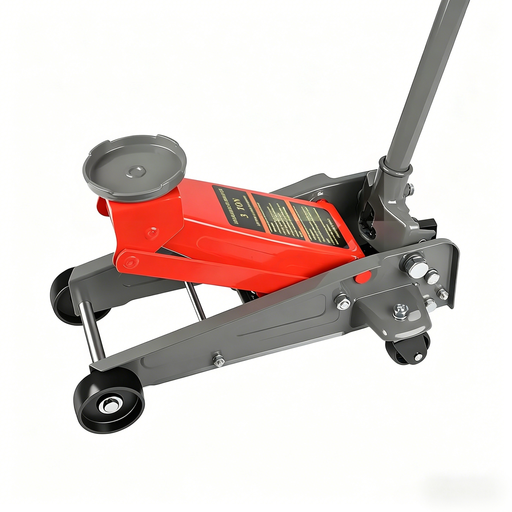
Why this product suits this profile: This hydraulic car jack is aimed at garages and workshops where regular repositioning and a larger lifting range are required. According to the product specifications, it lifts from 135 to 460 mm.
The 3-tonne load capacity and clearly stated lifting range make it easier to match the jack to a vehicle than vague specifications without measurements.
Carbon steel construction, 3-tonne load capacity and castors for positioning.
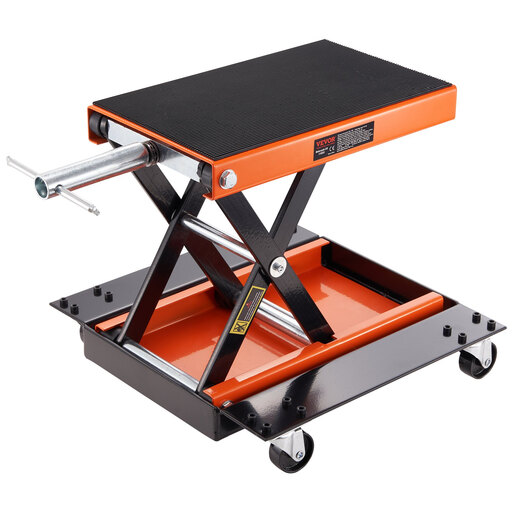
Why this product suits this profile: This motorcycle jack is designed for maintenance and tyre work on different types of motorcycle. Its lifting range of 120 to 390 mm and four castors make positioning in a garage or workshop easier.
The safety bar and specified support points make it clear that the motorcycle must also be secured against movement after lifting.
500 kg capacity, 120–390 mm lifting range, removable handle and four castors.
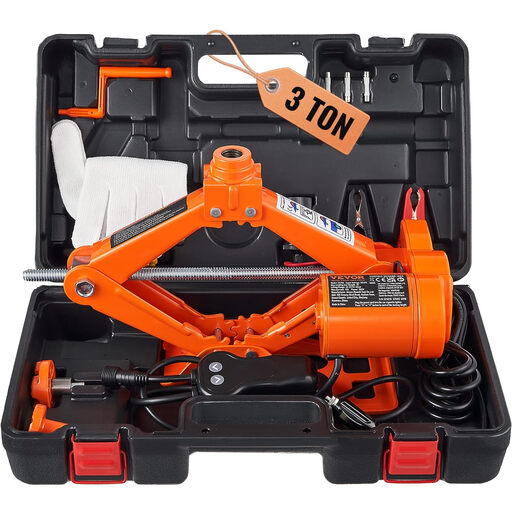
Why this product suits this profile: The 12-volt system is aimed at users who want to use as little manual effort as possible when changing a tyre. Before buying, check the socket, cable length and the vehicle’s approved lifting points.
The stated 12-volt power supply helps ensure that the power source is not overlooked when buying. The 3-tonne load capacity makes it easier to assess suitability for different cars and SUVs.
Electric drive, 12-volt connection and stated load capacity of 3 tonnes.
A complete tyre-changing tool kit should include at least a suitable wheel wrench, axle stands, a torque wrench and, where necessary, wheel chocks, in addition to the car jack. Before every use, check whether the screws, welds, castors, spindle or hydraulic system show any visible damage.
Only lift the vehicle at the points approved by the manufacturer. After lifting, secure the vehicle on axle stands before starting work on the suspension or beneath the vehicle. A car jack should be stored in a dry, clean place. With mechanical models, lightly lubricating the spindle in accordance with the manufacturer’s instructions may be advisable; hydraulic systems must not be filled independently with unsuitable fluids.
We have put together a complete, regularly updated list of products that fully meet these strict selection criteria and the safety regulations applicable in the EU.
Its service life depends on the load, frequency of use, storage and maintenance. A scissor jack should be protected from corrosion and its spindle kept clean. With a hydraulic car jack, check the seals, pumping function and any possible traces of oil. Damage to load-bearing components is grounds for discontinuing use.
It may be sufficient for simply lifting one wheel. For a safe tyre change, you also need suitable tools and secure support. The car jack must remain correctly positioned while the wheel is removed and refitted; the vehicle should not rest solely on the jack if the job takes longer.
A 12-volt car jack draws power from the vehicle battery or 12-volt socket. Running costs are usually low with occasional use. More importantly, the battery must be sufficiently charged and the engine or power supply must cover the stated power requirements. For regular workshop work, a hydraulic or mechanical car jack may be more practical because it does not rely on an external power supply.