
Lieferung heute & morgen

Qualitätsgarantie

Willkommens-Angebote freischalten: KOSTENLOSE Lieferung | Bis zu 80 % RABATT | Kostenlose 30-Tage-JoyPlus-Testphase
App herunterladen
A dead car battery is more than just an annoyance; it can derail your plans and lead to unexpected costs. Many drivers, therefore, turn to a portable jump starter to be independent of roadside assistance or helpful neighbours. However, the market is flooded with devices whose marketing claims often promise more than the technology can deliver. As your Joybuy Product Recommendation Officer, I'll help you identify the crucial features and avoid common purchasing traps.
Three common problems, in particular, often lead to disappointment:
jump starter power bank to be empty after just one attempt or a short period of storage.To make an informed decision, you shouldn't be guided by marketing buzzwords but rather check three core technical specifications. These determine whether a jump starter is suitable for your vehicle and reliable in an emergency.
The most important metric is the current the device can deliver. Here, a distinction must be made:
Pro Tip: For most petrol engines up to about 3.0 litres of displacement, a device with 400–600 A of cranking current is sufficient. A jump starter for diesel engines or larger petrol engines requires significantly more power; here, you should consider models with at least 800 A or more. Ensure the jump starter is explicitly rated for the size and type of your engine (petrol/diesel). All devices mentioned here are designed as a 12V jump starter, the standard for passenger cars.
The capacity, specified in milliampere-hours (mAh), determines how much energy the battery can store. A higher capacity not only means more reserves for multiple start attempts but also that the device can be used for longer as a jump starter power bank to charge smartphones or tablets. Modern lithium-ion or lithium-polymer batteries offer high energy density in a compact design.
Pro Tip: A capacity of 10,000 mAh is a good benchmark for a reliable portable jump starter. However, more important than the number itself is the quality of the cells used. Pay attention to the specified operating temperature. A good device will also work reliably at sub-zero temperatures when a car battery is dead and jump-starting is most urgently needed.
Modern car boosters should absolutely be equipped with "smart" jumper cables. These contain a small electronics box that offers several protective functions:
Pro Tip: The quality of the clamps themselves is also crucial. Solid, fully insulated clamps with thick copper cables ensure good conductivity and safe handling.
Based on these objective criteria, we have identified products that represent a suitable solution for specific user groups.
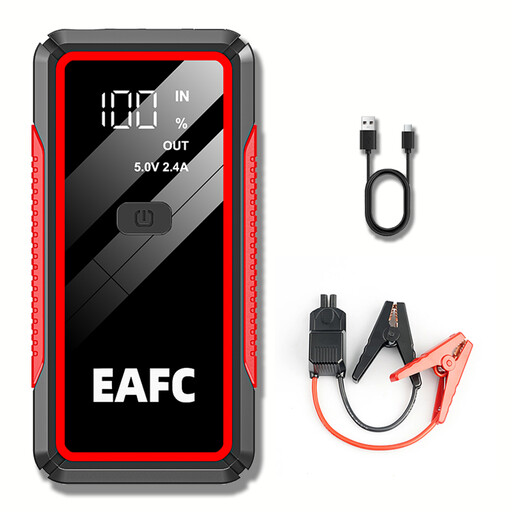
Why This Fits Their Persona: Ideal for drivers of common petrol and diesel vehicles looking for a reliable and compact solution for the boot or glove compartment. The additional function as a power bank is practical for everyday use.
The device specifies compatibility for petrol engines up to 6.0L and diesel engines up to 4.0L, based on a peak current of 2000A and a capacity of 10000mAh. It includes smart clamps with reverse polarity protection.
A great balance of power and portability. The integrated LED torch with an SOS function enhances safety during a breakdown at night.
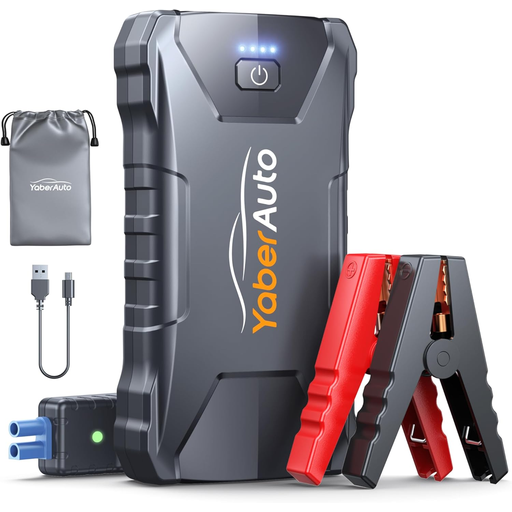
Why This Fits Their Persona: Suitable for drivers of SUVs, vans, or vehicles with large-displacement engines who need a higher power reserve. Its low weight still makes it very portable.
This model is explicitly designed for petrol engines up to 7.0L and diesel engines up to 5.5L. It addresses the safety trap with 10 integrated protection features that provide alerts in case of incorrect use.
High power for larger engines while maintaining very compact dimensions and a weight of only 340g. The USB-C input allows for modern and flexible charging.
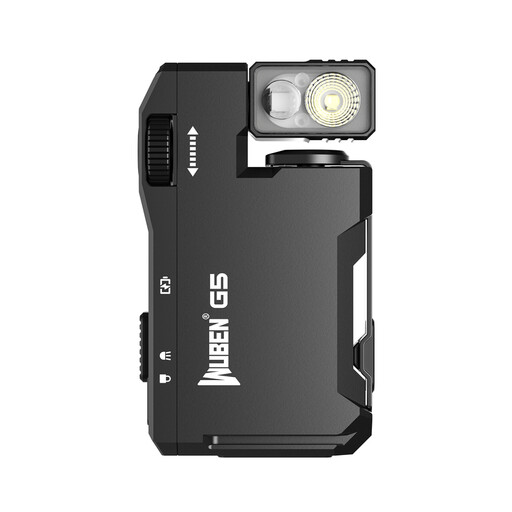
Why This Fits Their Persona: For users who appreciate a complete emergency kit. A jump starter is essential, but a powerful, reliable light source is indispensable for safe handling in the dark or bad weather.
This product avoids the trap of "all-in-one" devices with a weak flashlight. It is a specialised tool: an extremely bright, robust, and waterproof torch that serves as a complement to the jump starter.
Very high brightness of 1200 lumens, rechargeable via USB-C, and waterproof to the IP68 standard. This ensures maximum reliability in all weather conditions.
We have compiled a complete, real-time list of products that fully satisfy these strict selection criteria and UK safety regulations.
To maintain the battery's lifespan and ensure the device is ready in an emergency, it is recommended to fully charge it every 2 to 3 months, even if it has not been used. Store it in a cool, dry place and avoid extreme heat in the summer, such as can occur inside a car.
Not always. Diesel engines have a higher compression ratio and therefore require a significantly higher starting current, especially in the cold. Always use a jump starter only for the engine types and displacement sizes specified by the manufacturer. Using a device that is too weak may be unsuccessful or damage the unit.
Yes, as long as you use a high-quality device with the smart safety clamps described. Reverse polarity, short-circuit, and over-voltage protection are crucial to protect the sensitive onboard electronics (ECUs, infotainment systems) from damage. Always follow the manufacturer's instructions.