
Lieferung heute & morgen

Qualitätsgarantie

Willkommens-Angebote freischalten: KOSTENLOSE Lieferung | Bis zu 80 % RABATT | Kostenlose 30-Tage-JoyPlus-Testphase
App herunterladen
A dead car battery is more than just an inconvenience—it usually happens when you least expect it and need your vehicle the most. Relying on roadside assistance or the help of other drivers can be a test of time and patience. Modern jump starters, often called jump starter power banks or simply jump starters, offer an independent and fast solution to this problem.
This article serves as a practical guide. It's designed to help you understand how these devices work and their key features, so you can make an informed decision based on facts, not marketing hype. We will present a selection of models with different specialities to give you a clear overview of the available options.
Choosing the right device depends on your vehicle type, individual needs, and climate. Here are three key criteria to consider in your decision.
The peak current, measured in Amperes (A), is the most critical performance metric for a car battery jump starter. It indicates how much power the device can deliver in a short burst to start the engine.
Modern jump starters are more than just a car battery booster. They are multifunctional tools for emergencies and everyday use.
Safe operation is the top priority, especially for users without technical expertise. A high-quality jump starter should have comprehensive protection mechanisms. These include:
An intelligent system with clear indicators (e.g., on an LCD screen) and sturdy, fully insulated clamps minimises the risk of misuse and ensures safe application.
Based on the criteria above, we have compiled a selection of devices that cover a range of needs.
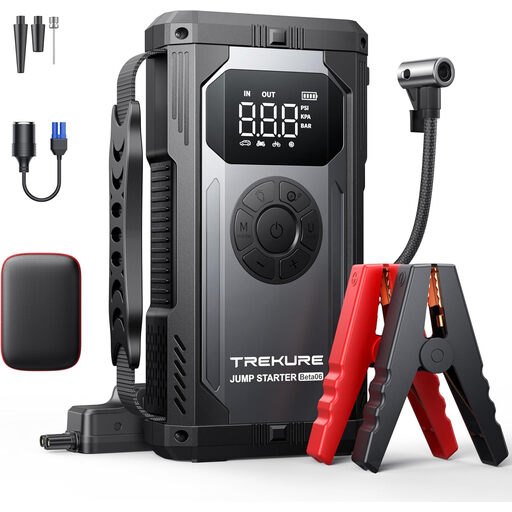
Why It Stands Out: The TREKURE Beta06 is a multifunctional emergency tool. It combines a very high peak current with an integrated air compressor, making it a comprehensive solution for roadside emergencies.
Advantages:
Who It's For: For drivers seeking an all-in-one device that helps with both a dead battery and a flat tyre. Ideal for families, owners of SUVs and RVs, and for outdoor activities.
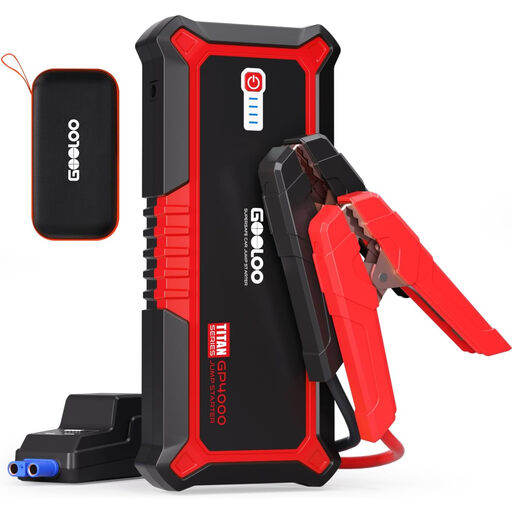
Why It Stands Out: The GOOLOO GP4000 focuses on maximum starting power in a rugged and portable design. Its "BOOST" function makes it especially reliable for deeply discharged batteries.
Advantages:
Who It's For: For users whose priority is pure, reliable starting power, especially for drivers of large-engine vehicles or those in regions with cold winters.
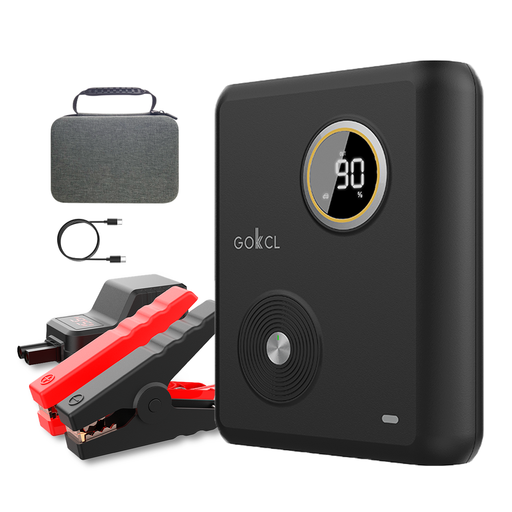
Why It Stands Out: The GOKKCL GK03 uses innovative sodium-ion battery technology. This is distinguished by its high level of safety and exceptionally long lifespan and standby time.
Advantages:
Who It's For: For users who value maximum safety, longevity, and minimal maintenance. Perfect for anyone who keeps a device in their car and wants to be sure it's ready to go even after a long period.
Can't find the right model for your specific needs, or want to compare more alternatives? Discover a wider selection of devices in our Car Jump Starter Boosters category.
1. How often do you need to charge a jump starter power bank? This depends on the battery technology. Conventional lithium-ion models should typically be checked and recharged every 3 to 6 months to ensure they are ready for use. Models with sodium-ion technology, like the GOKKCL GK03, have a significantly lower self-discharge rate and can, according to the manufacturer, remain ready for several years without recharging.
2. Can I use a jump starter to start a diesel engine? Yes, this is possible as long as the device has a sufficiently high peak current. Diesel engines require more starting power than petrol engines due to their higher compression and the pre-heating process (glow plugs). Therefore, pay close attention to the manufacturer's specifications regarding compatibility with diesel engines and the maximum supported displacement (e.g., "suitable for diesel up to 10.0L").
3. What does peak current (A) mean for a jump starter? The peak current (Peak Amps) is the maximum amperage the device can deliver for a very short moment (a few seconds). This high-current pulse is necessary to turn the engine's starter motor and initiate the combustion process. A higher peak current is particularly advantageous for large engines, diesel units, and in cold ambient temperatures, as starting the engine requires more energy under these conditions.