
Lieferung heute & morgen

Qualitätsgarantie

Willkommens-Angebote freischalten: KOSTENLOSE Lieferung | Bis zu 80 % RABATT | Kostenlose 30-Tage-JoyPlus-Testphase
App herunterladen
A soft click, a brief stutter, and then silence—a dead car battery is more than just an annoyance; it can derail your entire day. A portable jump starter, also known as a battery booster, promises a quick and easy solution. But the market is confusing and filled with devices making exaggerated advertising claims. Many drivers invest in a product that fails at the critical moment.
As your Joybuy Product Recommendation Officer, I'll help you separate marketing hype from facts. Before you make a purchase, you should know the three most common pitfalls that lead to a bad buy.
To make an informed decision, you should focus on the technical specifications that are critical for function and safety.
The most important metric is the peak current, measured in Amperes (A). It indicates how much energy the device can deliver in a short burst to start the engine. The required power is directly related to the displacement and type of engine:
Always check the manufacturer's specifications for the maximum supported engine displacement for both petrol and diesel engines.
The capacity, specified in milliampere-hours (mAh), is most relevant if you also plan to use the device as a power bank with jump-starting capability to charge smartphones, tablets, or other USB devices. A higher capacity means more charging cycles for your mobile devices. However, for the jump-starting function alone, the quality of the battery cells and the efficiency of the electronics are more important than the raw mAh value. A good portable jump starter should still hold enough charge for an emergency even after months in storage.
A modern jump starter is more than just a battery. It's an intelligent system with integrated protection circuits. Essential features include:
High-quality devices signal a correct connection or an error through visual (LEDs) and audible (beeps) alerts.
Here are some recommendations based on objective features and suited for different user profiles.
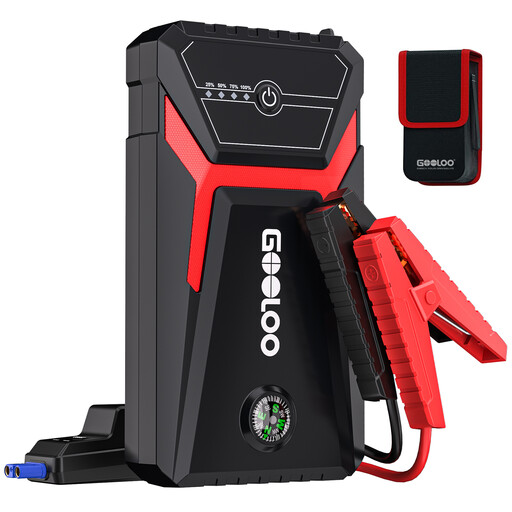
Why it's a good fit: Ideal for drivers of standard petrol and smaller diesel vehicles who need reliable, basic functionality for emergencies. Perfect for daily commuters with compact or mid-size cars.
The device offers a realistic 1500 A peak current designed for the specified engines (up to 6.0L petrol / 4.0L diesel), rather than advertising with inflated numbers. The smart clamps provide essential safety features often missing in entry-level models.
Balanced price-to-performance ratio; integrated safety features (10 types of protection); compact and easy to store.
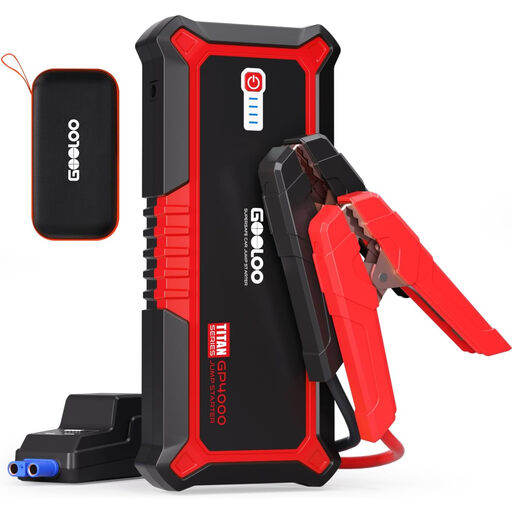
Why it's a good fit: Designed for owners of large SUVs, vans, or vehicles with high-displacement diesel engines (up to 10.0L). The high peak current delivers the necessary power for demanding starts, even in cold weather.
The 4000 A peak current is supported by a robust build and all-metal clamps designed for high current transfer, addressing the weakness of lower-quality models. A "BOOST" button also enables starting from deeply discharged batteries.
Very high starting power for all petrol and large diesel engines; robust metal clamps for durability; can be used in extreme temperatures according to the manufacturer.
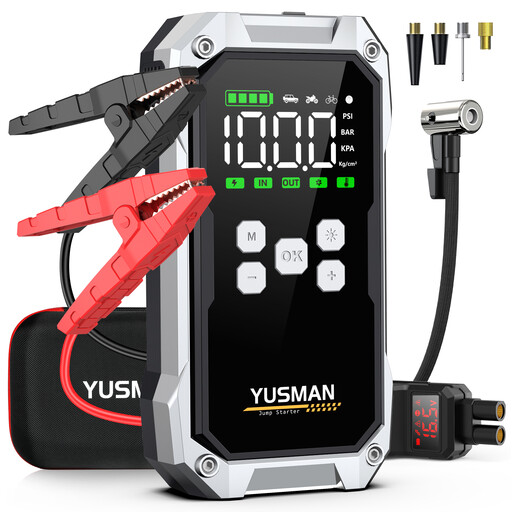
Why it's a good fit: The ideal choice for users looking for a multifunctional emergency tool. Perfect for camping, long road trips, or for anyone who wants to be prepared for both a dead battery and a flat tyre.
Unlike devices with superfluous gimmicks, the integrated 150 PSI air compressor is a genuinely useful feature. It combines a powerful **jump starter with a compressor** without compromising on crucial safety features (smart clamps).
Combines a jump starter and air compressor in one unit; LCD display for tyre pressure; high power for large engines.
We have compiled a complete, up-to-date list of products that fully meet these strict selection criteria and rigorous safety standards.
Even when not in use, a lithium battery loses its charge over time. Most manufacturers recommend fully recharging the device every 2 to 3 months. This ensures the battery remains healthy and can deliver its full power in an emergency.
A jump starter delivers a very high burst of current for a few seconds to start the engine. It does not recharge the battery. A car battery charger, such as the NOCO GENIUS2, is designed to slowly and gently recharge a dead or weak battery over several hours. It can also maintain a battery over the winter (trickle charge), but it cannot provide a jump-start.
Not necessarily. The key is that the power matches the vehicle. Using a 4000 A device for a small car isn't harmful, as the car will only draw as much current as it needs. However, you're paying for power you won't use. Choose a model that safely covers your engine's requirements, especially if you drive a diesel vehicle. A unit that is too weak will not be able to start the engine.