
Lieferung heute & morgen

Qualitätsgarantie

Willkommens-Angebote freischalten: KOSTENLOSE Lieferung | Bis zu 80 % RABATT | Kostenlose 30-Tage-JoyPlus-Testphase
App herunterladen
A dead car battery is more than just an annoyance—it means lost time, missed appointments, and often, the unexpected cost of a roadside assistance call. A portable jump starter promises independence and peace of mind. However, the market is flooded with devices making bold claims. As your Joybuy Product Recommendation Officer, I'm here to help you separate fact from fiction and find a unit that will work reliably when it matters most.
Many buyers fall into traps that render an otherwise useful product useless. Watch out for these three common problems:
To make an informed decision, you should focus on the technical specifications that are relevant to the core function—starting your vehicle.
The peak current (Peak Amps) is the maximum amperage the device can output for a very short time. More important, however, is the cranking current, which must be sustained for several seconds to turn the engine over. The power you need is directly related to your vehicle's engine:
The capacity, measured in milliampere-hours (mAh), is primarily relevant for its function as a power bank with a jump starter. It determines how many times you can charge your smartphone or other devices. For the jump-starting function itself, the ability to deliver high currents quickly is more critical.
Pay attention to the battery technology to avoid the self-discharge trap. Modern lithium-polymer batteries offer a good balance. A newer alternative is sodium-ion batteries, which, according to manufacturers, feature extremely low self-discharge and a higher cycle life, making them a low-maintenance, long-term solution.
A modern jump starter must have fundamental protection mechanisms. These include reverse polarity protection, overheat protection, short-circuit protection, and spark-proof technology. These features prevent damage to your vehicle's electronics and the device itself.
A jump starter with a compressor can be a real asset if the performance is adequate. Look for the maximum pressure rating (in PSI or Bar) and the air flow rate (in L/min). A good compressor should be able to inflate an average car tyre to its target pressure in just a few minutes.
Instead of making a one-size-fits-all recommendation, we have selected devices for different types of drivers and their specific needs.
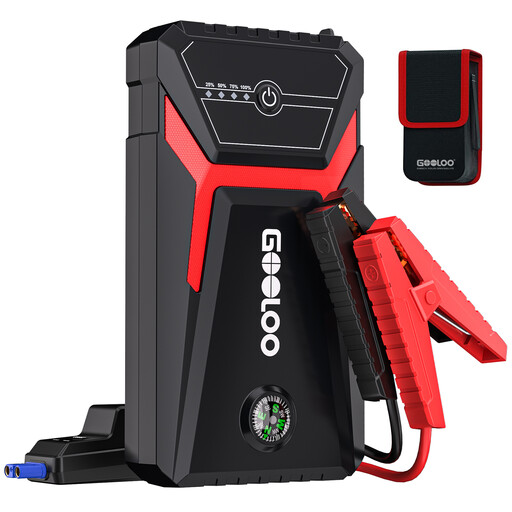
Why This Fits Their Persona: Ideal for drivers of standard passenger cars (petrol up to 6.0L, diesel up to 4.0L) who need a reliable and straightforward emergency solution. The device focuses on the core jump-starting function while also offering a useful power bank feature.
Avoids the "multi-function compromise" by focusing on strong core performance with 1500A peak current and essential safety features, rather than integrating superfluous, weak extras.
Solid Performance: Sufficient power for the most common passenger car engines in the UK and Europe.
Compact Design: Fits easily into the glove compartment.
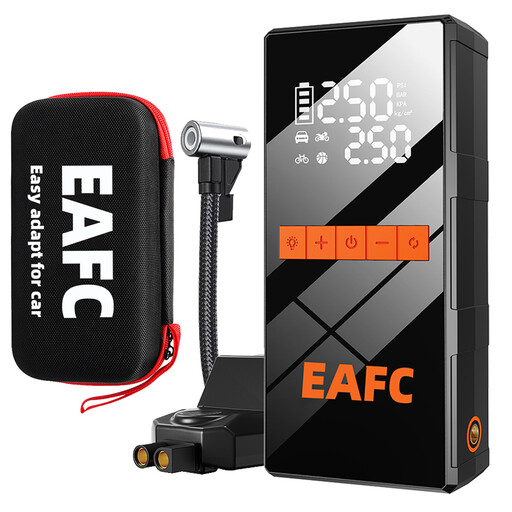
Why This Fits Their Persona: Perfect for family trips, camping, and daily life. This 4-in-1 device combines a jump starter, a powerful compressor, a power bank, and an LED light to prepare you for various eventualities.
Although it's a multi-function device, its 150 PSI compressor with auto-shutoff delivers solid performance that goes beyond a mere gimmick, making it practical for car tyres, bicycles, and sports balls.
Integrated Compressor: Saves space and the cost of a separate device.
Versatility: One tool for breakdowns, flat tyres, and dead mobile device batteries.
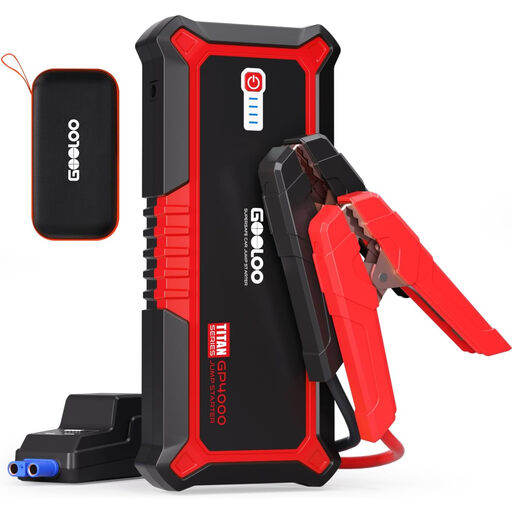
Why This Fits Their Persona: Engineered for the most demanding jobs. With 4000A of peak current, this device effortlessly starts all petrol engines and diesel engines up to 10.0L, making it the top choice for owners of SUVs, vans, RVs, and boats.
Sidesteps the exaggerated peak current trap by actually delivering the massive power required for large engines. The "BOOST" button also enables starting from deeply discharged batteries where weaker devices would fail.
Extreme Power: Reliably starts even large diesel engines in cold weather.
Robust Construction: Solid metal clamps and a durable housing for longevity.
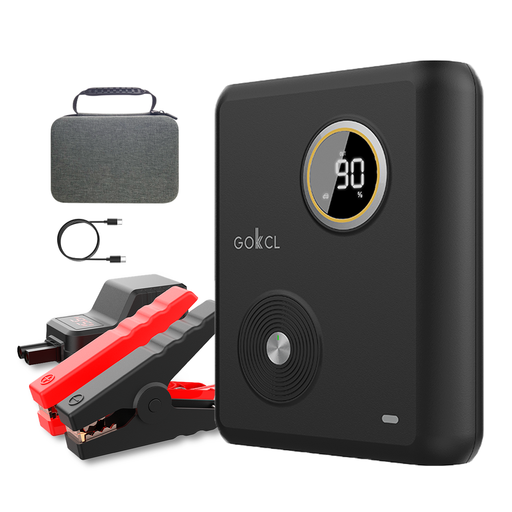
Why This Fits Their Persona: For drivers who prefer a "buy it and forget it" solution. The sodium-ion technology promises an extremely long standby time and a high cycle life, which minimises maintenance.
Directly addresses the self-discharge trap. According to the manufacturer, this device holds its charge for up to 5 years and can be reactivated even after a deep discharge—a decisive advantage over many lithium devices.
Long Standby Time: Ideal for infrequent drivers or as emergency equipment in a second car.
High Temperature Resistance: Works reliably in extreme cold and heat.
We've compiled a complete, up-to-date list of products that fully meet these strict selection criteria and UK/EU safety regulations.
This depends on the battery technology. For most lithium-ion based devices, it is recommended to fully charge them every 3 to 6 months, even if they haven't been used. This maintains the battery's health. Devices with sodium-ion technology, according to manufacturers, have a significantly lower self-discharge rate and need to be charged less frequently. Always check the manufacturer's specifications.
Yes, but you need a sufficiently powerful device. Due to their higher compression, diesel engines require a much stronger starting impulse than petrol engines of a comparable displacement. When selecting a product, explicitly look for its suitability for diesel engines and compare the manufacturer's engine size recommendations with your vehicle's.
An integrated compressor can be very practical for correcting tyre pressure without having to visit a petrol station, or for inflating bicycle tyres and sports equipment. It makes sense if you value an all-in-one solution. However, ensure that the compressor's performance is adequate for your needs and that it doesn't compromise the jump-starting function. For purely emergency use in the car, a device without a compressor may be more compact and lighter.