
Lieferung heute & morgen

Qualitätsgarantie

Willkommens-Angebote freischalten: KOSTENLOSE Lieferung | Bis zu 80 % RABATT | Kostenlose 30-Tage-JoyPlus-Testphase
App herunterladen
A dead car battery is more than just a nuisance—it means lost time, missed appointments, and the potential cost of a roadside assistance call. A portable jump starter, also known as a car battery booster, promises a quick and straightforward solution. However, the market is crowded and full of technical claims that don't always deliver. As your Joybuy Product Recommendation Officer, I'll help you identify the crucial features and avoid the common pitfalls when making a purchase.
Before you make a decision, it's essential to distinguish marketing hype from genuinely relevant performance specs. Many buyers invest in devices that fail in an emergency or are overkill for their needs.
To find the right device to jump-start your car, focus on the following three core aspects. These determine whether a portable jump starter will function reliably and safely.
The current required for a jump start depends directly on your vehicle's engine. Due to their higher compression, diesel engines generally require more power than gasoline engines.
The capacity, measured in milliampere-hours (mAh), determines how many start attempts are possible and how many times you can charge your smartphone. A modern jump starter power bank is more than just an emergency tool.
This is not an area for compromise. A high-quality car battery booster must have smart safety clamps. These provide essential protection mechanisms:
Here are some recommendations tailored to different driver profiles and needs.
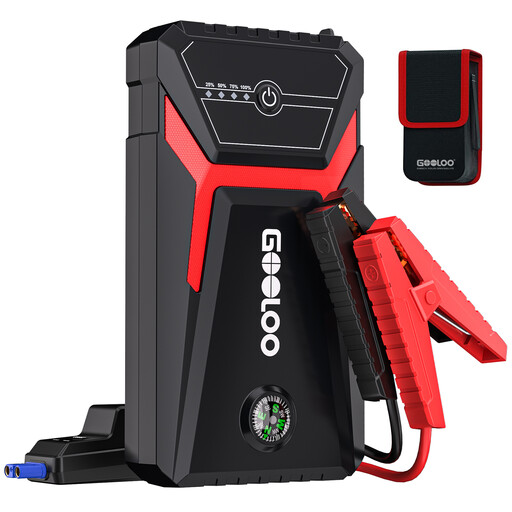
Why This Fits Their Persona: Ideal for drivers of common gasoline and smaller diesel vehicles who need a reliable and straightforward solution for emergencies. The compact design fits easily in the glove compartment.
With 1500A, it offers a realistic peak current that is sufficient for most passenger cars, without making you pay extra for unused power. The 10 integrated safety features protect the vehicle's electronics.
Good value for money; Compact design; Includes power bank function and LED flashlight.
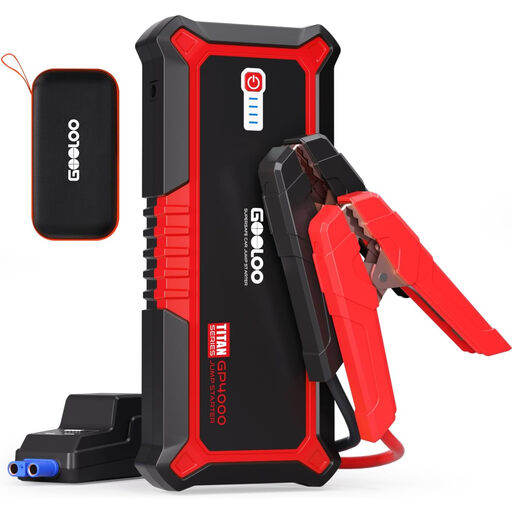
Why This Fits Their Persona: Designed for demanding tasks. Anyone who drives a large SUV, a van, or a vehicle with a large-displacement diesel engine needs high starting power, especially in winter.
This device avoids the trap of an underpowered starter by offering massive power reserves with 4000A peak current. The robust metal clamps and safety features address concerns about low-quality construction.
Very high peak current for engines up to 10.0L diesel; Robust construction and high-quality clamps; Boost function for deeply discharged batteries.
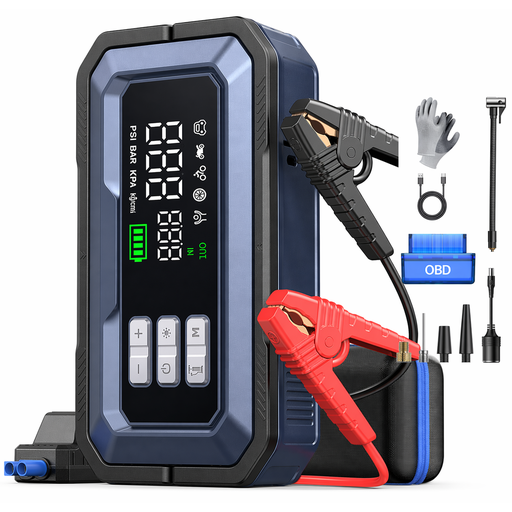
Why This Fits Their Persona: For campers, travellers, and tech-savvy users who want a multifunctional tool for any eventuality. This device is far more than just a jump starter—it's a complete emergency and utility kit.
Instead of focusing on a single marketing metric, this model delivers a package of genuinely useful features. It avoids the trap of overpriced, single-purpose gadgets through its versatility.
All-in-one solution: Jump starter, air compressor (150 PSI), power bank, work light, and OBD2 fault code reader in one device.
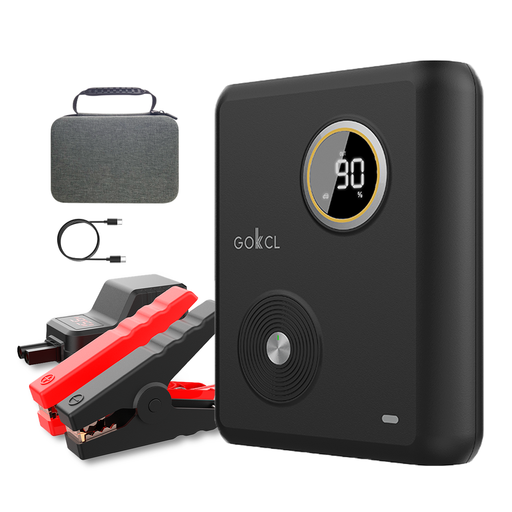
Why This Fits Their Persona: For drivers who leave the device in their car year-round and expect maximum reliability in extreme temperatures. The sodium-ion technology is the key factor here for stability and longevity.
This device solves the self-discharge trap. Thanks to its sodium-ion technology, it has an extremely low self-discharge rate (~1% per month) and is ready to use even after a long time in the car, without constant recharging.
Extreme operating temperature range (-40°C to 80°C); Very long standby time and high cycle life; Enhanced safety due to fire-resistant chemistry.
We have compiled a complete, up-to-date list of products that fully meet these strict selection criteria and safety regulations.
Most lithium-ion-based jump starters should be charged every 3 to 6 months to keep the battery healthy and ensure it's ready for use. Models with sodium-ion technology, like the GOKKCL GK03, have a significantly lower self-discharge rate and need to be charged less frequently. Always check the manufacturer's specifications.
Yes, it's possible, but you must choose a model that is explicitly designed for the size of your diesel engine. Diesel engines require a significantly higher starting current than gasoline engines. Pay attention to the specifications for maximum diesel engine displacement (e.g., "for diesel up to 7.0L") and a correspondingly high peak current (Amps).
Yes, modern, high-quality devices are very safe. The key is the "smart clamps." They have built-in protection circuits against reverse polarity, short circuits, overvoltage, and overheating. These mechanisms protect both the user and the vehicle's sensitive electronics from damage. Nevertheless, always read the user manual carefully before the first use.