
Lieferung heute & morgen

Qualitätsgarantie

Willkommens-Angebote freischalten: KOSTENLOSE Lieferung | Bis zu 80 % RABATT | Kostenlose 30-Tage-JoyPlus-Testphase
App herunterladen
A dead car battery is more than just an annoyance—it means lost time, missed appointments, and potential uncertainty, especially in bad weather or remote locations. A modern car jump starter, also known as a jump box or car booster, promises a quick and straightforward solution. But the market is overwhelming, and not every device delivers on its advertising promises.
As your Joybuy Product Recommendation Officer, I'll help you identify the typical pitfalls and make an informed decision. We'll focus on the facts so you can find a reliable device that truly fits your needs.
Many products advertise impressive numbers that can be misleading in practice. Watch out for these three common marketing traps:
To avoid a bad buy, you should focus on three verifiable core features. These determine the performance and safety of your portable jump starter.
The required peak current depends directly on your vehicle's engine. A simple rule of thumb is:
All devices mentioned here are designed for a 12V jump start, which is the standard for passenger cars, SUVs, and most light commercial vehicles.
A modern jump starter power bank is a multifunctional tool. Pay attention to the charging ports and their performance. A USB-C port with Power Delivery (PD) can not only fast-charge your smartphone but also power laptops or other larger devices. The capacity in watt-hours (Wh) provides a more honest overview of the stored energy than the simple mAh figure.
A high-quality jump starter features intelligent jumper cables (“Smart Clamps”). These are equipped with an electronics box that prevents critical errors:
A display that clearly shows the status and any errors further enhances user safety.
Based on the criteria above, we have compiled a selection of devices suitable for different user profiles.
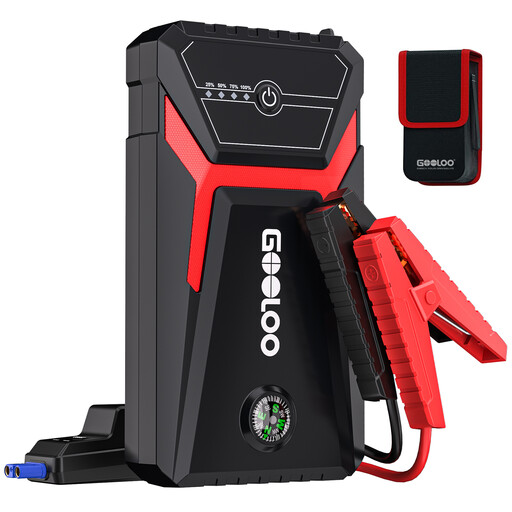
Why it's a good fit: It offers reliable performance for the most common petrol and smaller diesel engines without making you pay for oversized capacity. Ideal as a compact emergency solution for the daily commute.
This model focuses on a realistic peak output of 1,500 A, designed for engines up to 6.0L petrol / 4.0L diesel. It avoids the trap of advertising inflated ratings that aren't needed in practice.
Combines solid baseline performance with 10 essential safety features and a power bank function at a very accessible price point.

Why it's a good fit: With 3,000 A of peak current, it provides ample power reserves for large petrol (up to 9L) and diesel (up to 7L) engines found in SUVs, vans, or motorhomes. Its rugged design is built for demanding conditions.
Instead of just relying on a high amp rating, this model features a "BOOST" mode specifically designed for deeply discharged batteries. This is a practical benefit that goes beyond mere marketing numbers.
High compatibility with large engines and a 15V DC output that can also power accessories like tyre compressors, increasing its versatility.
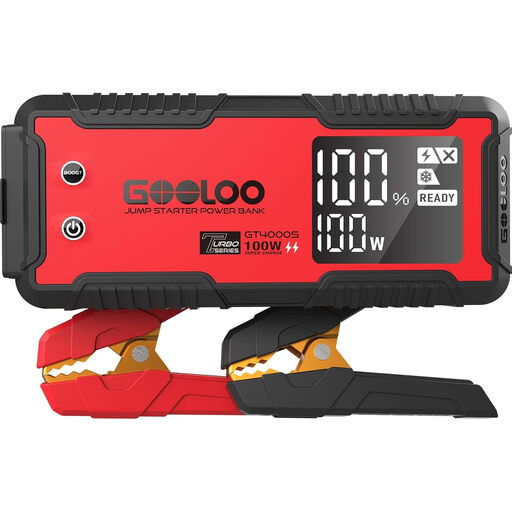
Why it's a good fit: For users seeking maximum performance and cutting-edge technology. The 100W two-way fast charging is a standout feature, supplying power extremely quickly to both the device itself and connected laptops.
It solves the problem of unclear battery capacity by offering a clear, practical benefit: according to the manufacturer, the device fully recharges in just 1.2 hours and can charge a laptop at full speed. That's a tangible value beyond mAh figures.
Extremely fast 100W two-way charging via USB-C and a large 3.2-inch display that shows all relevant information clearly and distinctly.
We have compiled a complete, up-to-date list of products that fully meet these strict selection criteria and safety regulations.
1. How often do I need to charge a jump starter power bank? Even when not in use, a lithium-ion battery slowly loses its charge. Most manufacturers recommend fully charging the device every 3 to 6 months to maintain battery life and ensure it's ready in an emergency. Some newer models, for example those with sodium-ion technology, advertise significantly longer standby times.
2. Can a jump starter damage my car battery or electronics? When used correctly and with a device featuring the smart safety functions mentioned above, the risk is minimal. Reverse polarity protection is the most critical feature here, as it prevents damage from incorrectly connecting the clamps. Budget devices without these safety mechanisms pose a significant risk to the vehicle's onboard electronics.
3. What does the peak current (Amps) on a jump starter mean? The peak current (Peak Amps) is the maximum amperage the device can deliver for a very brief moment to overcome the engine's starter motor. A higher peak current is particularly relevant for larger engines, especially diesels, as they require a higher starting current. For most standard passenger cars, however, the continuously available starting current is more important than an extremely high but short-lived peak value.