
Lieferung heute & morgen

Qualitätsgarantie

Willkommens-Angebote freischalten: KOSTENLOSE Lieferung | Bis zu 80 % RABATT | Kostenlose 30-Tage-JoyPlus-Testphase
App herunterladen
A dead car battery is more than just an annoyance—it means lost time, missed appointments, and the often-unpleasant reliance on help from strangers or expensive roadside assistance. A portable jump starter, also known as a car battery booster, promises a quick and straightforward solution. However, the market is crowded and full of technical promises that don't always deliver.
As a Joybuy Product Recommendation Officer, I'm here to analyse the facts behind the marketing hype. In this guide, I'll walk you through the most common pitfalls of buying a jump starter and highlight the critical features you need to look for to find a reliable device that actually works when you need it most.
Many devices advertise impressive numbers, but it's often the unmentioned details that determine real-world performance. Watch out for these three typical problems:
To make an informed decision, focus on these three objective criteria. They determine whether a device is suitable for your vehicle and your needs.
The most important metric is the peak current (in Amperes, A). It must match the size and type of your engine. As a rule of thumb:
Always check the manufacturer's specifications for the maximum engine displacement (in Litres, L) for both gasoline and diesel engines.
The battery capacity (in milliampere-hours, mAh) indicates how much energy the device can store. A higher capacity doesn't necessarily mean more starting power, but it does allow for more jump-start attempts on a single charge and longer use as a jump starter power bank for charging smartphones or tablets.
Some models offer useful additional features that significantly increase their value:
A high-quality jump starter must have comprehensive protection circuits. Look for the following features that ensure safe handling when jump-starting a dead car battery:
The clamps themselves should be robust, made of solid material (often copper), and have a strong spring for a secure connection. Insulated handles are standard.
Here are a few models that represent a smart choice for specific user profiles, based on objective technical data.
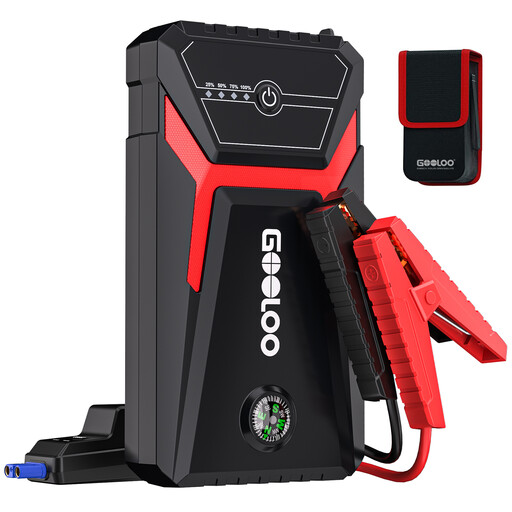
Why This Fits Their Persona: This model offers a solid set of essential features for drivers of common gasoline and smaller diesel vehicles who need a reliable emergency solution without paying for peak power they'll never use. It's compact and easy to store in a glove compartment.
It avoids the trap of poor safety by including 10 built-in protection mechanisms, including reverse-polarity and short-circuit protection, making it safe to use even for novices.
Sufficient Power: 1500A peak current for gasoline engines up to 6.0L and diesel up to 4.0L. Added Value: Doubles as a power bank with two USB outputs.
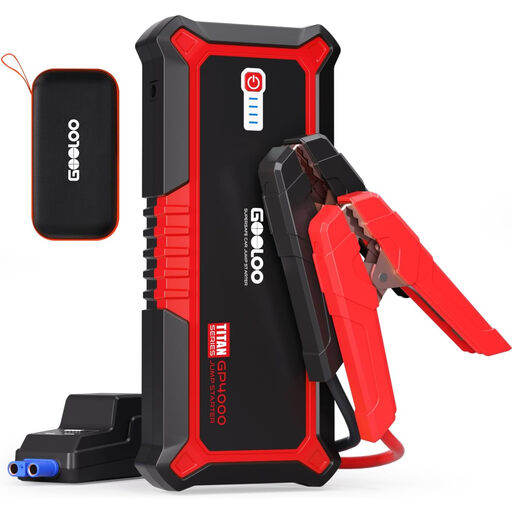
Why This Fits Their Persona: For owners of vehicles with large-displacement engines, especially diesels, maximum starting power is essential. This device provides the necessary power reserves to start reliably even in the cold and is suitable for RVs, tractors, or boats.
It bypasses the trap of unrealistic peak current by being rated for all gasoline and diesel engines up to 10.0L, according to the manufacturer. The "BOOST" function also helps with deeply discharged batteries.
High Power: 4000A peak current offers enormous reserves. Robust Clamps: All-metal clamps are designed for durability and good conductivity. Cold Resistance: Functional down to -20°C.
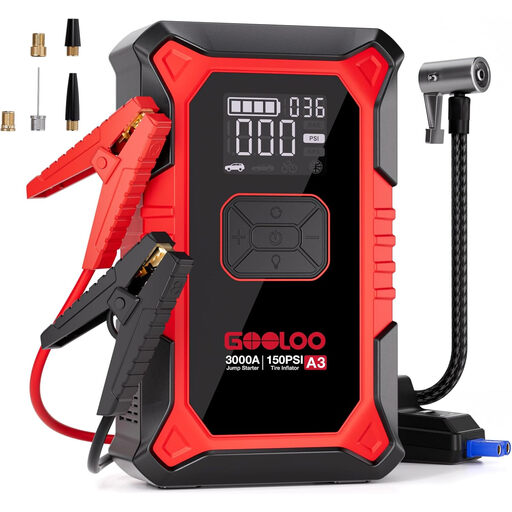
Why This Fits Their Persona: Anyone who wants to be prepared for all eventualities while camping, travelling, or in daily life will benefit from a multi-function device. This model combines a powerful jump starter with a digital air compressor for car tires, bicycles, or balls.
This device avoids the trap of being just an emergency gadget. By integrating a useful compressor, it becomes a regularly used tool, making you more likely to keep an eye on its charge level.
7-in-1 Functionality: Combines a jump starter, compressor, power bank, flashlight, and more. High Performance: 3000A peak current and 150 PSI compressor power. Digital Control: LCD for tire pressure display and automatic shut-off.
We have compiled a complete, up-to-date list of products that fully meet these strict selection criteria and all relevant safety regulations.
How often do I need to charge a jump starter power bank? Most manufacturers recommend checking and recharging the device every 3 to 6 months, even if it hasn't been used. This compensates for the lithium battery's natural self-discharge and ensures the jump starter is ready for an emergency. You can find the exact intervals in the user manual for your specific model.
Can I use a jump starter to revive a completely dead battery? Yes, many modern jump starters have a "Boost" or "Override" function. This is specifically designed for batteries with a very low voltage (often below 9V) that are no longer detected by the standard safety circuit. Activating this function manually forces the jump-start process. Always follow the manufacturer's safety instructions when using this feature.
Is a jump starter suitable for both my motorcycle and my car? Yes, most 12V jump starters are universally compatible with all vehicles that have a 12-volt electrical system, including cars, SUVs, motorcycles, RVs, and even boats. The only important factor is that the device's power output (peak current) is sufficient for the specific engine. Almost any jump starter will be adequate for a motorcycle, but you will need a more powerful model for a large diesel SUV.