
Lieferung heute & morgen

Qualitätsgarantie

Willkommens-Angebote freischalten: KOSTENLOSE Lieferung | Bis zu 80 % RABATT | Kostenlose 30-Tage-JoyPlus-Testphase
App herunterladen
A dead car battery is more than just an annoyance—it means lost time, missed appointments, and potential uncertainty, especially in bad weather or remote locations. A portable jump starter, also known as a battery booster, promises a quick and self-reliant solution. However, the market is flooded with devices making bold promises. Many drivers invest in a jump starter only to find it unreliable or unsuitable for their vehicle at the critical moment.
As your Joybuy Product Recommendation Officer, I'm here to help you navigate the common pitfalls. We'll focus on the facts so you can make an informed decision and not fall for marketing hype.
Before we dive into the key features, let's look at the three most common and costly mistakes buyers make:
To avoid a bad purchase, you should focus on three verifiable core features. These will determine if a portable jump starter is right for you.
The Peak Current (Peak Amps) is the maximum current the device can deliver for a very short moment to crank the engine. This value must be appropriate for your vehicle's engine.
The capacity, specified in milliampere-hours (mAh), is primarily relevant for its secondary function as a jump starter power bank—that is, how many times you can charge your smartphone with it. For starting power, the technology is more critical.
A safe jump starter is essential. Look for a device equipped with at least the following protection mechanisms:
Here are three recommendations tailored to different user profiles that meet the criteria mentioned above.
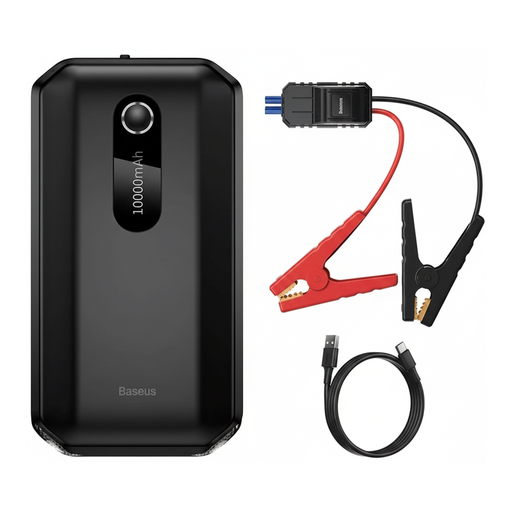
Why it's a great fit: Ideal for drivers of small to mid-size cars with gasoline engines who need a reliable, essential solution for emergencies. Its compact design and integrated power bank function make it a practical everyday companion.
With 1000A of peak current, it offers realistic and sufficient power for its intended vehicle class, preventing the purchase of an oversized unit. As a product from an established brand, it includes all the necessary safety features.
The perfect blend of a compact form factor, ample power for most passenger cars, and a handy power bank feature, all at an accessible price point.

Why it's a great fit: For owners of SUVs, vans, or vehicles with larger engines (up to 8.0L gas / 6.0L diesel). Its high power output and 65W Power Delivery (PD) fast-charging capability make it a versatile and future-proof solution.
The clear engine compatibility specifications and high 3000A peak current provide peace of mind for demanding applications. Its 10 integrated protection functions directly address all major safety concerns.
Powerful starting capability for a wide array of vehicles, paired with modern 65W fast-charging technology for both the jump starter and other devices like laptops.
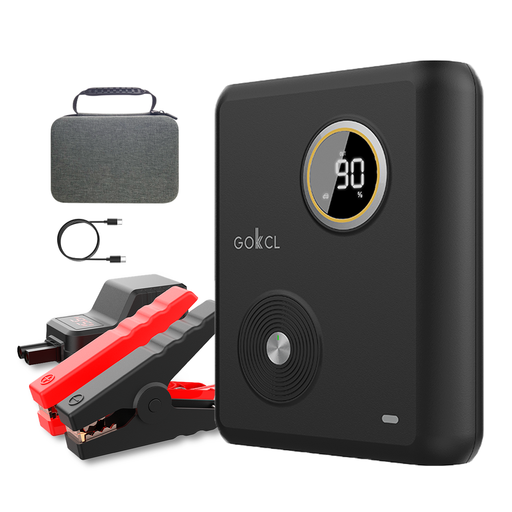
Why it's a great fit: Perfect for users who demand maximum reliability and minimal maintenance. It's ideal for vehicles exposed to extreme temperatures or that are driven infrequently, such as RVs, boats, or classic cars.
The sodium-ion technology fundamentally solves the problem of self-discharge. According to the manufacturer, the device remains ready for use even after years in storage. Its chemical stability ensures a high level of safety, even if damaged.
Extremely long standby time (up to 5 years, per manufacturer), a wide operating temperature range (-40°C to 80°C), and a high cycle count for an extended service life.
We have compiled a complete, up-to-date list of products that meet these strict selection criteria and comply with current safety regulations.
1. How often do I need to charge a jump starter? This largely depends on the battery technology used. Conventional lithium-ion devices should typically be checked every 3 to 6 months and recharged as needed to ensure they are ready for use. Models with newer sodium-ion technology have a significantly lower self-discharge rate and, according to manufacturers, may only need charging every few years. Always follow the specific recommendations from the manufacturer.
2. Can I use a jump starter to revive a completely dead battery? Yes, many modern jump starters feature a special "Boost" or "Force Start" function. This is designed to jump-start batteries with very low or no residual voltage. It works by bypassing some of the automatic safety checks to force the current to flow. This function should be used with caution and exactly as instructed by the manufacturer.
3. Is a higher peak current always better? Not necessarily. The required peak current should match your engine's displacement and type. An oversized 4000A device for a small car with a 1.4L gasoline engine offers no practical advantage over a suitable 1500A model, but it is typically more expensive and larger. What's more important than a flashy advertised number is a reliable current output that’s properly rated for your specific vehicle.