
Lieferung heute & morgen

Qualitätsgarantie

Willkommens-Angebote freischalten: KOSTENLOSE Lieferung | Bis zu 80 % RABATT | Kostenlose 30-Tage-JoyPlus-Testphase
App herunterladen
A dead car battery is more than just an annoyance—it means being stranded, often at the most inconvenient time. The market for jump starters is vast, but not every product delivers on its promise. As a Joybuy Product Recommendation Officer, I see daily how clever marketing can mislead customers into making unsuitable purchases. Before you invest, you should know the most common pitfalls to find a reliable and safe solution for your vehicle.
Many devices on the market boast tempting specifications that disappoint in practice. Pay close attention to these three points to avoid a bad purchase:
To find the right device, focus on the technical specifications that are relevant to the starting process.
The most important metric is the peak current, measured in amperes (A). This value indicates how much energy the device can deliver in a short burst to start the engine. The choice of the right peak current depends directly on your vehicle's engine:
Important: A battery's performance decreases at low temperatures. Therefore, always plan for a power reserve, especially if you live in colder regions.
It is crucial to understand the difference between the two main types:
Some models combine functions and, as a jump starter with a compressor, offer additional utility, such as correcting tire pressure.
Instead of making a one-size-fits-all recommendation, we have identified products tailored to specific user profiles.
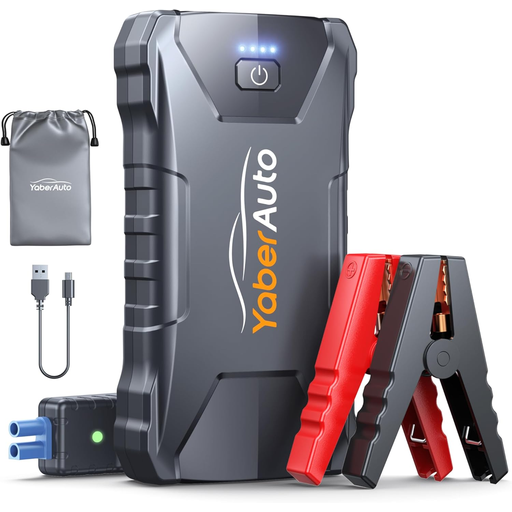
Why It's a Match: Ideal for drivers of small and mid-size cars. The device is extremely compact and lightweight, so it fits easily in the glove compartment. It offers enough power for most common gasoline and smaller diesel engines, making it a hassle-free companion for the daily commute.
The device doesn't advertise with unrealistic values but specifies a clear suitability for engines up to 7.0L gasoline. The 10 integrated safety features, including reverse polarity protection with an audible alarm, directly address the safety trap.
Very compact design and low weight (0.34 kg). Integrated LED flashlight with SOS function.
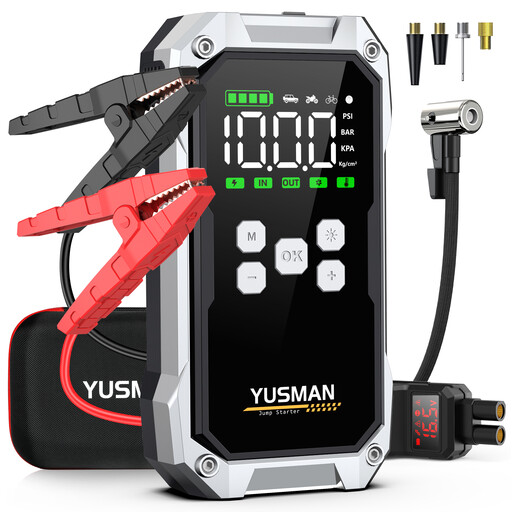
Why It's a Match: Perfect for owners of SUVs, vans, or for camping enthusiasts. This device is more than just a jump starter; it's a complete emergency kit. The integrated compressor can inflate not only car tires but also air mattresses or balls, making it a versatile tool for the road.
The high peak current rating of 5000A is designed for large engines (up to 10.0L diesel). The LCD display shows the operating status and tire pressure in real-time, and the smart clamps provide visual and audible warnings for incorrect connections.
Combines a powerful jump starter with a 150 PSI air compressor. Two USB ports for charging devices.
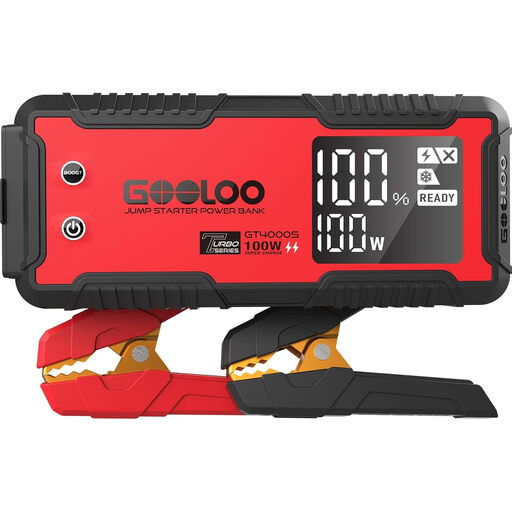
Why It's a Match: For owners of large diesel vehicles, motorhomes, boats, or agricultural machinery. This device delivers the necessary power to reliably start even large-displacement engines. The fast-charging feature is another plus for users who depend on quick readiness.
With 4000A of peak current, it offers realistic and high performance for engines up to 10.0L diesel, avoiding the trap of exaggerated advertising claims. The 3.2-inch display clearly shows the status, and 10 protection mechanisms ensure safety.
Extremely high starting power. Bidirectional 100W fast charging allows the device to be recharged in approx. 1.2 hours and can also charge laptops.
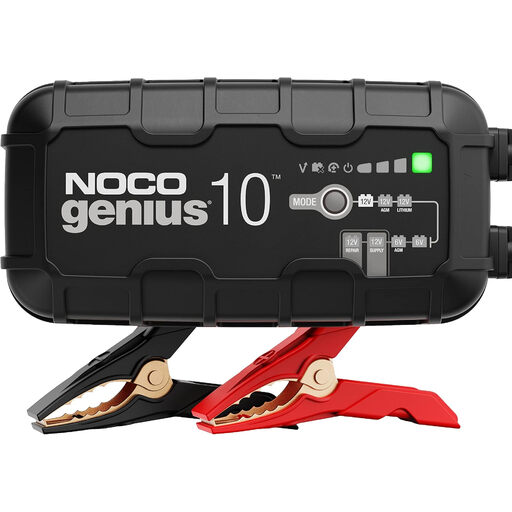
Why It's a Match: For owners of classic cars, motorcycles, or other seasonal vehicles where battery health is the priority. This device is not a jump starter but a smart charger for maintaining, desulfating, and restoring batteries. It is the ideal solution for maximizing battery lifespan.
It solves the problem at its root, rather than just being an emergency band-aid. Instead of just jump-starting, it actively maintains the battery. The integrated thermal sensor prevents over- or under-charging and adapts the charging cycle to the ambient environment.
Smart charger, trickle charger, and desulfator in one. Can restore deeply discharged batteries from as low as 1V.
We have compiled a complete, up-to-date list of products that fully meet these strict selection criteria and rigorous safety standards.
1. How often do I need to charge a jump starter? To preserve the lifespan of the internal lithium battery, it is recommended to fully charge the device every 2 to 3 months, even if it hasn't been used. Most models have a charge level indicator that shows you the current status.
2. Can I also charge my phone with a jump starter power bank? Yes, virtually all modern jump starters also function as a power bank. They are equipped with one or more USB ports that allow you to charge smartphones, tablets, and other electronic devices. This makes them a useful companion for travel and everyday life.
3. What is the difference between Peak Current (A) and Battery Capacity (mAh)? The Peak Current (A) is the crucial metric for starting power. It indicates how much force the device can momentarily apply to start your vehicle's engine. In contrast, the Battery Capacity (mAh) describes the amount of energy stored in the device's internal battery. A high mAh rating means you can charge your phone more often, but it does not alone guarantee high starting power. For jump-starting, the ampere value is what counts.