
Lieferung heute & morgen

Qualitätsgarantie

Willkommens-Angebote freischalten: KOSTENLOSE Lieferung | Bis zu 80 % RABATT | Kostenlose 30-Tage-JoyPlus-Testphase
App herunterladen
A dead car battery is more than just an annoyance—it means you're stranded, often at the worst possible time. A portable jump starter promises a quick fix, but the market is confusing. Many devices don't live up to their advertising claims. As your Joybuy Product Recommendation Officer, I'll help you identify the crucial features and avoid common purchasing traps, so you can find a reliable solution for any emergency.
Before you make a decision, you should be aware of the typical problems that arise with low-quality devices. These often lead to frustration and, in the worst-case scenario, a useless product when you need it most.
To avoid a bad buy, focus on verifiable technical specifications instead of marketing promises. These three parameters are crucial for performance and safety.
The peak current, measured in amperes (A), indicates the maximum current the device can deliver for a short burst. This value is critical for the starting process.
Always check the manufacturer's specifications for compatibility with your engine's displacement (in liters). A reputable car jump starter booster will clearly state which gasoline and diesel engines it is suitable for.
Modern jump starters use lithium-ion or lithium-polymer batteries. Compared to old lead-acid models, these are significantly lighter, more compact, and more powerful. When choosing a 12V jump starter, look for these essential safety features:
Many devices also function as a jump starter power bank for charging smartphones, tablets, or laptops. Key features here are the capacity (specified in mAh) and the type of ports (e.g., USB-A, USB-C with fast charging). A rugged, shock-proof casing and a low self-discharge rate (check the manufacturer's stated standby time) are indicators of a durable and reliable design.
Here are some recommendations tailored to different user profiles and vehicle types, which take the above criteria into account.
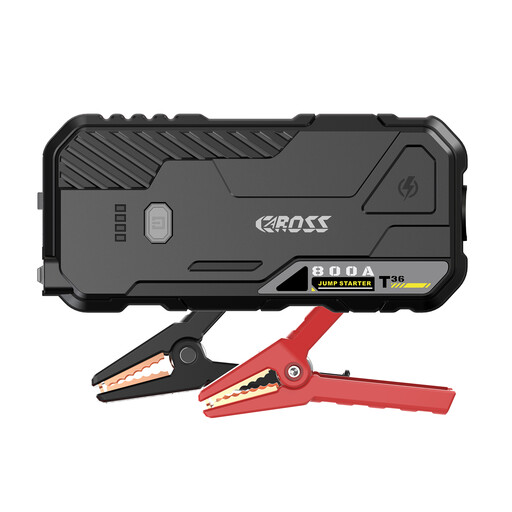
Why This Fits Their Persona: Ideal for drivers of compact and mid-size cars who need a reliable and space-saving emergency solution. The device is compact enough for the glove compartment and offers sufficient power for most common gasoline engines.
This model avoids the trap of misleading performance claims with a clear specification (800A peak) and features explicitly mentioned safety functions like spark-proof technology and reverse polarity protection.
Compact design and included protective case. Integrated power bank function with 18W Quick Charge for rapidly charging devices.

Why This Fits Their Persona: Designed for owners of large-displacement vehicles, including SUVs, RVs, and diesel cars. The high peak current of 3000A provides the necessary power reserves for a reliable start, even in cold weather.
This device avoids the underpowered performance trap with its clear suitability for diesel engines up to 7.0L. According to the manufacturer, it features 10 protection mechanisms and a special "BOOST" mode for deeply discharged batteries.
High power reserves for demanding engines. Rugged construction for use in extreme temperatures (from -20°C to 60°C, according to the manufacturer).
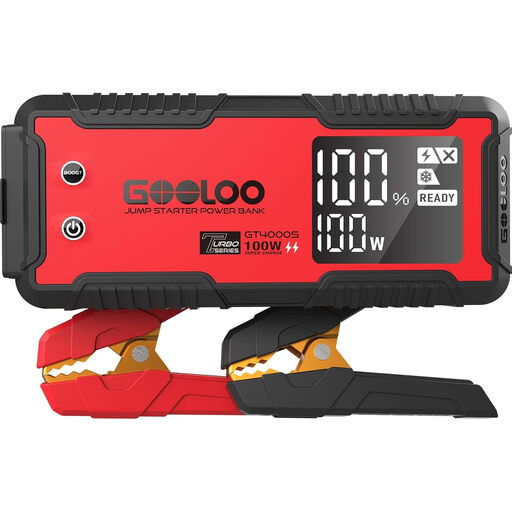
Why This Fits Their Persona: Perfect for users who expect maximum performance and cutting-edge technology. This device is not only an extremely powerful jump starter but also a fully-fledged power bank capable of charging laptops at up to 100W.
It addresses the self-discharge problem with a long standby time and can be fully recharged quickly thanks to 100W fast charging. The high output of 4000A is suitable for almost all passenger car engines.
100W two-way fast charging via USB-C allows for rapid recharging of the unit itself as well as laptops. Large 3.2-inch display for a clear status overview.
We have compiled a complete, up-to-date list of products that meet these strict selection criteria and safety requirements.
Most manufacturers recommend checking the device every 3 to 6 months and recharging it as needed. High-quality models with low self-discharge can hold their charge for up to 18 months. However, it's good practice to check the charge level before long trips or the start of the winter season.
Yes, it's possible, but only with a device designed for it. Diesel engines require a much higher starting current than gasoline engines due to their higher compression. Be sure to check the manufacturer's specifications regarding suitability for diesel engines and the maximum displacement (e.g., "suitable for diesel up to 7.0L"). A jump starter that is too weak will not be able to start the engine.
Modern jump starters are very safe when used correctly. Models with built-in safety features like reverse polarity protection, short-circuit protection, and spark-proof technology minimize the risk of user error. Always follow the manufacturer's instructions. As a general rule: connect the red clamp to the positive (+) terminal of the battery, and the black clamp to an unpainted metal point on the car's chassis (a ground point)—not directly to the negative terminal.