
Lieferung heute & morgen

Qualitätsgarantie

Willkommens-Angebote freischalten: KOSTENLOSE Lieferung | Bis zu 80 % RABATT | Kostenlose 30-Tage-JoyPlus-Testphase
App herunterladen
A dead car battery is more than just an annoyance—it means lost time, missed appointments, and the potential cost of a breakdown service. A portable jump starter promises a quick and independent solution. However, the market is flooded with devices making bold claims that often don't hold up in practice. Many drivers invest in a jump starter only to find out it's unsuitable for their vehicle at the critical moment.
As your Joybuy Product Recommendation Officer, I will help you recognise the typical pitfalls and make an informed decision. We'll focus on the facts that truly matter so you can find a reliable device for your needs.
Before you invest, you should be aware of the marketing tactics that often lead to a poor purchase.
jump starter with compressor or countless charging ports might sound convenient. Often, however, these additional features are of inferior quality. A weak compressor will drain the jump starter power bank before the tyre is full, and in the worst-case scenario, there won't be enough energy left for the actual jump-start. The core function—reliable starting assistance—should always be the priority.To make the right choice, focus on these three objective criteria.
The most important value is the device's ability to start your specific engine. Pay attention to the manufacturer's specifications regarding compatibility with engine displacement sizes. A jump starter for diesel engines generally requires more power than one for a comparable petrol engine, as diesel engines have higher compression.
jump starter device with at least 2000 A peak current and a clear suitability statement for diesel engines.The capacity, given in milliampere-hours (mAh), determines how many start attempts are possible and how often you can charge your smartphone with the power bank function. More important, however, is the underlying battery type.
A battery booster works with high currents. Therefore, integrated protection mechanisms are essential. Look for the following features:
portable jump starter must have protection against reverse polarity, short circuits, overcharging, overheating, and overvoltage. Smart clamps with visual or audible signals indicate a correct connection.Here are some recommendations tailored to different user profiles and vehicles.
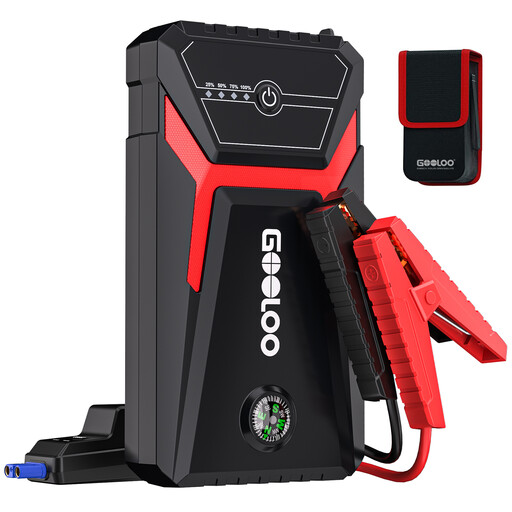
Why this device is a good fit: Ideal for drivers of compact and mid-size vehicles who need a reliable and straightforward emergency solution. It provides enough power for most common petrol and smaller diesel engines without making you pay extra for unused capacity.
This device focuses on the core function. Instead of advertising an oversized peak current, it offers solid baseline performance (1500 A) specified for engines up to 6.0L petrol / 4.0L diesel—a realistic and sufficient output for its target audience.
Features 10 essential safety functions, including reverse polarity protection. Its compact design and included case make it easy to store in the glove compartment.
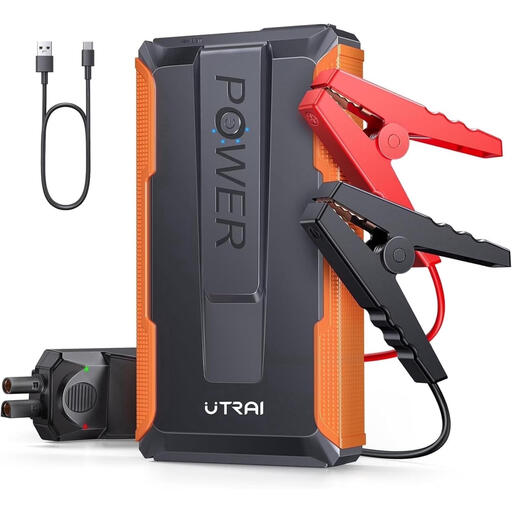
Why this device is a good fit: A well-balanced solution for families with larger vehicles like SUVs or vans. The 2000 A output is sufficient for petrol engines up to 7.5L and diesel engines up to 5.5L. The power bank function with Quick Charge 3.0 is practical for travel.
This model strikes a good balance between jump-starting power and useful extra features. Unlike devices with a weak compressor, the power bank's fast-charging function is a genuine added value without compromising the core function.
The smart clamps provide an audible alert for incorrect connections. The robust housing is rated for operation between -20°C and +60°C, which is relevant for year-round use in most climates.
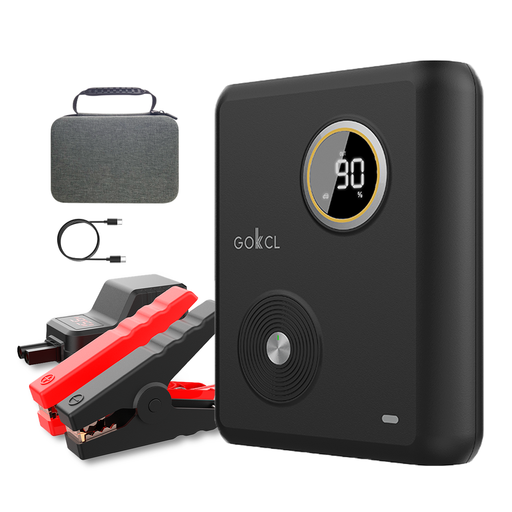
Why this device is a good fit: For users who prioritise maximum safety, longevity, and reliability in extreme temperatures. The sodium-ion technology makes it the ideal choice for anyone who wants to leave the device permanently in their car, whether in high summer or deep winter.
It directly addresses the weakness of lithium technology. With an operating range of -40°C to +80°C and inherent fire resistance due to its chemistry, it offers a higher level of safety and reliability than conventional lithium boosters.
According to the manufacturer, it offers an extremely long cycle life (≥ 6,000 cycles) and very low self-discharge. This means less maintenance and a longer lifespan for the device.
We have compiled a full, up-to-date list of products that fully meet these strict selection criteria and safety regulations.
1. How often do I need to charge a jump starter? Even when not in use, a jump starter loses energy through self-discharge. It is recommended to fully charge the device every 3 to 6 months to maintain battery life and ensure it is ready for an emergency. Models with low self-discharge, such as those with sodium-ion batteries, require less frequent charging.
2. Can I use a jump starter power bank to start a diesel vehicle? Yes, but only if the device is explicitly designed for it. Diesel engines require a significantly stronger cranking current due to their higher compression. Always check the manufacturer's specifications for the maximum engine displacement for diesel engines. A device specified only for petrol engines will likely fail to start a diesel.
3. Is using a portable jump starter safe for my car's electronics? Yes, modern, high-quality jump starters are equipped with numerous protection mechanisms. The most important is reverse polarity protection, which prevents damage if the clamps are connected to the wrong battery terminals. Additional safeguards against short circuits, overvoltage, and overheating protect both the jump starter and your vehicle's sensitive electronics.