
Lieferung heute & morgen

Qualitätsgarantie

Willkommens-Angebote freischalten: KOSTENLOSE Lieferung | Bis zu 80 % RABATT | Kostenlose 30-Tage-JoyPlus-Testphase
App herunterladen
A click, a stutter, then silence. A dead car battery is more than just a nuisance—it means lost time, missed appointments, and relying on the help of strangers. A portable jump starter promises independence and peace of mind. But the market is flooded with devices boasting impressive numbers and bold promises. Many of them turn out to be a bad investment.
As your Joybuy Product Recommendation Officer, I have analysed the most common pitfalls to help you make an informed decision. Let's focus on the facts that truly matter and bypass the typical marketing traps.
Before you spend any money, you should be aware of the three most common issues that lead to useless devices and frustration:
To find the right Car Jump Starter, focus on these three objective criteria. They are the key to a reliable device that works when you need it most.
The most important parameter is the current the device can deliver. Compatibility with your vehicle's engine is crucial here.
Rule of thumb: Choose a device whose specified engine compatibility (in litres of displacement for petrol/diesel) is higher than your vehicle's to ensure a safety margin.
The capacity determines how many start attempts are possible and how long the device can serve as a jump starter power bank for your smartphone or tablet.
A portable jump starter works with high currents. Compromising on safety is not an option here.
Based on these objective criteria, we have identified a few models that represent a considered choice for specific user groups.
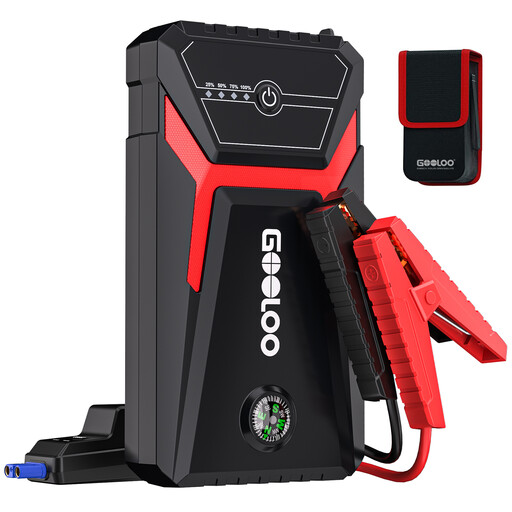
Why This Fits Their Persona: This model offers a solid baseline for drivers of common petrol and smaller diesel vehicles who need a reliable emergency solution without paying for unused peak power. The compact design fits easily into the glove compartment.
It bypasses the ampere trap by offering a realistic 1500 A, which is sufficient for its target group (up to 6.0L petrol/4.0L diesel), instead of advertising inflated numbers.
Excellent value for money; equipped with 10 protection features and smart jumper cables for safe use.
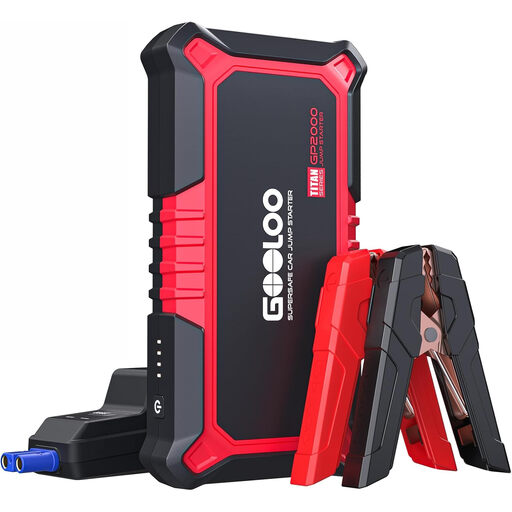
Why This Fits Their Persona: Ideal for owners of SUVs, vans, or larger saloons with petrol or diesel engines. The 2000 A peak current provides plenty of reserve power, while the dual USB outputs make the device a useful power bank for commuters and travellers.
This model avoids the "one-size-fits-all" myth by clearly stating its compatibility (up to 8.0L petrol/6.0L diesel), offering balanced performance for a broad but defined class of vehicles.
Strong all-around performance with robust metal clamps; versatile as a power bank and designed for a wide temperature range (-20°C to 60°C).
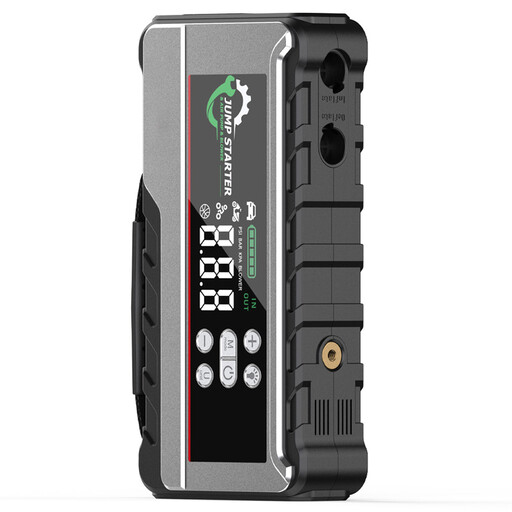
Why This Fits Their Persona: For users who want more than just a jump starter. This all-in-one device combines a powerful 3000 A booster with a 150 PSI tyre compressor and a PD65W power bank that can even charge laptops. Perfect for camping, road trips, and comprehensive emergency preparedness.
Instead of just exaggerating one parameter, this device justifies its price with genuine added value. It is a multifunctional tool whose individual components (jump starter, compressor, power bank) all have high performance specs.
Combines three essential car tools in one device; PD65W fast-charging for laptops and rapid recharging of the unit itself.
We have compiled a complete, up-to-date list of products that fully meet these strict selection criteria and UK safety regulations.
1. How often do I need to charge a jump starter power bank? Even when not in use, the battery will slowly discharge. Most manufacturers recommend fully charging the device every 3 to 6 months to maintain battery life and ensure it is ready for an emergency. Some newer models with low self-discharge rates advertise longer standby times. Check the manufacturer's specifications for this.
2. Can I use a jump starter to revive a deeply discharged battery? A car booster is primarily designed to provide the surge of current needed to start the engine, not to fully charge a battery. Some models have a "Boost" or "Force Start" function that allows a start attempt even with very low or no residual voltage in the car battery. However, this is an emergency function and not a substitute for a proper battery charger.
3. Do I need a special jump starter for diesel engines? Not necessarily, but due to their higher compression, diesel engines require a much stronger cranking current than petrol engines of a comparable size. Therefore, when buying a jump starter for diesel engines, it is essential to choose a model with a sufficiently high peak and cranking current. Manufacturers usually state the suitability for diesel engines explicitly with the maximum displacement (e.g., "up to 8.0L Diesel").