
Lieferung heute & morgen

Qualitätsgarantie

Willkommens-Angebote freischalten: KOSTENLOSE Lieferung | Bis zu 80 % RABATT | Kostenlose 30-Tage-JoyPlus-Testphase
App herunterladen
A dead car battery is more than just an annoyance—it means lost time, missed appointments, and potential dependence on roadside assistance. A portable jump starter, also known as a battery booster, promises a quick and straightforward solution. However, the market is crowded and filled with technical specifications that often confuse more than they clarify. As a Joybuy Product Recommendation Officer, I will filter the facts from the marketing promises for you, so you can make an informed decision and avoid the most common pitfalls.
Before you invest in a device, you should be aware of the typical marketing exaggerations that often lead to a poor purchase.
To find the right car battery jump starter for your needs, focus on these three objective criteria.
The current required to start an engine depends directly on its displacement and fuel type. As a rule of thumb:
Always check the manufacturer's specifications for the recommended maximum engine size for a jump starter for diesel and gasoline engines.
The capacity, ideally stated in watt-hours (Wh) as this value is voltage-independent, determines how many start attempts are possible and how many times you can charge your electronic devices. A higher capacity means more reserve power. Modern lithium-ion batteries are the standard, as they are compact and powerful. Newer technologies like sodium-ion batteries offer advantages in extreme temperatures and a longer lifespan, making them an interesting alternative.
A high-quality 12V jump starter must have comprehensive safety certifications (e.g., CE marking) and protection features. Look for the following in the product description:
Instead of presenting a confusing list, we have selected products for three typical user profiles.
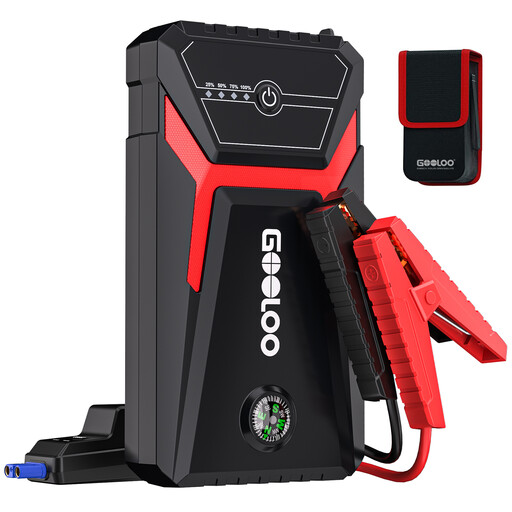
Why This Fits Their Persona: This device offers a solid set of essential features for the most common vehicles on the road (gasoline up to 6.0L, diesel up to 4.0L) at a very accessible price. It's the ideal solution for commuters and drivers of standard cars who want reliable emergency preparedness without a high cost.
It bypasses the pitfall of inadequate safety by offering 10 protection features, including smart jumper cables, according to the manufacturer. The performance ratings are realistic for its target vehicle class.
Excellent value for money; Compact design; Integrated power bank function and LED flashlight.
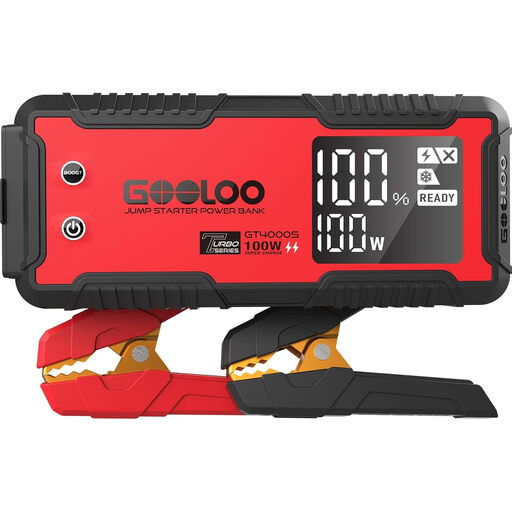
Why This Fits Their Persona: Anyone driving a vehicle with a large diesel (up to 10.0L) or gasoline engine needs uncompromising power. The GT4000S delivers the necessary reserves with 4000A of peak current. The 100W fast-charging capability (for both recharging the unit and charging laptops) is a significant added value for users who prioritize efficiency and time savings.
This model avoids the exaggerated peak current trap by delivering genuinely high performance for demanding engines. The informative LED display and 10 protection mechanisms ensure transparency and safety.
Very high starting power; Extremely fast recharging (100W); Serves as a powerful laptop power bank; Informative display.
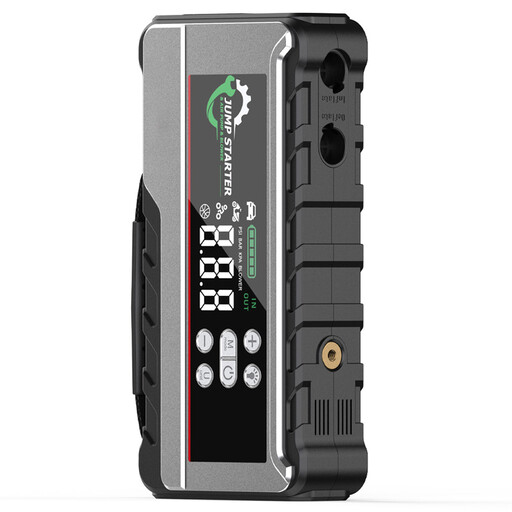
Why This Fits Their Persona: For anyone who wants to be prepared for anything while traveling or camping, this multi-function device is ideal. It combines a very powerful jump starter (3000A) with a high-performance 150 PSI air compressor. This covers the two most common breakdown causes—a dead battery and a flat tire—with a single device.
Instead of just promoting one feature with exaggerated specs, this device delivers demonstrably useful additional functions. The combination of a jump starter and an air compressor is a practical added value, not just a marketing claim.
All-in-one emergency solution; High starting power plus air compressor; PD 65W fast charging for laptops and other devices.
We have compiled a complete, up-to-date list of products that fully meet these strict selection criteria and safety regulations.
Even when not in use, a jump starter's battery will slowly self-discharge. Most manufacturers recommend fully charging the device every 3 to 6 months to maintain the battery's lifespan and ensure it's ready for an emergency. Some modern devices have very low self-discharge rates and advertise longer standby times. A look at the user manual will provide precise information.
Yes, this is possible, provided the device is designed for it. Diesel engines require a significantly higher starting current than gasoline engines. Therefore, pay close attention to the manufacturer's specifications regarding compatibility with diesel engines and the maximum supported displacement. A device designed for a small gasoline car will likely be insufficient for a larger diesel SUV.
Yes, when used correctly and with a high-quality device, the process is safe. Modern portable jump starter devices with smart clamps feature numerous protection mechanisms (e.g., reverse polarity, short-circuit, and over-voltage protection) that prevent damage to your vehicle's sensitive onboard electronics. It is crucial to choose a device with these safety features and to follow the manufacturer's instructions carefully.