
Lieferung heute & morgen

Qualitätsgarantie

Willkommens-Angebote freischalten: KOSTENLOSE Lieferung | Bis zu 80 % RABATT | Kostenlose 30-Tage-JoyPlus-Testphase
App herunterladen
A dead car battery is more than just an annoyance—it means lost time, missed appointments, and unexpected costs. A portable jump starter, also known as a battery booster, promises a quick and independent solution. But the market is overwhelming, and many devices don't live up to their advertising claims. As your Joybuy Product Recommendation Officer, I'll help you navigate the common pitfalls and make an informed decision.
Before you invest, you should be aware of the marketing tactics that often lead to a bad purchase.
To make the right choice, focus on these three objective criteria.
The peak current (Peak Amps) is the maximum amperage the device can deliver in a short burst to start the engine. This is the most important value for a successful jump-start.
The capacity, specified in milliampere-hours (mAh), determines how many times you can provide a jump-start or how long you can use the device as a car jump starter power bank to charge your smartphone or tablet.
A high-quality portable jump starter must have intelligent safety clamps (Smart Clamps). These protect against the most common user errors and prevent damage to the vehicle's electronics. Essential features include:
Here are some recommendations tailored to specific user profiles that meet the quality criteria mentioned above.
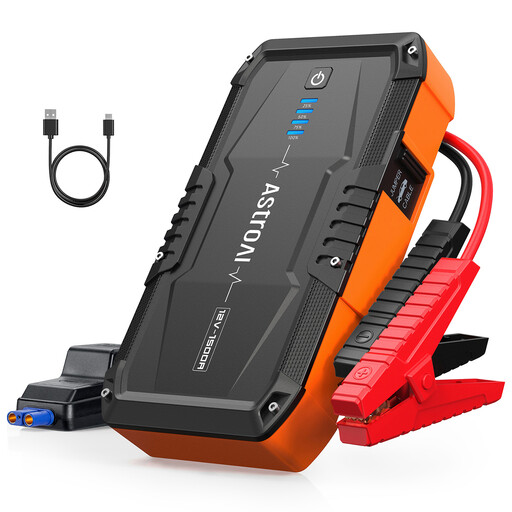
Why it's a good fit: Ideal for commuters and owners of small to mid-size cars with gasoline engines. It offers sufficient power for common vehicles without being oversized, and its compact design makes it easy to store in the glove compartment.
This device avoids the trap of exaggerated performance claims with a clear specification for engines up to 6.0L gasoline/3.0L diesel. It features 8 built-in safety functions, thus bypassing the risk of inadequate safety.
Compact design, a comprehensive safety package, and a "BOOST" mode for deeply discharged batteries.
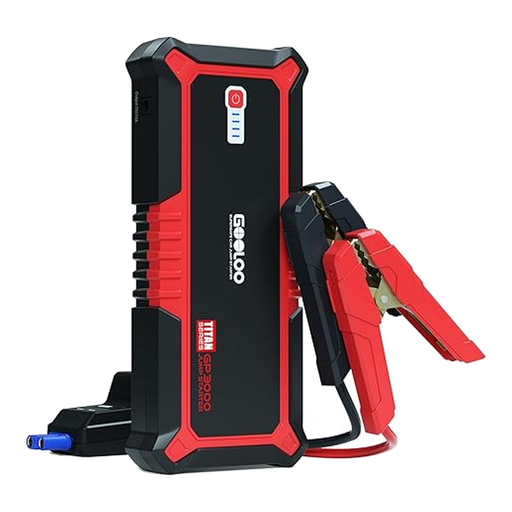
Why it's a good fit: With 3000 A of peak current, it delivers the necessary power for large-displacement gasoline (up to 9L) and diesel (up to 7L) engines. It's a reliable choice for owners of SUVs, family vans, or light commercial vehicles who depend on a safe jump-start, even in cold weather.
This model delivers a high, verifiable peak current and is explicitly designed for large engines. The 10-point safety system directly addresses the concern of inadequate protection in powerful devices.
High starting power for diesel engines, a rugged design, and a special "BOOST" mode for severely discharged batteries.
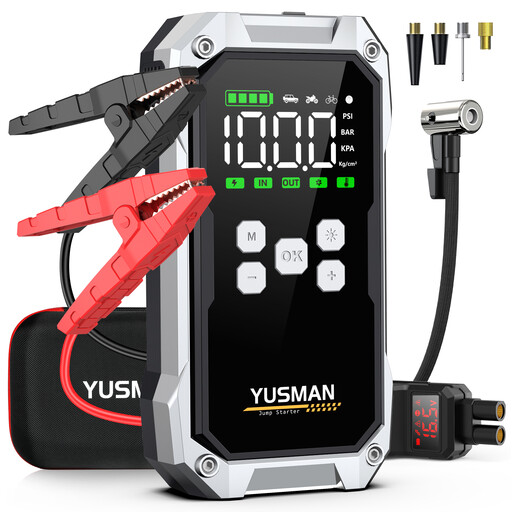
Why it's a good fit: For anyone looking for a powerful, all-in-one solution. With 5000 A of peak current, it can start virtually any 12V vehicle (up to 10.0L diesel). The integrated 150 PSI compressor makes it the ideal companion for RVs, camping trips, or as an emergency kit for the whole family.
This model debunks the trap of weak additional features. It combines an extremely high peak current with a capable compressor that isn't just a gimmick but a fully-fledged tool.
Extremely high starting power, a powerful 150 PSI compressor, and an LCD display for monitoring tire pressure.
We have compiled a complete, up-to-date list of products that meet these strict selection criteria and applicable safety regulations.
Even when not in use, the battery will lose its charge over time. It is recommended to fully charge the device every 3 to 6 months to maintain the battery's lifespan and ensure it is ready for an emergency. Always follow the manufacturer's specific instructions.
Yes, this is possible as long as the device is designed for it. Due to their higher compression, diesel engines require a significantly higher starting current than gasoline engines. When making your selection, look specifically for the manufacturer's specifications on diesel engine compatibility and choose a model with a correspondingly high peak current (e.g., "suitable for up to 7.0L diesel").
Yes, modern, high-quality jump starters are equipped with smart clamps that feature a range of protection mechanisms. These include reverse polarity protection, short-circuit protection, overvoltage protection, and overheating protection. These systems protect your vehicle's sensitive onboard electronics from damage caused by user error.