
Lieferung heute & morgen

Qualitätsgarantie

Willkommens-Angebote freischalten: KOSTENLOSE Lieferung | Bis zu 80 % RABATT | Kostenlose 30-Tage-JoyPlus-Testphase
App herunterladen
A dead car battery is more than just an annoyance—it means lost time, missed appointments, and potential reliance on outside help. A portable jump starter, often called a car booster or jump starter power bank, promises quick independence. However, the market is flooded with devices making tempting promises. Before you make a decision, it's crucial to know the most common pitfalls that can lead to a bad purchase.
The 3 Most Common Pitfalls When Buying a Car Jump Starter:
To make an informed decision, focus on the technical specifications that are relevant for reliable performance. Marketing terms are secondary.
The peak current, measured in amperes (A), is the maximum energy the device can deliver for a short burst to turn over the engine. The required power depends directly on your vehicle:
Always check the manufacturer's specifications for the maximum engine displacement (in liters) for both gasoline and diesel engines. This is a more reliable indicator than the ampere rating alone.
The capacity, given in milliampere-hours (mAh), determines how many start attempts are possible on a full charge and how many times you can charge your smartphone or other devices. A higher capacity means more reserve power.
In addition to the common lithium-ion technology, there are also newer developments like sodium-ion batteries. These can offer advantages such as a longer lifespan (more charge cycles) and more stable performance at extreme temperatures, which reduces concerns about rapid self-discharge in a hot summer or cold winter. A good portable jump starter should hold its charge for several months.
A high-quality jump-starting device must have comprehensive safety mechanisms. Look for the following features, often marketed as "Smart Clamps" or intelligent jumper cables:
A clear display that shows the charge status and any error messages makes operation much easier and ensures the process is safe even for novices.
Here are some models tailored to specific user profiles that are designed to avoid the pitfalls mentioned.
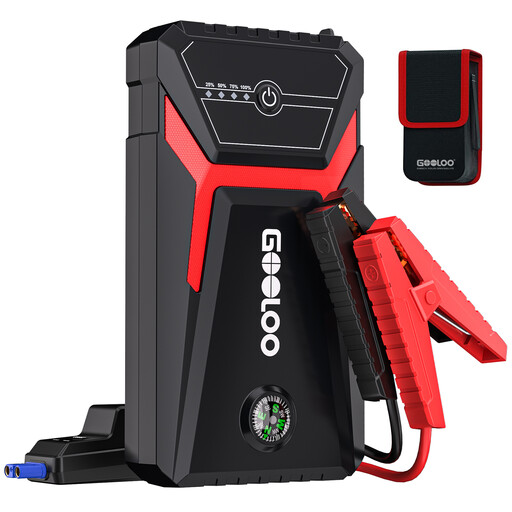
Why it's a good fit: It offers a reliable and cost-effective solution for common gasoline vehicles and smaller diesel engines. Ideal for an emergency in the glove box without breaking the bank. It combines a jump-starting function with a practical power bank for mobile devices.
With 10 declared safety features, including reverse polarity protection, it minimizes the risk of damaging the vehicle's electronics. The clear manufacturer specifications on engine compatibility (up to 6.0L gas / 4.0L diesel) prevent a bad purchase based on vague performance claims.
Its compact design and low weight (0.878 kg according to the manufacturer) make it easy to store. The integrated LED flashlight with an SOS function provides added utility in a breakdown situation.
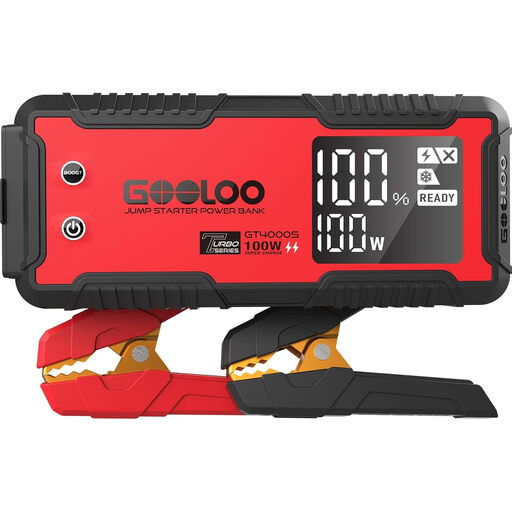
Why it's a good fit: With 4000A of peak current, it delivers the necessary power to reliably start even large-displacement engines. Its manufacturer-rated 100W fast-charging capability is especially practical for professional drivers or for long trips with laptops and other high-power devices.
The high, clearly stated peak power is specifically designed for large engines (up to 10.0L diesel), directly addressing the problem of underpowered devices. The manufacturer-stated standby time of up to 24 months addresses the concern of self-discharge during infrequent use.
The 3.2-inch LED display provides clear information on the device's status. The ability to fully recharge the unit itself in just 1.2 hours (according to the manufacturer, with a 100W charger) ensures it's always ready for action.
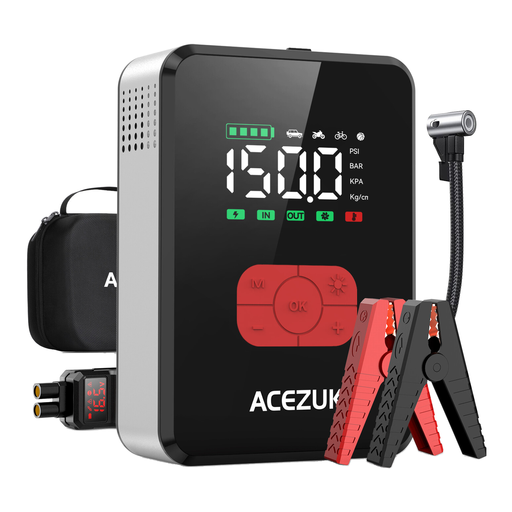
Why it's a good fit: This is a multifunctional solution that combines extremely high jump-starting power with an integrated **jump starter with an air compressor**. Perfect for anyone who wants a single tool for breakdowns, tire maintenance, and recreational activities like inflating balls or air mattresses.
The patented clamp design with an integrated display and warning tone actively prevents user error and offers a higher level of safety than standard clamps. Its clear multifunctionality justifies the value and prevents the purchase of multiple separate, lower-quality devices.
The digital air compressor with a 3.3-inch screen, preset modes, and an auto-shutoff function allows for precise and effortless inflation of tires up to 150 PSI. The high peak power of 7000A provides enormous reserves.
We have compiled a complete, up-to-date list of products that fully meet these strict selection criteria and adhere to key safety standards.
Most manufacturers recommend charging the device every 3 to 6 months, even if it's not used, to maintain the battery's health. Models with a very low self-discharge rate, such as those with sodium-ion technology, may need to be charged less frequently. Check the user manual for your specific model for details.
Yes, it's possible, but it is crucial to choose a device with sufficient peak current. Diesel engines require significantly more starting power than gasoline engines due to their higher compression. When selecting a product, explicitly look for the manufacturer's stated suitability for diesel engines and the maximum recommended displacement.
Yes, modern, high-quality jump starters are safe to use when operated correctly. The key is integrated safety features like reverse polarity protection, short-circuit protection, and over-voltage protection. These mechanisms prevent damage to the onboard electronics, even if the clamps are accidentally connected incorrectly. It is advisable to only use devices that meet these safety standards.