
Lieferung heute & morgen

Qualitätsgarantie

Willkommens-Angebote freischalten: KOSTENLOSE Lieferung | Bis zu 80 % RABATT | Kostenlose 30-Tage-JoyPlus-Testphase
App herunterladen
A dead car battery is more than just an annoyance—it means lost time, missed appointments, and potential uncertainty, especially in the cold or in remote locations. A portable jump starter promises a quick fix, but the market is overwhelming. As your Joybuy Product Recommendation Officer, I'm here to help you separate fact from marketing hype and make an informed decision.
Many buyers are drawn to big numbers and bold advertising claims, only to find their device fails at the critical moment. Watch out for these common traps:
To avoid falling into these traps, you should check three core aspects before buying. These determine whether a car jump starter is suitable for your vehicle and your needs.
The most important question is: Is the device compatible with my engine? The requirements vary significantly:
The type and quality of the built-in battery determine its longevity, safety, and additional features.
Incorrect use can damage both the jump starter and the vehicle's electronics. Modern devices minimize this risk with integrated protection circuits. The following are essential:
Based on the criteria above, we have identified a few models that are particularly well-suited for specific user groups.
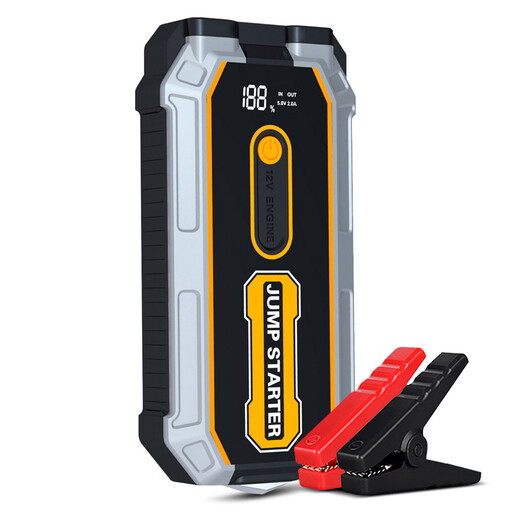
Why this device is a good fit: Ideal for drivers of compact and mid-size cars with petrol engines who need a compact, straightforward solution for emergencies. It fits easily in the glove compartment and offers basic power bank functions for on the go.
The device provides realistic specs (1200A peak, 600A starting current) that are sufficient for its target audience of standard cars, rather than advertising with unrealistic numbers.
Very compact design and low weight (approx. 330g). The LCD display clearly shows the battery status, making it easy to use.
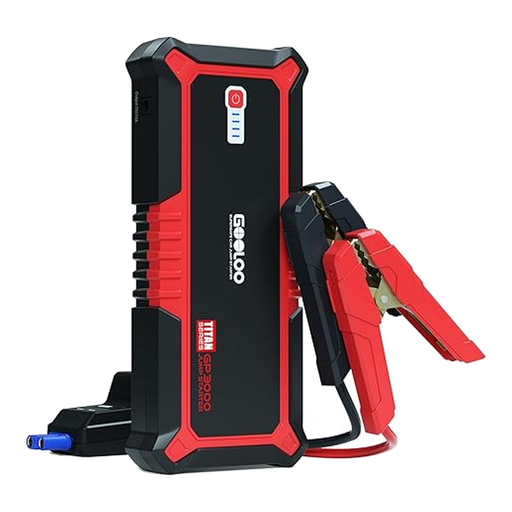
Why this device is a good fit: Designed for demanding tasks. Its high power output makes it suitable for SUVs, vans, RVs, and vehicles with large-displacement diesel engines that require a strong starting current.
The high peak current of 3000A is backed by clear engine compatibility specs (up to 9L petrol/7L diesel) and a "BOOST" function for deeply discharged batteries, which provides real added value.
High power reserves for demanding engines and a robust, drop-resistant design. The 10-level safety technology ensures reliable operation.
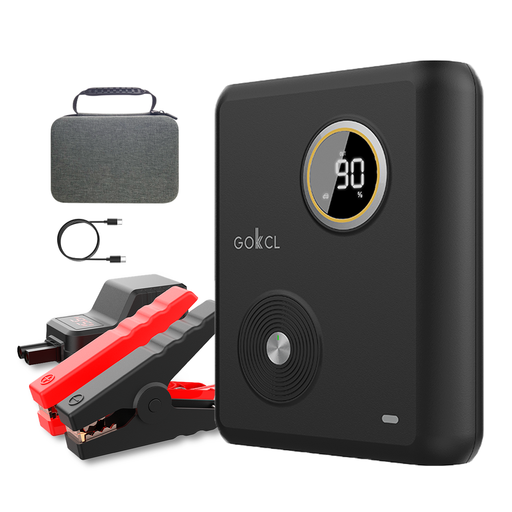
Why this device is a good fit: For users who value longevity, minimal maintenance, and reliability under extreme conditions. The sodium-ion technology makes it the ideal "buy once, always ready" solution.
It solves the problem of temperature sensitivity and self-discharge common in lithium batteries. With an operating range of -40°C to 80°C and a standby time of up to 5 years, it's ready to go in winter and after long periods of storage.
Future-forward sodium-ion technology for extreme longevity (up to 6,000 cycles, according to the manufacturer) and zero maintenance. The PD60W fast-charging function is an added bonus.
We have compiled a complete, up-to-date list of products that fully meet these strict selection criteria and safety regulations.
1. How often do I need to charge a jump starter? For conventional lithium-ion devices, it is recommended to check and recharge them every 3 to 6 months to maintain battery health. Models with sodium-ion technology have a significantly lower self-discharge rate and need to be charged much less frequently (e.g., only every few years). Always follow the manufacturer's instructions.
2. Can I use a jump starter power bank to start a diesel vehicle? Yes, but only if the device is explicitly designed for it. Diesel engines have higher compression and require a much stronger starting current. Pay close attention to the manufacturer's specifications regarding the maximum engine displacement for diesel vehicles. A device designed for small petrol engines will likely be insufficient for a diesel car.
3. Is using a jump starter safe for my car's electronics? Modern, high-quality jump starters with the safety features mentioned above (especially reverse polarity and short-circuit protection) are safe for your vehicle's onboard electronics when used correctly. These systems prevent voltage spikes and fault currents that could damage sensitive control units. Using a device without these protective features is not recommended.