
Lieferung heute & morgen

Qualitätsgarantie

Willkommens-Angebote freischalten: KOSTENLOSE Lieferung | Bis zu 80 % RABATT | Kostenlose 30-Tage-JoyPlus-Testphase
App herunterladen
A flat car battery often strikes when you’re short on time: on the commuter car park, before a trip, or after a cold night. A car jump starter power bank can be a handy addition to your vehicle kit in these situations. However, it doesn’t replace a faulty battery or a professional check of your vehicle’s electrics.
When buying, high amp ratings, unclear compatibility claims, and a lack of care instructions often lead to poor decisions. What really matters isn’t just the advertised peak power, but the combination of 12-V compatibility, suitable engine size, safety features, and a design that works for everyday use.
Figures like 1,500 A, 4,000 A or 7,000 A usually refer to the maximum peak current under certain conditions. This number alone doesn’t tell you how many times you can start a vehicle, or how the device performs in low temperatures. Also pay attention to the manufacturer’s stated limits for petrol and diesel engines, as well as the intended starting current.
A 12 V jump starter with the right engine approval for your vehicle type is more important than the highest number on the box.
“For all vehicles” without further details isn’t very meaningful. Check whether the device is suitable for your engine size, fuel type, and electrical system. Heavy commercial vehicles, buses, and many work machines, for example, use 24-V systems. A 12-V power bank for car batteries isn’t automatically suitable for them.
The same applies to SUVs, vans, boats, and motorcycles – always check the specific model’s specifications. For hybrid vehicles, you need to confirm whether only the 12-V auxiliary battery is supported. The high-voltage battery of an electric vehicle must never be jumped with a conventional jump starter.
A jump starter with a compressor can be useful on the road, but it takes up more space and weight than a dedicated starting device. A power bank function, USB ports, or an LED emergency light are practical extras, but they shouldn’t overshadow the core function. Also check whether adapters, charging cables, clamps, and a storage pouch are actually included in the box.
Start by comparing the manufacturer’s specifications for:
A battery booster for SUVs and motorcycles should be chosen based on the actual engine size, not just the vehicle name. For larger diesel engines, you’ll usually need more powerful devices with sturdier clamps.
Look for intelligent clamps with indicators or audible warnings. Useful protection features can include reverse polarity protection, short-circuit protection, overcurrent protection, overcharge protection, and over-temperature protection. These features reduce the risk of user error, but they don’t replace checking the red and black clamps yourself.
Before use, make sure the vehicle battery and cables are undamaged. A frozen, leaking, swollen, or visibly damaged battery must never be jumped. Only use the clamp cable supplied or one approved by the manufacturer.
Capacity is often given in mAh. Because the nominal voltage and the actual usable capacity vary, a direct comparison based on this number alone is only possible to a limited extent. More practical are details about charging time, charge status, and the available connections.
For everyday use, the following features can be relevant:
Lithium batteries shouldn’t be exposed to prolonged heat, moisture, or direct sunlight. Many models need to be recharged every two to three months during long-term storage. Always follow the manufacturer’s specific instructions.
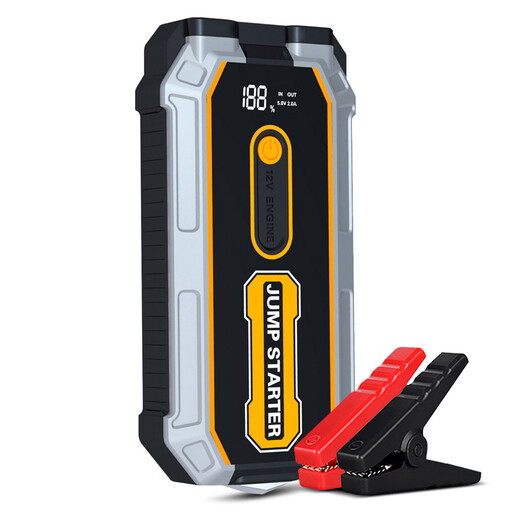
Why this product fits the profile: According to the product details, this compact device is designed for 12-V petrol and diesel vehicles, SUVs, motorcycles, and boats. At around 330 g, it’s easy to store in your vehicle without taking up much space.
The specifications list 1,200 A peak current, 600 A starting current, and the exact dimensions of 165 × 84 × 30 mm. This means key comparison data is available straight away.
12,800 mAh battery according to the product description, USB output at 10 W, and an LED light with three modes.
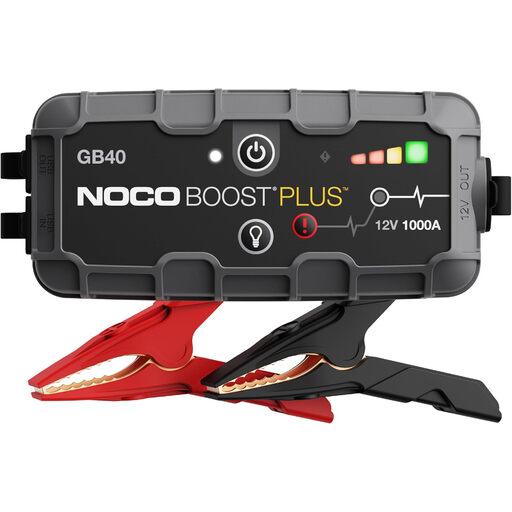
Why this product fits the profile: According to the product details, this model is aimed at cars, motorcycles, and boats with 12-V systems. The product description mentions IP65 certification and a compact design weighing around 1.1 kg.
The product details feature an UltraSafe design with reverse polarity and spark protection, plus clear engine limits for petrol and diesel.
1,000 A peak current, LED lamp with seven modes, and a power bank function for mobile devices.
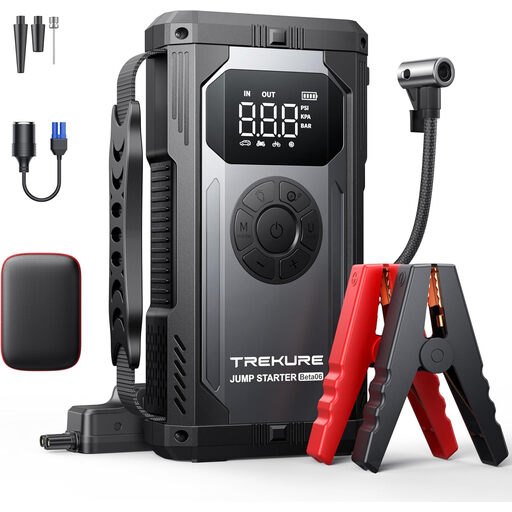
Why this product fits the profile: For campers, SUV drivers, and heavy users, this device combines jump starting, a tyre compressor, LED light, and USB charging in one unit, according to the product details.
The integrated LCD display is designed to show battery level, current tyre pressure, and preset pressure. The compressor is rated at 150 PSI with automatic shut-off.
5,500 A peak current, approval for engines up to 10.0 L according to the supplier, and multiple pressure units on the display.
We’ve put together a full, regularly updated list of products that fully meet these strict selection criteria and the safety regulations in force in the EU.
The lifespan depends on the cell type, usage, storage conditions, and charging care. High temperatures and a battery that’s left completely flat for long periods can put strain on the cells. For long-term storage, check the charge level according to the manufacturer’s instructions – typically every two to three months.
That depends on the model. Diesels often need higher current reserves when starting. So check the manufacturer’s separate specification for diesel engines and the maximum engine size. A device that’s suitable for a petrol engine isn’t automatically approved for a diesel of the same size.
Ongoing costs are usually limited to the electricity needed for recharging. More important than the low charging cost are correct storage, regular checks, and, if necessary, replacing the device once the battery’s expected lifespan is up. Lithium batteries must not be disposed of with household waste – they need to be recycled according to local regulations.