
Lieferung heute & morgen

Qualitätsgarantie

Willkommens-Angebote freischalten: KOSTENLOSE Lieferung | Bis zu 80 % RABATT | Kostenlose 30-Tage-JoyPlus-Testphase
App herunterladen
A flat car battery often strikes when you're short on time, it's freezing cold, or you're about to set off on a long journey. A car jump starter power bank can be a mobile alternative to traditional jump leads in these situations. It doesn't require a second vehicle and can usually be stored in the boot, under the seat, or in the glovebox.
However, these devices differ significantly in terms of starting current, battery capacity, engine compatibility, and safety features. If you only look at a high amperage or a large mAh rating, you could end up buying a car jump starter that's unsuitable for your vehicle.
Many products advertise a very high peak current. This value describes a short-term maximum current, not necessarily the continuous starting power available. What matters is whether the manufacturer explicitly approves the device for your vehicle's engine size and type.
A diesel engine often requires different power reserves when starting compared to a petrol engine. Therefore, a small car has different requirements to an SUV, van, motorhome, or commercial vehicle.
The capacity of a car power bank is usually given in mAh. Without additional information on voltage, usable capacity, and charging losses, this figure is difficult to assess. A model with a higher mAh number doesn't automatically mean it can perform more starting attempts.
So, also pay attention to Wh ratings, the specified starting current, and the recommended number or usage limit for jump-starting operations.
LED light with SOS or flashing function is helpful in a breakdown, but it says little about the quality of the battery jump starter. Likewise, a power bank should not be seen as a replacement for a hi-vis vest, warning triangle, and other car emergency equipment. Also, check whether the clamps are adequately insulated and whether the device shuts down in the event of reverse polarity, overcurrent, or overtemperature.
Most devices in this category are designed for 12V jump starting. That doesn't mean they are suitable for every vehicle. Before buying, you should check the following points:
A device for petrol engines up to 6.0 litres and diesel engines up to 3.0 litres, for example, doesn't automatically suit a larger diesel vehicle. With hybrid vehicles, you need to check whether the jump starter is only intended for the 12V auxiliary battery. It cannot be used to start a high-voltage battery in an electric vehicle.
The starting current describes the power output relevant for starting, while the peak current indicates a short-term maximum value. So, don't just compare the amperage; also consider:
According to the instruction manual, a starting attempt should only last a few seconds. A pause is required between several attempts to allow the device and cables to cool down.
Useful safety features include reverse polarity protection, short-circuit protection, overcurrent protection, overcharge protection, and overtemperature protection. Smart clamps with a display or audible signal can make connection clearer, but they don't replace checking the terminals.
For everyday use, USB outputs, USB-C charging, and a charge level indicator are practical. Also, consider storage conditions: lithium batteries should not be left permanently in a hot vehicle. Depending on the model, the manufacturer recommends recharging every two to six months. CE or RoHS markings should be present; however, they are not a sole guarantee of quality.
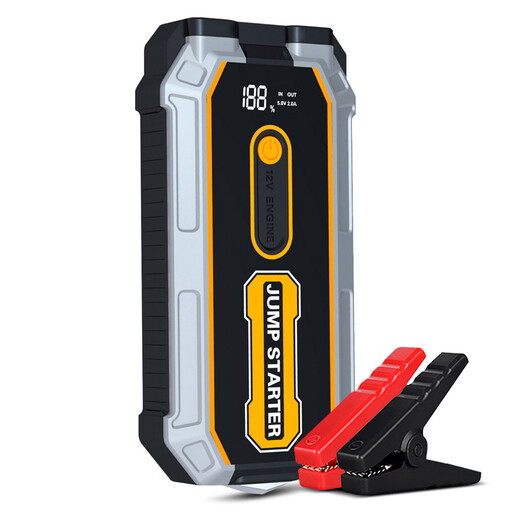
Why this product fits the profile: For cars, SUVs, and motorbikes with a 12V system, the manufacturer specifies 1200A peak current and support for petrol and diesel vehicles. The compact housing, weighing around 330 g, can be stored away to save space.
The specifications for 12V vehicles, 600A starting current, and 7200mAh nominal capacity are listed separately. This makes it easier to objectively compare the device with your own vehicle.
LCD display, 10W USB output, three LED modes, and a stated charging interval of around four hours.
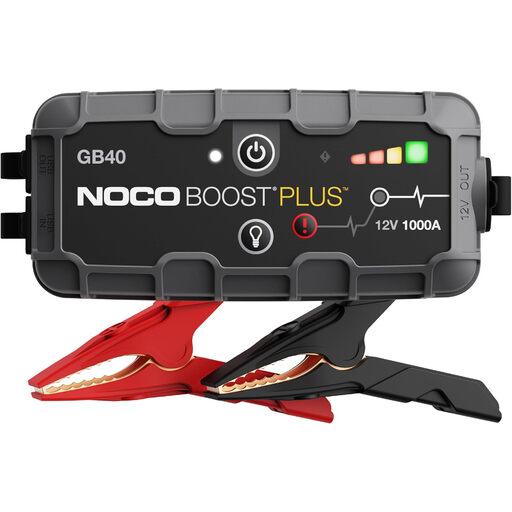
Why this product fits the profile: According to the product specifications, this model is designed for petrol engines up to 6.0 litres and diesel engines up to 3.0 litres. The IP65 housing and the stated UltraSafe protection architecture appeal to users who value enclosure protection and connection control.
The vehicle limits are clearly stated. Additionally, protection against sparks and reverse polarity, as well as a robust IP65 housing, are specified.
1000A peak current, USB power bank function, LED light with seven modes, and included starter cables.
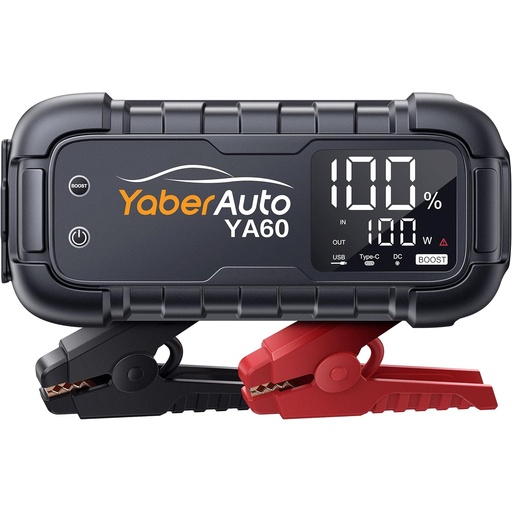
Why this product fits the profile: For larger petrol engines and diesel engines up to 12.0 litres, the manufacturer specifies 8000A peak current. The additional ports are suitable for users who want to power several devices on the go.
Alongside the peak current specification, the product description states specific engine limits, 8-AWG cables, and ten safety features. This provides several checkpoints rather than just one marketing figure.
65W USB-C charging, two USB-A outputs, 150W DC output, and a 600-lumen LED light with three modes.

Why this product fits the profile: According to the manufacturer, this device is intended for petrol engines up to 8.0 litres and diesel engines up to 6.0 litres. The 59.2Wh rating, LED display, and 65W PD charging function suit regular use and planned maintenance.
The Wh capacity is stated alongside the peak current and engine limits. This makes it easier to assess compared to offers that only advertise with mAh or amps.
65W PD Type-C charging, digital display, three light modes, and ten stated safety features.
We have compiled a complete, regularly updated list of products that fully meet these strict selection criteria and the safety regulations in force in the EU.
No. It must be suitable for the 12V system, engine type, and engine size. These devices are generally not intended for 24V vehicles or the high-voltage batteries of electric vehicles.
The lifespan depends on battery chemistry, storage, temperature, charge cycles, and care. Even with infrequent use, the charge level should be checked regularly. Maintenance intervals vary by model; the manufacturer's specifications are definitive.
A charger charges the vehicle battery over a longer period. A mobile jump starter, on the other hand, is designed for an immediate starting attempt. Both products therefore fulfil different tasks and can complement each other in a car emergency kit.