
Lieferung heute & morgen

Qualitätsgarantie

Willkommens-Angebote freischalten: KOSTENLOSE Lieferung | Bis zu 80 % RABATT | Kostenlose 30-Tage-JoyPlus-Testphase
App herunterladen
A flat car battery always seems to happen at the worst possible moment: in the car park, before your commute, or during a trip with your SUV, van or motorhome. A car jump starter power bank can be a practical addition to your vehicle kit in these situations. However, these devices differ significantly in current output, vehicle compatibility, safety features and charging options.
As a Joybuy Product Recommendation Officer, I’ve filtered out the key information and will show you which technical specifications actually matter before buying a jump starter for your car.
Figures like 2,000 A, 3,000 A or even 8,000 A usually refer to the maximum peak current. This value doesn’t automatically describe the continuous power available. What matters is whether the device is suitable for your vehicle’s engine size and type.
A 12V battery booster should always be checked against your vehicle manufacturer’s specifications. A diesel engine often needs different power reserves when starting compared to a petrol engine. A large van or SUV has different requirements to a small car or motorcycle.
Many devices list battery capacity in mAh. Depending on cell voltage, electronics and conversion losses, not all of that capacity is available at the USB outputs or the jump-start clamps. Some products also list a nominal capacity or energy in Wh.
If you want to use your mobile car battery jump starter as a power bank too, you should pay attention to the actual ports and their output power. A fast-charging USB feature like Quick Charge or USB-C Power Delivery can be more practical for smartphones and sat navs than an especially high mAh number.
A jump starter for cars is only ready to use when its battery is sufficiently charged. If you’re not using it for a while, the product instructions usually recommend checking and recharging it every two to six months, depending on the model. High temperatures inside a parked vehicle can also put extra strain on lithium batteries.
Before buying, you should check the temperature range, charging port, charge level indicator and storage options. A device that fits in your glovebox or under the seat is more likely to be carried with you day to day than a heavy model without a carry case.
Most portable jump starters in this category are designed for 12V vehicles. This typically includes cars, motorcycles, SUVs and smaller vans. They are not automatically suitable for 24V lorry systems or the high-voltage battery of electric vehicles. With hybrid vehicles, only the 12V auxiliary battery may be relevant, depending on the model.
Look for clear specifications like “up to 7.5 L petrol” or “up to 5.5 L diesel”. These figures are more understandable than an isolated peak current rating.
Intelligent safety clamps should at least have an indicator for correct connection. Depending on the model, protection features against reverse polarity, short circuit, overcurrent, overheating, overcharging and sparking may also be included.
Despite protection circuits, the correct order remains important: red clamp to the positive terminal, black clamp to the negative terminal or a suitable earth point as per the instructions. The clamps must not touch each other when the device is switched on. A damaged, leaking or frozen vehicle battery must not be jump-started.
An LED emergency light with constant, SOS and flashing modes can be helpful if you break down in the dark. For use as a portable power bank for your car, USB-A, USB-C or DC outputs are relevant. Also check whether a charging cable, carry case and the correct jump-start cables are included in the box.
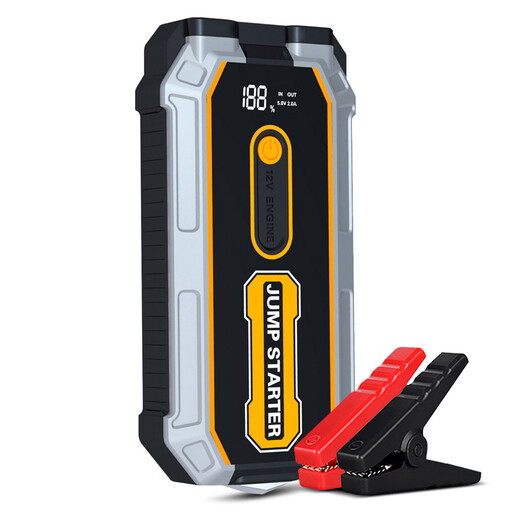
Why this product fits the profile: This compact device weighs around 330 g according to the product information and is suitable for 12V petrol and diesel vehicles, motorcycles and other smaller vehicles.
The stated suitability up to 6.0 L petrol or 3.0 L diesel makes the vehicle limit clearer than an isolated marketing figure.
12,800 mAh battery capacity, LCD display, USB output up to 10 W and LED light with three modes.
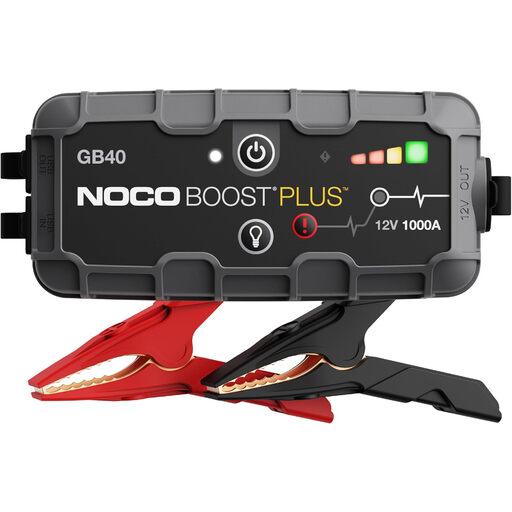
Why this product fits the profile: For users who value defined protection features, a robust build and compact storage.
The UltraSafe technology is stated to include protection against reverse polarity and sparking; the housing is also IP65-rated according to the product data.
Up to 1,000 A peak current, power bank function, 100-lumen LED with seven modes and suitability up to 6.0 L petrol or 3.0 L diesel.
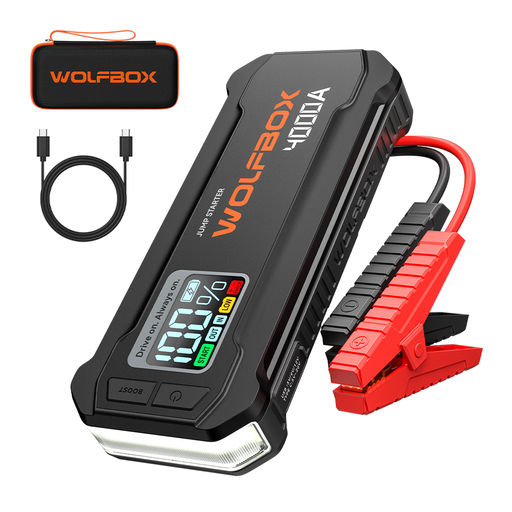
Why this product fits the profile: This model is aimed at drivers of larger petrol and diesel vehicles, as well as users who need a higher energy reserve and fast recharging.
The product data lists specific limits up to 10 L petrol and 10 L diesel, plus an LED display to check the charge level.
4,000 A peak current, 88.8 Wh energy, 65 W fast charging via USB-C and LED light with three modes.
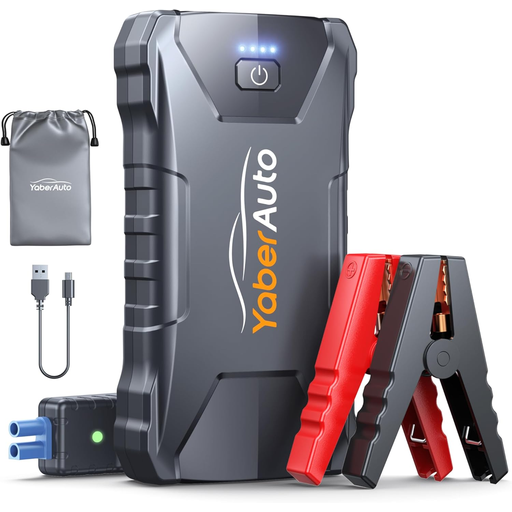
Why this product fits the profile: This model combines a low weight of around 340 g according to the product information with a power bank and LED function for everyday use, camping and travel.
The specifications list both the suitability up to 7.0 L petrol and 5.5 L diesel, as well as ten protection features and a temperature range of approximately -20 °C to 60 °C.
2,000 A peak current, 13,800 mAh battery, USB-C input, USB output and LED emergency light with constant, SOS and strobe modes.
We’ve put together a complete, regularly updated list of products that fully meet these strict selection criteria and the safety regulations in force in the EU.
No. What matters are the on-board voltage, engine type and engine size limit. Most of the devices mentioned are designed for 12V petrol and diesel vehicles. They are not automatically suitable for 24V vehicles and the high-voltage systems of electric cars.
The lifespan depends on the cell type, charge cycles, temperature and storage conditions. Regular charge level checks and following the manufacturer’s instructions can help maintain readiness. If storing for a long period, the device should be recharged at the recommended intervals.
The ongoing electricity costs mainly come from recharging and are usually low. More important than the pure charging cost are the correct vehicle compatibility, a working cable system and regular maintenance. A cheap device without sufficient power reserves could end up being a false economy with a larger diesel engine.