
Lieferung heute & morgen

Qualitätsgarantie

Willkommens-Angebote freischalten: KOSTENLOSE Lieferung | Bis zu 80 % RABATT | Kostenlose 30-Tage-JoyPlus-Testphase
App herunterladen
A car jump starter power bank can be a practical alternative to jump leads when your 12-volt car battery goes flat. The device connects to the battery terminals and delivers the starting current needed in a short burst. However, not every jump starter on the market is suitable for the same purpose for drivers, commuters, campers and motorcyclists.
Many products prominently advertise the peak current, for example 2,000 or 4,000 A. This figure describes a short-term current spike and does not automatically reflect the sustained starting performance. What also matters are the stated starting current, the vehicle voltage and the permissible engine size.
A device designed for smaller petrol engines can reach its limits with a large diesel engine. Therefore, check whether the model is expressly suitable for jump starting petrol and diesel engines and what engine capacity limits are specified.
With portable devices, you often see values such as 10,000 or 16,800 mAh on the packaging. This figure usually refers to the internal cell voltage. The actual usable capacity may be lower. Sometimes a nominal capacity or a "rated capacity" is also provided.
When choosing a portable car booster, you should therefore not only look at the mAh figure. Charging time, USB output, weight and the recommended recharging during longer storage periods are also relevant.
A visually modern casing does not replace clearly described protection functions. For car battery jump starting, reverse polarity protection, short-circuit protection, overcurrent protection and overheat protection are all useful. Intelligent clamps should indicate an incorrect connection via a display or signal.
A jump starter power bank is not intended for damaged, leaking or frozen batteries. Before purchasing and before each use, the operating instructions must be followed.
Most cars, SUVs, motorcycles and many vans use a 12V electrical system. However, heavy commercial vehicles can operate on 24 volts. A 12V jump starter must not be used on a 24-volt system.
Then compare the engine size specifications:
The amperage values are manufacturer specifications and should be understood as a selection aid, not as a guarantee for every vehicle.
Look for sufficiently long cables, insulated handles and a secure connection to the device. A clearly colour-coded cable makes connection easier: red goes to the positive terminal, black to the negative terminal or to a suitable earthing point as per the operating instructions.
Clamps with a status indicator are practical. A green signal can indicate a correct connection, while a warning signal tells you to stop. With a completely flat battery, a separate boost function may be required depending on the model.
A mobile jump starter power bank can do more in daily use than just start the engine. USB-A or USB-C ports can charge a smartphone, sat nav or camera, for example. A car jump starter with an LED light helps when working in the engine bay or makes your vehicle more visible at the roadside.
An integrated compressor is interesting for users who want to adjust tyre pressure on the go. Check the maximum pressure, running time and cooling breaks. A compressor does not replace regular tyre pressure checks or repair of a damaged tyre.
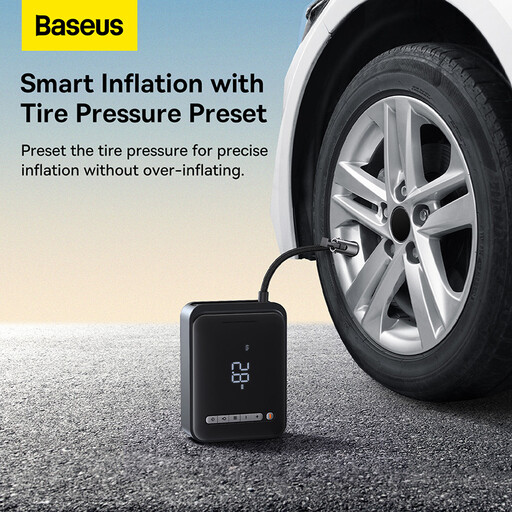
Why this product suits the profile: This model combines jump starting and tyre inflation in one device. It is specified with 500 A starting current, 1000 A peak current, 8,000 mAh battery capacity and two USB outputs.
The product data lists starting and peak current separately. In addition, the pump pressure range is given as 5 to 150 psi; a maximum of 120 psi is recommended for use.
2-in-1 function, USB outputs and a stated charging time of around three hours.
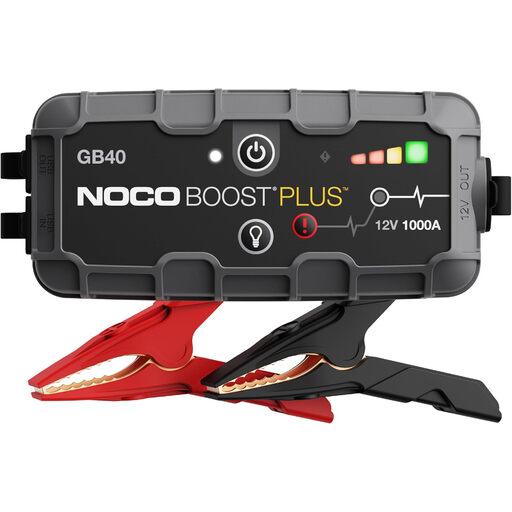
Why this product suits the profile: This jump starter is designed for 12-volt vehicles and comes with an LED light, starter cables and a carry case. The product description specifies petrol engines up to 6.0 litres and diesel engines up to 3.0 litres.
The specifications give concrete engine limits and integrated functions such as reverse polarity and spark protection, rather than just a high amperage figure.
1000 A peak current, IP65 rating, 100-lumen LED and power bank function.
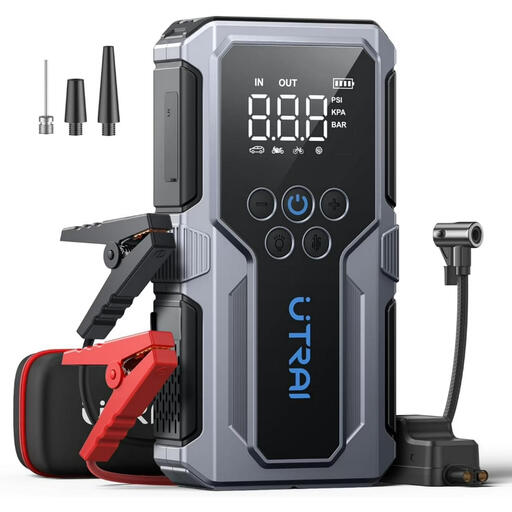
Why this product suits the profile: In addition to 12V jump starting, this device offers a compressor up to 150 psi, an LCD display, USB and USB-C ports and an LED light with three modes.
The operation shows the tyre pressure on the display and includes automatic shut-off when the preset pressure is reached. Cooling breaks must be observed for the compressor.
3000 A peak current, 15,000 mAh, 150 psi compressor and ten stated protection functions.
Fully charge the car jump starter device before first use. Park the vehicle, switch off electrical consumers and connect the clamps according to the instructions. Starting attempts should only last a few seconds. A pause is required between several attempts.
After use, the booster should be recharged. For longer storage, many product instructions recommend checking or recharging every three to six months. In summer, a lithium power bank should not be left permanently in a very hot car interior. Damaged, swollen or leaking devices must not be used.
We have compiled a complete, regularly updated list of products that fully meet these strict selection criteria and the safety regulations in force in the EU.
Usually, the red cable is connected to the positive terminal first, then the black cable to the negative terminal or a designated earthing point. Only when the status indicator shows a correct connection should the engine be started. The operating instructions of the respective model take precedence.
The lifespan depends on cell quality, charge cycles, temperature and storage. Regular recharging prevents complete deep discharge during storage. Figures such as "number of starts" are product-specific manufacturer values and not a general guarantee of durability.
The direct energy consumption is low, as the device only draws power from the mains or a USB charger when being charged. Additional costs can arise from a missing power adapter, replacement cables or later battery replacement. Therefore, check the scope of delivery, charging ports and warranty conditions before purchasing.