
Lieferung heute & morgen

Qualitätsgarantie

Willkommens-Angebote freischalten: KOSTENLOSE Lieferung | Bis zu 80 % RABATT | Kostenlose 30-Tage-JoyPlus-Testphase
App herunterladen
A flat car battery usually happens at the worst possible time: on the way to work in the morning, in a winter car park or during a journey. A compact car jump starter can be a practical addition to your emergency kit in situations like these. However, devices vary considerably in terms of starting current, battery, safety features and connection options.
The product details come from the respective manufacturers’ descriptions. Buyers should take particular care with maximum engine sizes and check that the stated values are suitable for their own vehicle.
Figures such as 1,500 A, 2,000 A or 4,000 A generally refer to the maximum peak current. This figure alone does not indicate how effectively a device will start a particular engine in real-world conditions. The supported engine size, the condition of the car battery, the temperature and the quality of the cables and clamps are also important.
A 12V jump starter should therefore not be selected solely on the basis of the highest amp rating. A small petrol engine has different requirements from a large diesel, SUV or van.
A high battery capacity can be useful for several starting attempts or the power bank function. However, the battery chemistry, discharge rate and electronics also play a role when providing assistance to the car battery itself. In addition, manufacturers may state capacities differently, for example as cell capacity or usable output capacity.
A device with USB fast charging is therefore not automatically suitable for larger diesel engines.
Lithium batteries do not cope well with constant heat in a parked car or complete discharge. Before buying, check the instructions to see the temperatures at which the device may be used and stored. It is also important to note that many models need recharging every two to six months, even when they have not been used.
Compare the manufacturer’s specifications for petrol and diesel engines separately. Diesels often require more energy to start. A device whose product description states that it supports petrol engines up to 7.5 litres may specify a lower limit for a diesel engine of the same size.
Use the following as a guide:
The amp rating is not a standardised value that can be compared directly across all products. You should therefore always consider the engine type and litre limit together.
A car battery jump starter should have a clear display and a protected clamp unit. Useful safety features include protection against:
An audible signal or LED display can indicate an incorrect connection. However, this does not replace checking that the red clamp is connected to the positive terminal and the black clamp to the negative terminal or a suitable earth point. Read the operating instructions before use.
For commuters and families, a jump starter power bank with a USB connection can provide extra benefits. Check the specific charging output: USB-C with Power Delivery or Quick Charge can charge compatible smartphones and tablets more quickly than a basic 5V output.
An LED emergency light with steady light, strobe and SOS modes is useful if you break down in the dark. If you are looking for a jump starter with compressor, you will also need to check the air pressure, hose length and intended tyre performance. The devices presented here are primarily boosters and power banks; not every model includes a compressor.
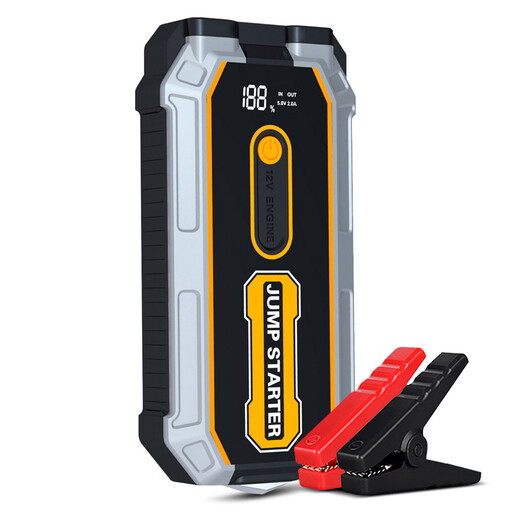
Why this product suits this profile: Compact portable jump starter for drivers who want to keep a 12V device with an LCD display and basic power bank function in the glove compartment.
The manufacturer’s specifications state separate limits of 4.5 litres for petrol and 2.5 litres for diesel. This makes it easier to compare the product’s suitability with your own vehicle.
1,200 A peak, 12,800 mAh battery, LCD display, USB output and LED light with three modes, weighing around 330 g.
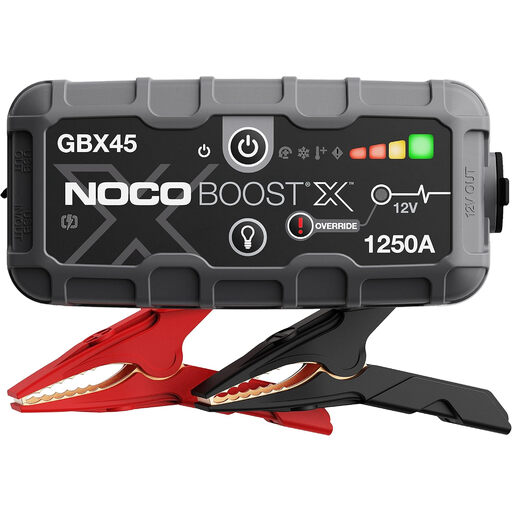
Why this product suits this profile: For drivers who value clearly described safety features, a compact design and an additional charging function.
The product description lists a spark-free connection and reverse-polarity protection. The stated engine limits are up to 6.5 litres for petrol and 4.0 litres for diesel.
12V lithium booster, power bank function, integrated LED light and storage bag according to the manufacturer’s description.
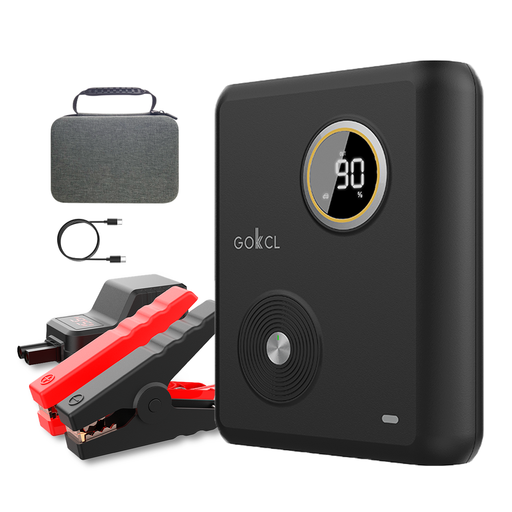
Why this product suits this profile: For campers, outdoor users and vehicles that are left parked for longer periods and need greater energy capacity and connection options.
The specifications state 12V, an operating temperature of approximately -40 °C to 80 °C and a low monthly self-discharge rate. These details should nevertheless be checked against the operating instructions.
27,500 mAh sodium-ion battery, PD60W input and output, QC3.0, 1,500 A peak and 200-lumen LED light.
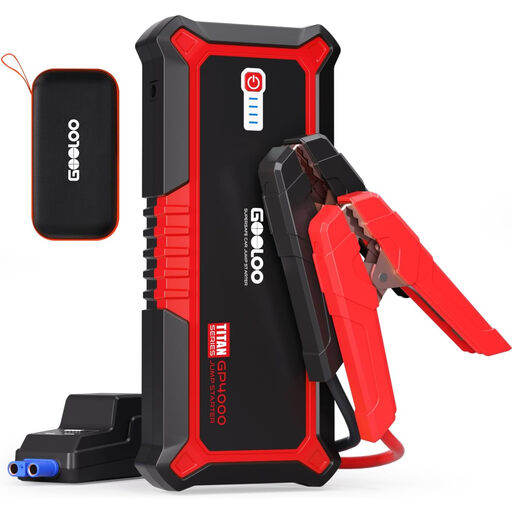
Why this product suits this profile: For drivers of larger petrol and diesel vehicles, vans, pick-ups or leisure vehicles, provided the vehicle has a 12V system.
The product specifications limit use to 12V vehicles and engines up to 8.0 litres for petrol and 6.0 litres for diesel. The model is not intended for 24V vehicles.
4,000 A peak, ten stated safety features, two USB outputs, LED light and robust clamps according to the product description.
We have put together a complete, regularly updated list of products that fully meet these strict selection criteria and the safety regulations applicable in the EU.
A damaged, leaking or frozen car battery must not simply be started with a booster. If you are unsure, roadside assistance is the safer option.
Its lifespan depends on the battery chemistry, storage conditions, charging cycles and temperature. Check the charge level regularly and follow the maintenance intervals in the instructions. A device should no longer be used if it shows visible damage, has a swollen battery or a damaged casing.
This depends on the permitted temperature range of the particular model. High temperatures inside a parked vehicle can put strain on the battery. For longer periods of non-use, a cool, dry place is recommended for storage. The manufacturer’s instructions on storage and recharging should always be followed.
If you own a booster, the main cost is the electricity needed to recharge it. Additional costs may arise from replacement cables, damaged accessories or a battery replacement later on. Buying one is particularly worthwhile if you use the power bank and LED functions regularly or frequently travel by car.